
On this page
A caliper is the clamp that squeezes the pads against the rotor. When one sticks, leaks or seizes, Route 66 Auto Repair in Upland proves which caliper failed, replaces it with a new or remanufactured unit, and bleeds the brakes so the pedal is firm. You see photos of the failed caliper and a written quote before we start.
What does a failing caliper feel like?
- The car pulls to one side when you brake, or even while coasting
- One wheel is much hotter or dirtier than the rest after a drive
- A burning smell, sometimes with light smoke from one wheel
- Pads worn thin on one side of the axle and thick on the other
- Brake fluid wetting the inside of a wheel or tire
- Fuel mileage slipping from a brake that never fully lets go
When is replacement the right call?
A caliper can fail at the piston, the seals, the slide pins or the body itself. Replacement makes sense when the bore is corroded, the piston will not go back, the bleeder screw is seized, or fluid is escaping past the seal. On most common cars a remanufactured caliper costs little more than labor for a caliper rebuild, and it removes the guesswork about the bore.
We suggest replacing both calipers on an axle only when the other side shows the same wear or corrosion. If the other side tests fine, we tell you so and leave it alone. The choice is yours, and it is written on the estimate either way.
Our caliper replacement process
Step 1: Prove the failure
We compare wheel temperature, pad wear and piston movement to show which caliper is bad.
Step 2: Swap the unit
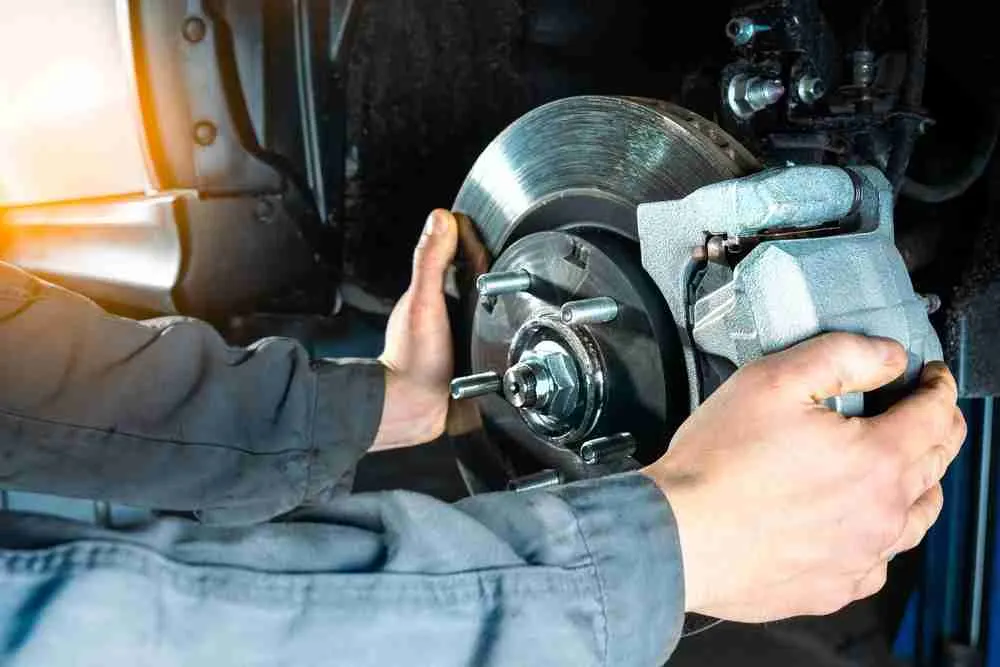
The failed caliper comes off, the brake hose at that wheel is checked, and the new caliper goes on with fresh sealing washers where used.
Step 3: Bleed
We run a brake system bleed to clear the air let in during the swap.
Step 4: Test
Pedal feel is checked, then a road test confirms the pull and drag are gone.
What's included in caliper replacement
Included on the work order
- 01Test that proves which caliper failed
- 02New or remanufactured caliper, your choice on the estimate
- 03New sealing washers on banjo fittings where used
- 04Hose inspection at that wheel
- 05Brake bleed and fluid top-off
- 06Road test with a wheel temperature check
Can a sticking caliper wait?
Need now: call
- A caliper leaking fluid
- A caliper dragging hard enough to heat the wheel
- Any pull under braking
Need later: book
- A torn dust boot on a piston that still moves freely
- Surface rust on the caliper body
What drives the price of a caliper job?
After the new caliper goes on
Over the first week, check that the pedal stays firm and that the wheel does not smell hot after a drive. Coverage on the caliper depends on the part and the repair, and it is written on your invoice. If anything feels off, come back; comebacks go to the front of the line.
Frequently asked questions
Why does one of my wheels smell hot?
A caliper or parking brake that does not release keeps the pads pressed on the rotor, which makes heat and a burning smell. Pull over somewhere safe, let it cool, and call us before driving far.
Should I replace both calipers?
Only if both need it. A healthy caliper on the other side does not have to be changed. We test both sides and show you what we found before you decide.
Can you give me a written estimate before you start?
Yes. The estimate lists the caliper, any pads or rotor it damaged, and the bleed. If we find more once it is apart, we stop and ask before continuing.