
On this page
Route 66 Auto Repair in Upland diagnoses and repairs light and medium-duty diesel pickups and vans. If your truck cranks too long on a cold morning, blows smoke, drops into reduced power on the Cajon Pass or just feels flat with a trailer behind it, we can help. ASE-certified technicians test the fuel, air, glow plug and turbo systems before naming a part, and you get a written estimate before any repair starts.
What is your diesel trying to tell you?
A diesel that acts up makes you nervous, because the parts cost more and the truck usually has a job to do. The good news is that most complaints trace back to a short list of systems. This table matches what you notice to the usual causes and tells you how soon to act. If the truck will not start or runs away on its own, do not keep cranking. Call (909) 646-4111. We accept tow-ins.
| What you notice | Usual causes | Now or later? |
|---|---|---|
| Long crank or no start when the engine is cold | Weak glow plugs or glow plug controller, low battery voltage, air in the fuel, a clogged fuel filter | Soon. It gets worse as nights cool off. |
| Black smoke when you accelerate | Boost leak, restricted air filter, a leaking or sticking injector, a turbo that is not building pressure | Soon. Heavy smoke under load means fuel is not burning fully. |
| White smoke that smells like raw fuel | Low compression on a cylinder, a failed glow plug, injector timing or a misfiring injector | Soon. Book a look within days. |
| White smoke with a sweet smell and falling coolant | Coolant getting into a cylinder through a gasket, cooler or crack | Now. Park it and call us. |
| Reduced power or derate message on the dash | The engine computer protecting itself: a sensor fault, low fuel pressure, a boost fault, an aftertreatment fault | Now. Drive only to a safe place. |
| Water-in-fuel light | Water collected in the fuel and water separator | Now. Drain it and have the filter checked before a long drive. |
| Whistle or hiss that rises with boost | A split intercooler boot, a loose clamp, a cracked charge pipe | Soon. Lost boost costs power and raises exhaust heat. |
| Knock that changes with engine load | A sticking injector, air in the fuel, or internal wear that needs testing | Now until we know which one it is. |
Which diesel trucks and vans do we work on?
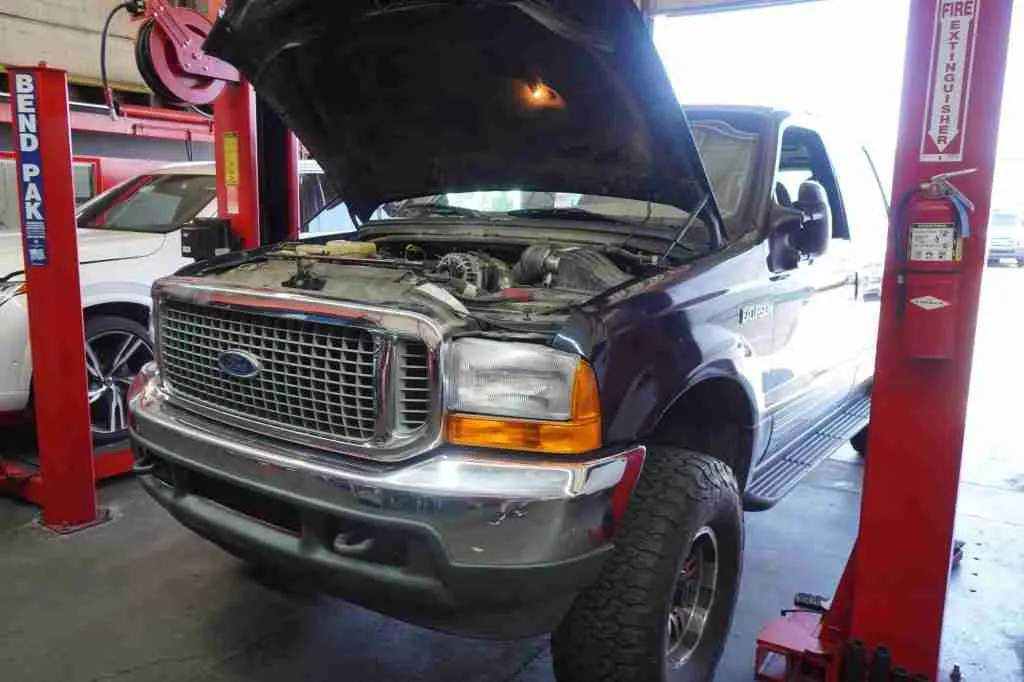
We work on light and medium-duty diesels: half-ton, three-quarter-ton and one-ton pickups, diesel SUVs, and diesel cargo and passenger vans that contractors and delivery crews run up and down Foothill Blvd every day. If you drive something larger, a cab-over box truck or a dually with a heavy service body, call before you drive over so we can tell you honestly whether it fits our bay and our equipment.
Diesels are welcome for routine work too, not just breakdowns. Oil and filter changes, fuel filters, air filters and valve lash checks keep a diesel healthy, and they give us a chance to spot a weeping injector seal or a soft coolant hose before it leaves you stranded on the 210. Our diesel truck owners page covers how we set up a maintenance plan around the way you actually use the truck.
What does diesel smoke color mean?
A light puff at a cold start or a hard pull is normal on many older diesels. Newer trucks with a particulate filter should show almost nothing from the tailpipe. Smoke that you can see in the mirror, or that hangs behind you at a light, is a symptom worth testing. Here is how we read it:
- Black or dark gray: too much fuel for the air available. We check the air filter, boost pressure, intercooler and injector balance first.
- White and fuel-smelling, mostly cold: fuel is going in but not lighting off. Glow plugs, compression and injector spray pattern are the usual suspects.
- White and sweet-smelling, hot or cold: coolant is being burned. That is a stop-driving sign, and we pressure test the cooling system before anything else.
- Blue or blue-gray: engine oil is burning. It can come from a turbo seal, worn rings or valve guides, or a clogged crankcase vent.
- Smoke on a truck with a particulate filter: the filter may be cracked or bypassed, which is its own repair. We explain what we find and what it takes to put the system back to factory form.
Why is my diesel hard to start or stuck in reduced power?
A diesel has no spark plugs. It lights fuel with the heat of compression, so anything that lowers cylinder heat makes a cold start harder. Weak glow plugs, a failing glow plug controller, low cranking speed from a tired battery, and low compression all show up first on the coldest mornings of the year. Air in the fuel does the same thing at any temperature, often after a filter change or when a line has a pinhole leak. Our diesel glow plug replacement page explains how we test each plug before replacing any.
Reduced power, often called derate or limp mode, is the engine computer protecting itself. It limits fuel when it sees a problem it cannot trust, such as rail pressure that does not match what it asked for, boost that runs high or low, an overheating reading, or an aftertreatment fault. Clearing the code without finding the reason usually brings the message back within a few miles. We read the stored and pending codes, then compare live sensor data against the values the engine is asking for. That comparison is what points us to the right system instead of the most expensive one.
Our diesel diagnosis and repair process
Step 1: Listen and write it down
The service writer records when it happens: cold or hot, loaded or empty, uphill or on flat ground, and what you have already had done.
Step 2: State the diagnostic fee
Before testing starts, the counter tells you the diagnostic fee. It applies to approved related repair.
Step 3: Scan and test
We read all modules, compare live data to commanded values, and run the pressure, boost, glow plug or compression tests the symptom calls for.
Step 4: Written estimate
You get a written estimate with each line marked need-now or need-later, plus photos of failed parts when the part is the point.
Step 5: Repair to spec
Approved work is done to the maker's procedure. If the job grows, we stop and ask again before going further.
Step 6: Check and road test
A quality check and a road test under load confirm the fix, and the codes are rechecked before the truck goes home.
What's included in a diesel diagnostic visit
Included on the work order
- 01Symptom interview with notes on the repair order
- 02Full-module scan with stored and pending codes
- 03Live data review for rail pressure, boost and temperatures
- 04Visual check for fuel, oil, coolant and boost leaks
- 05Targeted tests for the symptom you described
- 06Written estimate with need-now and need-later lines
- 07Photos of failed parts when they explain the repair
- 08Road test and code recheck after approved work
Which diesel services do we offer?
Each service below has its own page with symptoms, process and timing. If you are not sure which one you need, start with diesel engine diagnostics and let the testing decide.
- Fuel system: injector repair, fuel pump repair, fuel pressure testing, fuel line and fuel tank repair, and a fuel system flush after contamination.
- Air and boost: turbo boost pressure repair, intercooler repair and air filter replacement.
- Starting: glow plug testing and replacement, battery and cranking checks.
- Engine health: compression testing, valve adjustment, gasket replacement and overhaul planning.
- Maintenance: diesel oil changes, fuel filters, air filters and a written maintenance plan.
- Exhaust: leak repair and diagnosis of exhaust sensor and aftertreatment faults, kept to factory configuration.
Is your diesel problem need-now or need-later?
Need now: call
- Coolant loss with white, sweet-smelling smoke
- A fuel leak on the engine or a strong raw-fuel smell in the cab
- Derate or reduced power that returns after a restart
- Water-in-fuel warning that comes back after draining
Need later: book
- A slightly longer crank only on the coldest mornings
- A light oil mist on the valve cover with a steady level
- An air filter restriction indicator that is close to its mark
- A maintenance interval coming due in the next few weeks
What diesel work will we not do?
We do not remove, bypass or reprogram emissions equipment. That means no particulate filter deletes, no EGR deletes, no DEF system disabling and no aftermarket performance programming. We also do not perform state emissions inspections or sign any emissions certification. Those modifications are illegal on road vehicles in California, and they tend to create new problems for the owner at registration or resale.
What we do is diagnose the fault that sent you looking for a shortcut. A clogged filter often has a cause upstream: a leaking injector, a stuck EGR valve, a bad sensor or a truck that never gets a long enough drive to clean itself. We find that cause, explain it in plain words, and put the repair on a written estimate that keeps the truck in factory form. You can check open recalls on your truck with the NHTSA recall lookup (opens in a new tab) before your visit.
What happens when a diesel needs major engine work?
Sometimes the tests point inside the engine: low compression on several cylinders, coolant in the oil, or heavy blow-by. That is when owners worry most, and it is when a clear plan matters most. We show you the test numbers, explain the options, which can include a gasket job, a head repair, an overhaul or a replacement engine, and tell you honestly when the truck's value makes a big repair a hard sell.
Your written estimate shows every step of the job, including any parts that need inspection or reconditioning, so nothing surprises you on the invoice. Our diesel engine overhaul page walks through how that decision usually goes.
Do we service diesel fleets and work vans?
Yes. Contractors, delivery operators and small fleets use us for diesel pickups and vans. We put unit numbers on invoices, set up A, B and C preventive maintenance intervals around your mileage and hours, and give fleet vehicles priority when the board allows. Payment is by card or cash at pickup, the same as any customer. Our fleet managers page explains how we keep a running history for each unit.
How pricing and timing work for diesel repair
Diesel parts cost more than most gas engine parts, and some jobs take longer because components sit under turbos, intake plumbing or cab structure. The price depends on the engine, the part brand you choose, how much has to come apart to reach it, and whether seized parts such as glow plugs or exhaust bolts need extra time. Phone quotes are ranges until we inspect the truck. Once we do, you get a written estimate, and if the job grows we stop and ask again.
Diesel aftercare
After fuel system work, the engine may idle a little rough for the first few starts while any remaining air works out. After a turbo or intercooler repair, listen for any new whistle and watch for oil at the charge pipe joints. Keep an eye on coolant and oil levels for the first week after any gasket job.
Declined items stay on your repair order, so you have a record of what can wait and why. If a problem comes back, bring the truck in. Comebacks go to the front of the line, and we write the root cause on the repair order. Warranty coverage depends on the part and the repair and is printed on your invoice.
Every diesel engine services page
Each page explains the symptoms, how we test, what the work order includes and what to ask before you approve.
- Diesel Engine Services Overview
- Diesel Engine Diagnostics
- Diesel Fuel Injector Repair
- Diesel Glow Plug Replacement
- Diesel Turbocharger Repair
- Diesel Fuel Pump Repair
- Diesel Engine Overhaul
- Diesel Injector Cleaning
- Diesel Fuel Filter Replacement
- Diesel Exhaust System Repair
- Diesel Engine Tuning
- Diesel Fuel System Diagnostics
- Diesel Turbo Intercooler Repair
- Diesel Fuel Tank Repair
- Diesel Injection Pump Repair
- Diesel Engine Valve Adjustment
- Diesel Fuel Line Repair
- Diesel Air Filter Replacement
- Diesel Oil Change
- Diesel Engine Compression Test
- Diesel Fuel Pressure Testing
- Diesel Turbo Boost Pressure Repair
- Diesel Engine Gasket Replacement
- Diesel Fuel System Flush
- Diesel Injector Nozzle Repair
- Diesel Engine Cooling System Repair
- Diesel Fuel System Bleeding
- Diesel Turbo Wastegate Repair
- Diesel Engine Oil Pump Repair
- Diesel Fuel System Leak Repair
- Diesel Engine Timing Adjustment
- Diesel Exhaust Manifold Repair
- Diesel Fuel Injector Seal Replacement
- Diesel Turbo Oil Line Repair
- Diesel Engine Thermostat Replacement
- Diesel Fuel System Priming
- Diesel Engine Mount Repair
- Diesel Fuel Tank Cleaning
- Diesel Injector Pump Calibration
- Diesel Engine Oil Cooler Repair
- Diesel Turbo Actuator Repair
- Diesel Fuel System Pressure Regulator Repair
- Diesel Engine Crankshaft Repair
- Diesel Fuel Line Pressure Testing
- Diesel Engine Oil Filter Replacement
- Diesel Turbocharger Bearing Repair
- Diesel Fuel System Contamination Test
- Diesel Engine Valve Cover Repair
- Diesel Fuel Injector Line Repair
- Diesel Engine Cooling Fan Repair
- Diesel Fuel System Diagnostic Scan
Videos from the shop
Frequently asked questions
Why is my diesel hard to start when it's cold?
Cold air lowers the heat of compression, so a diesel leans on its glow plugs and a strong battery. One weak glow plug, a failing controller or low cranking speed can make a cold start slow. Air in the fuel does it too. We test each glow plug and the cranking voltage before replacing anything.
What does black smoke from a diesel mean?
It usually means more fuel than the available air can burn. Common causes are a restricted air filter, a boost leak, a turbo that is not building pressure, or a leaking injector. We test boost and check injector balance so the fix matches the cause.
What does white smoke from a diesel mean?
If it smells like fuel and fades as the engine warms, fuel is not lighting off, often from glow plugs, low compression or an injector problem. If it smells sweet and your coolant level is dropping, coolant is being burned. Stop driving and call us for that one.
Why is my diesel in derate?
Derate is the engine computer limiting power to protect the engine. It can be triggered by fuel pressure that does not match what was commanded, a boost fault, overheating or an aftertreatment problem. We read the codes and compare live data to find the real cause instead of just clearing the message.
How often should diesel fuel filters be changed?
Follow the interval in your owner's manual, and shorten it if you buy fuel from many different stations, work in dust, or see the water-in-fuel light often. We drain the water separator and inspect the filter housing during your diesel oil change.
Do you delete or tune diesel emissions systems?
No. We do not remove, bypass or reprogram particulate filters, EGR systems or DEF systems, and we do not install performance programming. We diagnose the fault behind the warning and repair the system to factory form, with a written estimate first.
Can you work on my diesel van or larger truck?
We service light and medium-duty diesel pickups, SUVs and vans. If yours is larger or carries a heavy body, call (909) 646-4111 before you drive over, and we will tell you honestly whether it fits our bay.
Is there a diagnostic fee for diesel problems?
Yes. The counter states the diagnostic fee before any testing begins, and it applies to approved related repair. You then get a written estimate before any repair work starts.