
On this page
Route 66 Auto Repair in Upland diagnoses and repairs automatic transmissions, CVTs, manual gearboxes, clutches and 4WD transfer cases. If your car is slipping, shifting hard, shuddering or leaving red spots in the driveway, we can help. ASE-certified technicians scan the transmission computer, check the fluid, road test the car with you when possible, and hand you a written estimate before any repair begins.
What is your transmission trying to tell you?
A transmission problem feels expensive before anyone has looked at it. Many symptoms that feel like a dying transmission turn out to be low fluid, a sensor, a solenoid or software. Others really are internal wear. This table sorts common complaints by cause and urgency. If the car will not move, stop driving and call (909) 646-4111. We accept tow-ins.
| What you notice | Usual causes | Now or later? |
|---|---|---|
| Engine revs climb but the car does not speed up (slipping) | Low or burnt fluid, worn clutch packs or bands, low line pressure, a worn manual clutch | Now. Slipping creates heat, and heat spreads the damage. |
| Hard clunk into gear or a harsh 1-2 shift | Fluid condition, a sticking solenoid, a broken mount, adaptive shift data that needs a relearn | Soon. Book a look within days. |
| Long pause after moving the lever to Drive or Reverse | Low fluid, internal seal wear, a weak pump, a clogged filter | Soon, and check the fluid level first. |
| Shudder like rolling over rumble strips at 30 to 50 mph | Torque converter clutch shudder, worn fluid, an engine misfire that feels similar | Soon. It often starts small and grows. |
| Stuck in one gear with the check engine light on | Limp mode set by the transmission computer after a solenoid, sensor or pressure fault | Now. Drive only to get off the road. |
| Red or brown spots under the middle of the car | Pan gasket, cooler line, axle or output seal, or a leaking cooler | Depends on the rate. A steady drip is now. |
Why does my transmission slip, shift hard or hesitate?
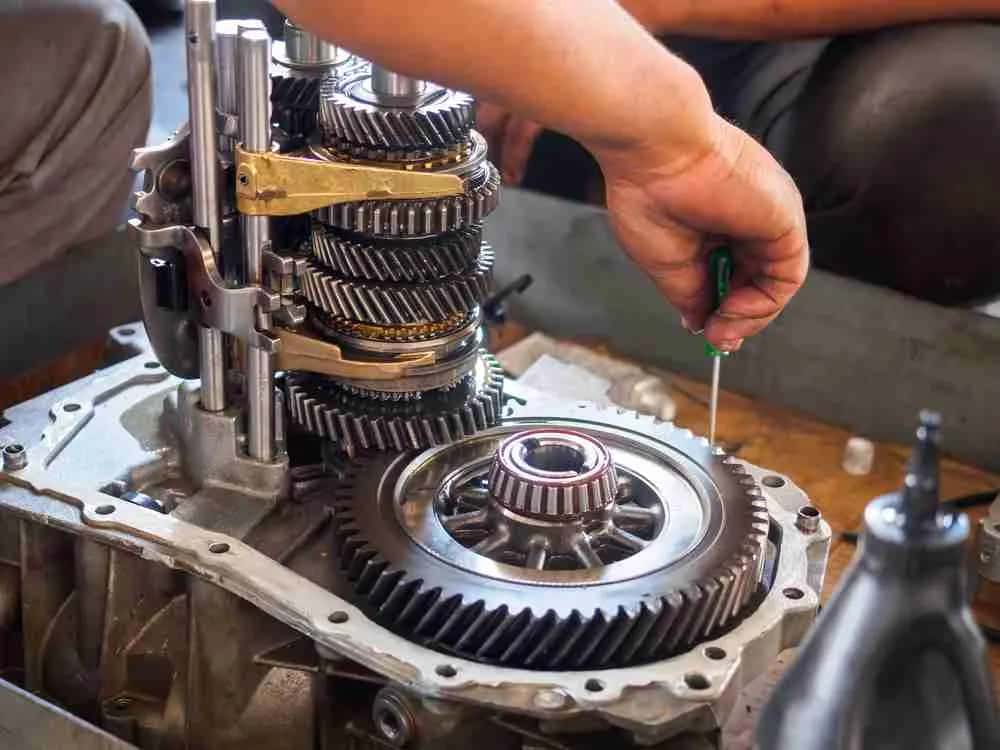
An automatic uses fluid pressure to squeeze clutch packs and bands that hold each gear. When pressure is low or the friction material is worn, the gear does not grab fully. You feel a flare in engine speed during a shift, or the car feels lazy climbing the 210. Low fluid is the first thing we rule out, because it mimics expensive wear.
Hard or late shifts are often a control problem. A computer reads speed sensors, throttle position and fluid temperature, then fires solenoids to move fluid. A weak solenoid, a bad temperature sensor or old adaptive data can make shifts rough. Shudder at steady speed usually comes from the lockup clutch inside the torque converter, though an engine misfire feels similar, so we scan both systems.

What do transmission fluid color and smell mean?
Fluid is the easiest window into a transmission's health. Many newer cars have no dipstick, so the level is checked at a fill plug with the fluid at a set temperature. We do that as part of every transmission condition inspection. Here is what we look for on the rag and in the drain pan:
- Clear red or pink: most automatic fluids start this color. Some newer fluids are amber or another shade, so we compare against the fluid your maker specifies.
- Brown or dark red: the fluid has been heat-aged. It still lubricates, but its friction behavior has changed, and it is time to plan a service.
- Dark with a burnt smell: clutch material has overheated. This often goes with slipping, and new fluid alone will not repair the worn parts.
- Milky pink, like a strawberry shake: coolant has mixed with the fluid, often from a failed cooler inside the radiator. Stop driving and call us.
- Glitter or dark paste in the pan: metal or friction debris. A small amount can be normal wear. A lot means internal damage, and we show you a photo.
Is a transmission flush better than a drain and fill?
Neither is better in every case. A drain and fill is simple and gentle. A flush, or fluid exchange, replaces more old fluid in one visit. The right choice depends on the design, the fluid's condition and the service history.
One point matters most: a flush is not a cure for slipping. Fresh fluid cannot rebuild worn clutch packs, and it can even make slipping more noticeable. When a car already slips, we test before we service. See our transmission flush and transmission fluid change pages.
| Question | Drain and fill | Flush (fluid exchange) |
|---|---|---|
| How much old fluid is replaced? | Only what drains from the pan. The rest stays in the torque converter, cooler and lines. | Most of it, because the exchange runs until outgoing fluid matches the new fluid. |
| When does it fit best? | Regular maintenance, sealed units, and cars with an unknown or thin service history | Cars on a regular schedule where the fluid is aged but not burnt |
| Can the filter be changed? | Yes, when the filter is reachable through the pan | Only if the pan is dropped as a separate step |
| Will it fix slipping? | No | No. Slipping needs diagnosis, not new fluid. |
Is CVT fluid service different from a regular automatic?
Yes. A CVT, or continuously variable transmission, has no fixed gears. A steel belt or chain runs between two pulleys that change width, and it relies on a fluid with very specific friction properties. CVT fluid must match the maker's specification. The wrong fluid can let the belt slip on the pulleys, and that damage cannot be flushed out.
CVT symptoms differ too: a whine that rises with speed, a shudder from a stop, or reduced power with a warning light while climbing on a hot day. We check the level by the maker's procedure, look up software updates, and use only the specified fluid.
How do I know if my clutch is going out?
A manual transmission connects to the engine through a clutch: a friction disc squeezed between the flywheel and a spring-loaded pressure plate. Wear shows up clearly. Engine revs rise without the car speeding up, especially in a high gear on a grade. The pedal engages higher than it used to. You smell burnt paper after a hill start.
Some problems are hydraulic, not wear. A pedal that sinks, sticks down or feels spongy points to the master or slave cylinder or a line. Grinding into every gear suggests the clutch is not releasing. Grinding into one gear points to a worn synchronizer. Our clutch repair diagnosis checks the whole chain before any quote.
What does a transfer case do on a 4WD vehicle?
On a 4WD truck or SUV, the transfer case sits behind the transmission and splits power between the front and rear axles. Most use an internal chain, and many shift with an electric motor. Its fluid is easy to forget, because nothing warns you when it wears out.
Warning signs include a rattle or grind from under the front seats, a 4WD light that flashes or will not engage, and binding in tight turns. Binding on dry pavement is expected with part-time 4WD, which belongs on loose surfaces only. We change the fluid with the type your maker calls for, check the shift motor and look for chain stretch. Our transfer case service page has the details.
Why does towing in Inland Empire heat hurt transmissions?
Heat ages transmission fluid faster than anything else you control. Pulling a trailer up the Cajon Pass in August pushes fluid temperature well above normal. Hot fluid oxidizes, loses its friction properties and hardens seals. Many trucks add a separate transmission cooler, a small radiator for fluid heat.
Most cars cool transmission fluid through a section of the engine radiator, so a cooling system problem becomes a transmission problem quickly. We check cooler lines for rub-through, look for a clogged cooler, and talk with you about an auxiliary cooler if you tow often. Before a move, the free towing inspection checks your hookup: coupler and ball size, pin, chains, lights and tongue weight against U-Haul requirements. A mechanical check of your tow vehicle's transmission, brakes and cooling is a normal paid inspection, and we tell you that up front.
When does the rebuild or replacement conversation happen?
Only after testing shows internal damage: heavy debris in the pan, a failed pressure test, stored clutch slip codes, or a road test that still shows the fault once simple causes are ruled out. Until then, we look at external repairs first, such as a solenoid, speed sensor, connector, valve body, cooler or seal.
When the transmission does need major work, we lay out the choices: rebuilding your unit, installing a remanufactured unit, or in some cases a used unit, along with how each affects cost, timing and warranty. Warranty depends on the part and the repair and is written on the invoice. Your written estimate shows every step of the job, and if anything changes once work begins, we stop and call you before going further.
Our transmission diagnosis and repair process
Step 1: Listen and write it down
The service writer records when the problem happens: cold or hot, speed, gear, grade.
Step 2: Scan and check fluid
We read transmission and engine codes, check live data, and check fluid level and condition by the maker's procedure.
Step 3: Road test
A technician drives the car to feel the fault, watching shift timing, slip and temperature on the scan tool.
Step 4: Pinpoint tests
Depending on the fault: pressure testing, solenoid and wiring checks, a leak trace, or a pan drop to inspect debris.
Step 5: Written estimate
Each line is marked need-now or need-later. Nothing is repaired until you approve it.
Step 6: Repair, check and road test
Work is done to spec, adaptive values are reset where needed, and the car is road tested before pickup.
What's included in a transmission diagnosis
Included on the work order
- 01Customer interview and written symptom notes
- 02Transmission and engine computer scan with live data
- 03Fluid level and condition check by the maker's procedure
- 04Leak inspection at the pan, lines, cooler and seals
- 05Mount and shift linkage check
- 06Road test with a technician
- 07Photos of fluid, debris or failed parts when they matter
- 08Written estimate with need-now and need-later lines
Is it a need-now or need-later transmission repair?
Need now: call
- Slipping, flaring or no movement in a gear
- Limp mode, stuck in one gear with a warning light
- Milky fluid, or a leak that leaves a puddle overnight
- A clutch pedal that sinks to the floor
Need later: book
- Dark fluid with no shifting complaint
- A slight seep at the pan gasket
- Scheduled transfer case or manual gearbox fluid service
- A mild shift feel change that a relearn may address
How pricing and timing work for transmission repair
Fluid services and many external repairs are often same-day when the board allows, so call before you drive over. Jobs that remove the transmission take longer, and parts availability sets the pace. We give you a window we can hold and text you if it will slip. If a heavy removal needs two technicians, we explain that before the clock starts.
What to expect after transmission work
After a fluid service or control repair, many transmissions relearn shift timing over several drives, so shifts may feel slightly different before they settle. Skip towing and hard launches for a couple of days if we say the unit is relearning, and check for spots during the first week.
If a symptom comes back, call us. Comebacks go to the front of the line, and the root cause is written on the repair order. Declined items stay on the repair order so you can plan them. The ASE (opens in a new tab) site explains what our technicians' certification covers.
Every transmission services page
Each page explains the symptoms, how we test, what the work order includes and what to ask before you approve.
- Transmission Services Overview
- Transmission Repair
- Transmission Flush
- Transmission Fluid Change
- Torque Converter Repair
- Torque Converter Clutch Repair
- Transmission Solenoid Replacement
- Shift Solenoid Repair
- Gearbox Overhaul
- Gearbox Bearing Replacement
- Gearbox Synchronizer Repair
- Gearbox Oil Pump Repair
- Clutch Repair
- Clutch Plate Replacement
- Clutch Disc Replacement
- Pressure Plate Repair
- Clutch Pressure Plate Alignment
- Flywheel Resurfacing
- Clutch Cable Adjustment
- Hydraulic Clutch Service
- Clutch Master Cylinder Repair
- Clutch Slave Cylinder Repair
- Clutch Pedal Adjustment
- Clutch Release Bearing Repair
- Clutch Release Arm Repair
- Clutch Fork Repair
- Clutch Hydraulic Line Repair
- Clutch System Bleeding
- Clutch Adjustment
- Transmission Cooler Repair
- Transmission Cooler Line Repair
- Transmission Cooler Installation
- Transfer Case Service
- Transfer Case Fluid Change
- Transfer Case Fluid Flush
- Transfer Case Chain Replacement
- Transfer Case Bearing Replacement
- Transmission Mount Replacement
- Transmission Pan Gasket Repair
- Transmission Filter Replacement
- Transmission Linkage Adjustment
- Transmission Fluid Leak Repair
- Transmission Control Module Diagnostics
- Transmission Valve Body Repair
- Transmission Seal Replacement
- Transmission Input Shaft Repair
- Transmission Output Shaft Repair
- Output Shaft Seal Replacement
- Transmission Fluid Pressure Testing
- Transmission Shift Cable Repair
- Transmission Speed Sensor Repair
- Transmission Fluid Temperature Sensor Repair
- Transmission Case Repair
- Transmission Fluid Analysis
- Transmission Fluid Cooler Installation
Frequently asked questions
Why is my transmission slipping?
The common causes are low or burnt fluid, worn internal clutch packs, low hydraulic pressure from a pump or seal, or a solenoid fault. On a manual, it is usually a worn clutch disc. We check fluid and codes first, then road test, because low fluid and worn parts feel the same from the driver's seat.
Why does my car hesitate when I shift into drive?
A pause before the car engages usually means pressure is slow to build. Low fluid is the first check. After that, we look at the filter, internal seals, the pump and the solenoid that controls engagement. A short pause that shows up only on a cold morning is often less urgent than one that is getting longer each week.
What does pink fluid under my car mean?
Bright pink or red drops under the middle of the car are usually transmission fluid, from a pan gasket, cooler line or seal. Pink fluid near the front can also be coolant on some cars. Put a piece of cardboard under the car overnight and bring it in. The color and spot location help us trace the leak faster.
Is CVT fluid service different from a regular automatic?
Yes. A CVT uses a belt and pulleys that depend on a fluid with exact friction properties, so the fluid must match the maker's specification. Level checks follow the maker's temperature procedure too. We use only the specified fluid and check for software updates that change how the CVT behaves.
What does a rattle from the transfer case mean?
A rattle from under the front seats on a 4WD vehicle often points to a stretched transfer case chain, low fluid or worn bearings. It can also be a loose heat shield nearby. We check fluid level and condition, inspect mounts and shields, and road test in each drive mode before recommending any repair.
Do you rebuild transmissions?
When testing shows internal damage, we explain the options, including rebuilding your unit or installing a remanufactured one, and what each means for cost, timing and warranty. Your written estimate shows every step of the job. We do not start any major work without your approval.
Can I drive to the shop if my transmission is slipping?
If it is a short trip on surface streets and the car still moves normally in most gears, driving gently is usually fine. If it will not move, flares badly or is stuck in one gear with a warning light, call us at (909) 646-4111. We accept tow-ins, and towing often saves the transmission from more damage.