
On this page
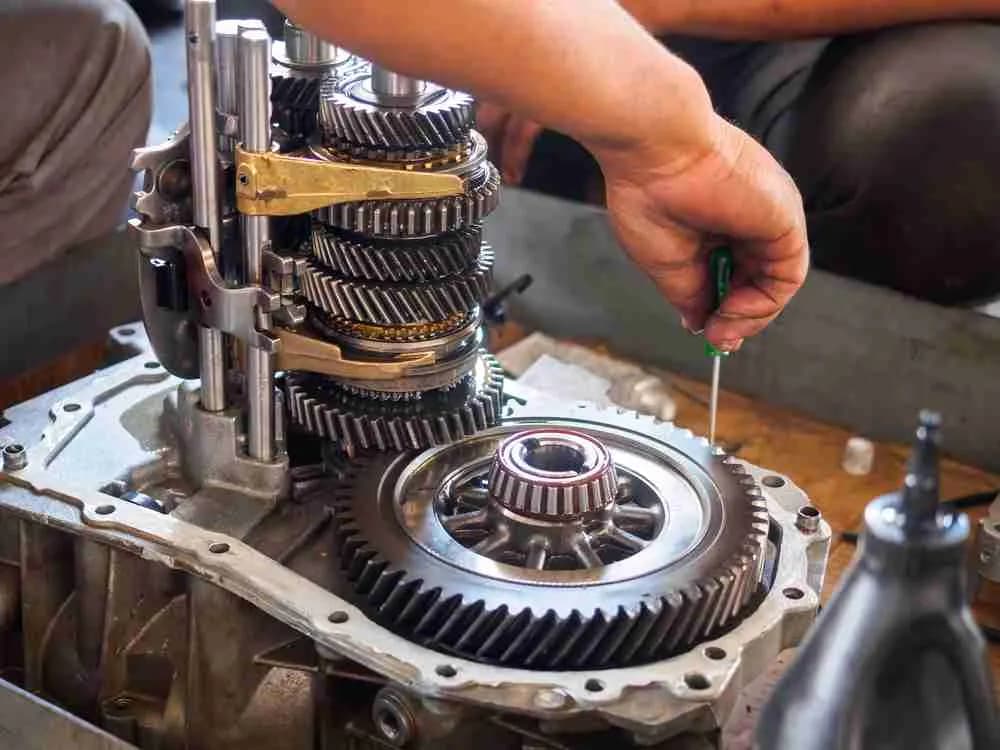
Route 66 Auto Repair in Upland repairs clutch forks, the lever inside the bellhousing that pushes the release bearing into the pressure plate. The fork pivots on a ball stud or shaft and is held by a small clip. When the fork cracks, the pivot wears, or the clip pops off, the pedal can lose resistance and the clutch will not release. Because the fork sits inside the bellhousing, we confirm the fault from outside before removing the transmission.
What are the signs of a clutch fork problem?
- The pedal suddenly has little or no resistance, yet no fluid is leaking
- The clutch will not release, so gears grind or cannot be selected
- A clunk from the bellhousing area when pressing the pedal
- A slave cylinder rod that moves but the clutch does not respond
- Uneven wear on the release bearing when it is removed
How do we check the fork before removing the transmission?
On an external slave design, we watch the slave rod and the fork end through the bellhousing opening while a helper presses the pedal. If the rod moves fully but the fork barely does, or flexes, the fork or its pivot has failed. We also check the hydraulics, since a weak clutch slave cylinder can look similar. On cable or linkage systems, the clutch release arm outside the case is checked too.
A worn pivot ball lets the fork tilt, which loads the bearing unevenly and causes noise and wear. A fork that slipped off its pivot usually needs the transmission removed to reset or replace.
Our clutch fork repair process
Step 1: Rule out hydraulics
Fluid level, slave movement and linkage are checked first.
Step 2: Observe the fork
Where access allows, fork movement is compared with slave or cable movement.
Step 3: Remove and inspect
With approval, the transmission comes out and the fork, pivot, clip and bearing are examined.
Step 4: Replace and grease
Worn parts are replaced, contact points are greased as specified, and the car is road tested.
What's included in clutch fork repair
Included on the work order
- 01Hydraulic and linkage checks
- 02Fork movement observation
- 03Fork, pivot ball and retaining clip replacement as needed
- 04Release bearing inspection
- 05Clutch condition report
- 06Road test
Need-now or need-later?
Need now: call
- A clutch that will not release
- A pedal with no resistance
Need later: book
- Slight noise from uneven bearing contact with good release
How pricing and timing work
Aftercare
The pedal should feel consistent from the first drive. If the engagement point moves or noise returns, come back. Our clutch release bearing repair page explains related noise.
Frequently asked questions
Why did my clutch pedal suddenly go limp?
A failed hydraulic part is the most common cause, but a broken fork or a fork that slipped off its pivot can do the same thing. We check the hydraulics first.
Should the release bearing be replaced with the fork?
Usually yes. The bearing is inexpensive, and a worn fork often wears it unevenly. With the transmission out, it makes sense.
Can a clutch fork be welded?
We replace cracked forks rather than weld them, because a repaired fork can fail again under load.