
On this page
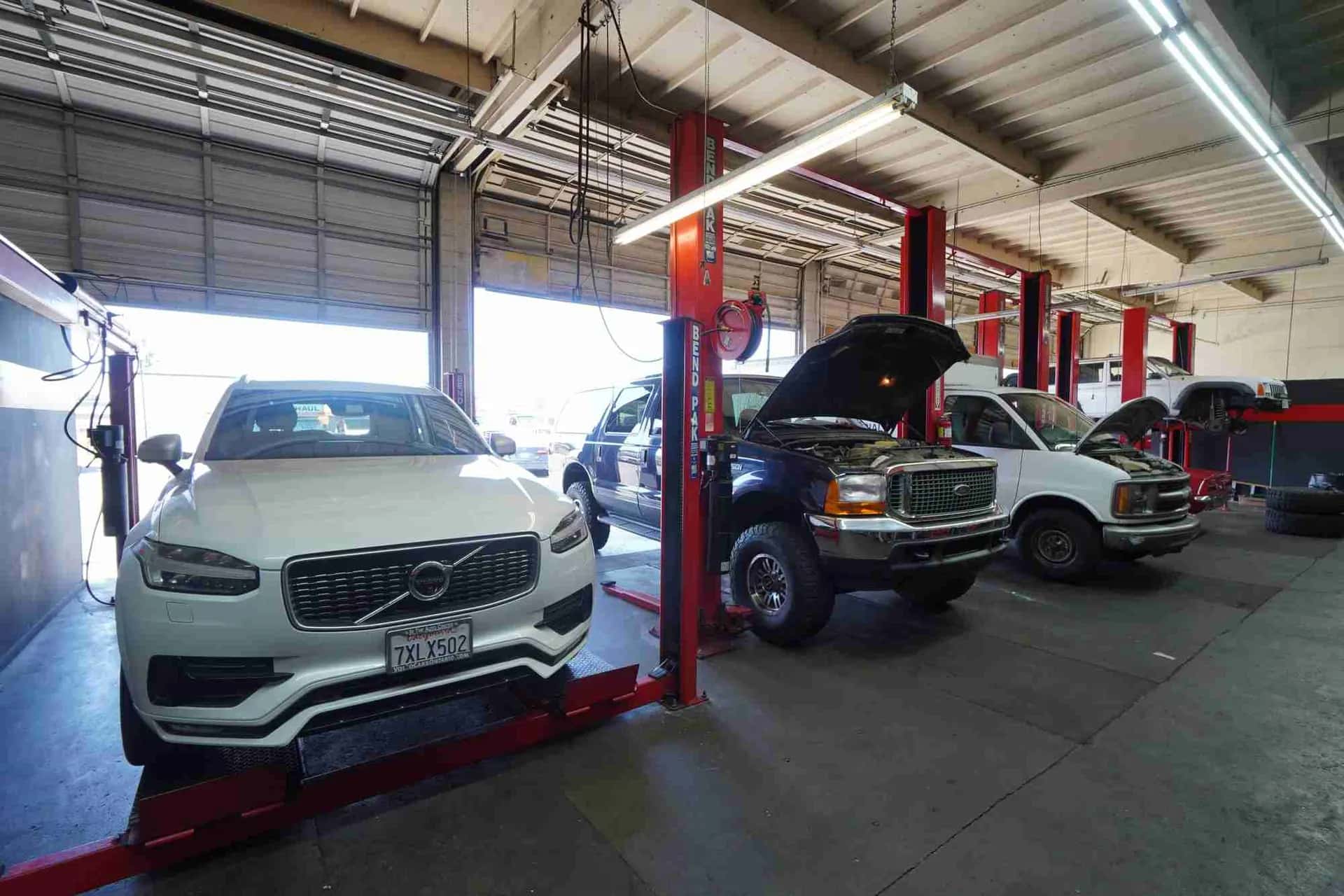
A wheel bearing inspection at Route 66 Auto Repair in Upland finds which wheel is making that hum, growl or rumble and whether the bearing has play. Bearing noise is easy to confuse with tire noise, so we test both. We road-test with load shifted left and right, check each wheel for play and roughness on the lift, and write down which bearing is worn and how urgent it is.
Signs of a worn wheel bearing
- A hum or growl that rises with speed and changes when you change lanes
- A rumble that gets louder in long sweeping turns on the 210
- Looseness felt through the steering wheel
- An ABS light, since many sensors live in the hub
- Uneven brake pad wear on one wheel
How do we find the bad bearing?
Bearing noise changes with load. On the road test, a gentle sweep to the left loads the right-side bearings, and a sweep to the right loads the left. If the hum grows in one direction, that points to a side. We compare that with tire tread, because cupped or uneven tires can make a similar sound.
On the lift, we grip each wheel at 12 and 6 o'clock and rock it. Play there, with the brakes and suspension ruled out, points to the bearing. We spin the wheel by hand and feel for roughness. After a drive, a bearing that runs hotter than the one across the axle is another clue. For quiet, borderline cases, a chassis listening tool clipped near each hub helps confirm the side before any part is ordered.
What the bearing report shows
- Which wheel the noise comes from, and how it was confirmed
- Play and roughness at each wheel
- Tire wear that might mimic bearing noise
- ABS sensor or hub-related codes from the scan
- Whether the bearing is pressed in or part of a bolt-in hub
Our wheel bearing inspection steps
Step 1: Load road test
We sweep left and right at speed to isolate the noisy side.
Step 2: Rock and spin
Each wheel is checked on the lift for play and roughness.
Step 3: Confirm
Temperature or a chassis listening tool confirms the side when needed.
Step 4: Report
You get the finding, how we know, and the estimate.
What's included in a wheel bearing inspection
Included on the work order
- 01Road test with load changes
- 02Play check at each wheel
- 03Hand-spin roughness check
- 04Tire wear comparison
- 05Scan for ABS sensor codes
- 06Written findings
Is a noisy bearing need-now?
Need now: call
- A bearing with play you can feel by hand
- A grinding sound or a bearing running hot
- An ABS fault caused by a failing hub
Need later: book
- A faint hum with no play and normal temperature
- Noise traced to tires rather than the bearing
How pricing and timing work
What to read next
A worn bearing leads to wheel bearing replacement or wheel hub assembly repair on bolt-in designs. If the noise turns out to be tires, see tire services. An ABS light after the repair may need the ABS wheel speed sensor checked too.
Frequently asked questions
How long can I drive on a noisy wheel bearing?
It depends on the play and heat. A faint hum with no play can often be scheduled. Grinding, heat or play means it should be replaced soon, because a failed bearing can lock or let the wheel wobble.
Is it the tire or the bearing?
Both can hum. The road test with load changes and the tire tread check tell them apart. The report states which we found and how.
Should I replace both sides?
Only if both are worn. Bearings do not have to be replaced in pairs. We list each wheel separately.