
On this page
Route 66 Auto Repair in Upland replaces worn universal joints, the small cross-shaped parts at each end of a driveshaft that let it flex as your suspension moves. A worn U-joint usually starts as a chirp or a clunk and gets louder over time. Left alone, it can come apart and drop the shaft. ASE-certified technicians check each joint for play by hand, show you what they find, and give you a written estimate before replacing anything.
What are the signs of a bad U-joint?
- A single clunk when you shift into drive or reverse
- A chirp at low speed that sounds like a bird under the truck
- Reddish rust dust around the bearing caps
- A vibration when you accelerate that eases when you coast
Why do U-joints wear out?
Each U-joint has four small caps full of needle bearings. Some joints have a grease fitting and many sealed ones do not. Once the grease is gone or water gets past a seal, the needles wear flat and the joint develops play. Towing, heavy loads, lifted suspension and short trips with lots of shifting all speed up that wear.
Rust dust around the caps means the joint is already running dry. Greasing at every service slows wear on joints with fittings, but it cannot fix one that already has play. On four-wheel-drive trucks, the front shaft and transfer case output get the same check.
How do we check a U-joint?
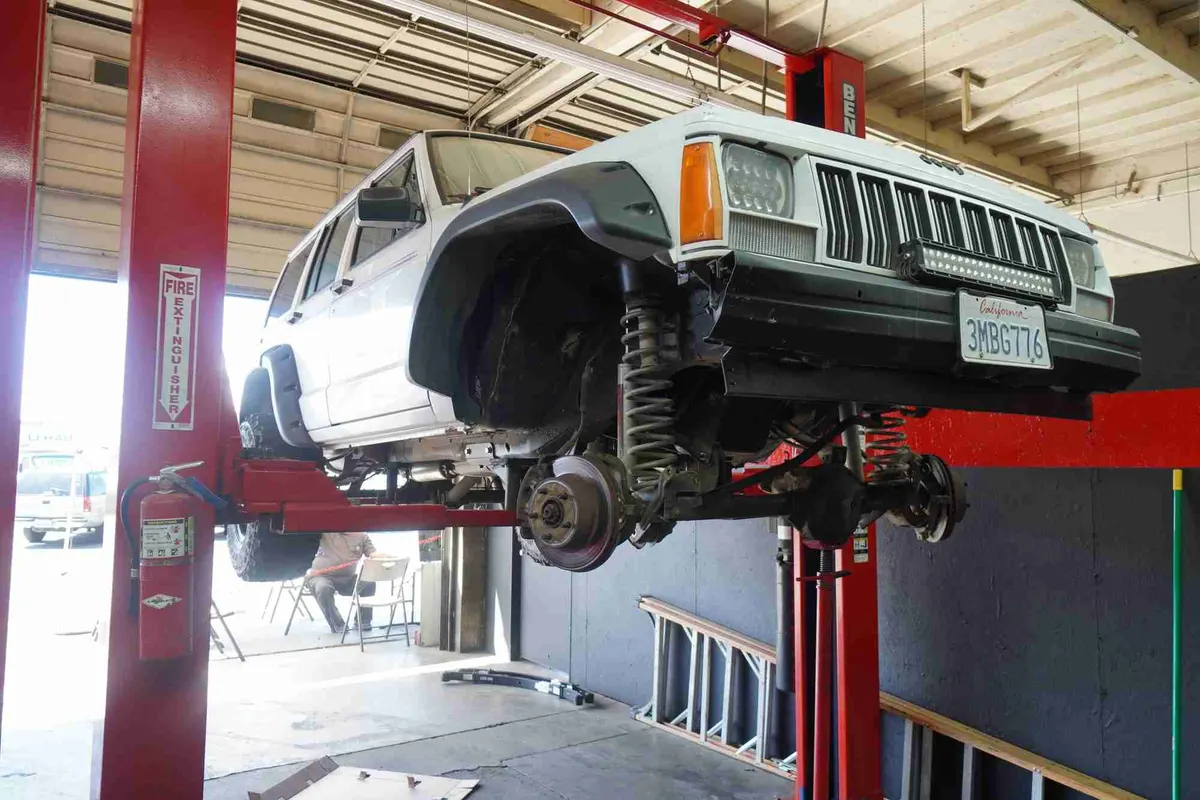
With the vehicle on the lift and in neutral, a technician grips the shaft next to the joint and twists and lifts it against the yoke. A good joint has no play. Any click, lift or roughness means it is worn. We check the joint at the other end too, since they usually wear together, and we look at the whole driveshaft for other causes of vibration.
Our U-joint replacement process
Step 1: Confirm the joint
We check for play at each joint and photograph the worn one so you can see it.
Step 2: Mark and remove
We mark the shaft's position so it goes back in balance, then remove it from the vehicle.
Step 3: Replace the joint
We press out the old joint, install the new one with its retaining clips, and grease it if it has a fitting. Your written estimate shows every step.
Step 4: Reinstall and road-test
We torque the flange bolts to specification and drive the vehicle to confirm the clunk or chirp is gone.
What's included in U-joint replacement
Included on the work order
- 01Play check on every U-joint on the shaft
- 02Photo of the worn joint
- 03Shaft position marked before removal
- 04New joint installed with retaining clips
- 05Road test after the repair
Is U-joint replacement need-now or need-later?
Need now: call
- A joint with play you can feel by hand
- A metal screech or clanking under the vehicle
- Missing bearing caps or a broken retaining clip
Need later: book
- A dry joint with a grease fitting and no play yet
- Light surface rust on the caps with no noise
How U-joint pricing and timing work
After a U-joint replacement
If your new joint has a grease fitting, ask for it to be greased at every oil change. Listen for any new chirp over the next week. If you tow, a quick look underneath after the first trip is a good habit. Anything that sounds wrong goes to the front of the line.
Frequently asked questions
How long can I drive on a bad U-joint?
There is no safe number of miles. A joint with play can last weeks or can fail on your next freeway on-ramp. If you hear a clunk or chirp, book a visit soon. If you hear scraping or feel heavy shaking, pull over safely and call for a tow.
Should I replace both U-joints at once?
Often, yes. The joints at each end carry the same load, so when one is worn the other is usually close. We check both and tell you which one is worn and which one can wait, with each line marked on the estimate.
Can a bad U-joint damage anything else?
Yes. A loose joint can wear the transmission tail seal or the pinion seal and start a leak. If it breaks, the shaft can strike the exhaust or fuel lines, which is why play counts as need-now.