
On this page
Alternator testing at Route 66 Auto Repair in Upland answers a narrow question: is the alternator itself bad? Batteries, belts and wires can all make a healthy alternator look guilty. We test the unit's output directly, check whether it responds to the computer's command, and listen for bearing noise. Only then do we recommend replacing it.
What makes a good alternator look bad?
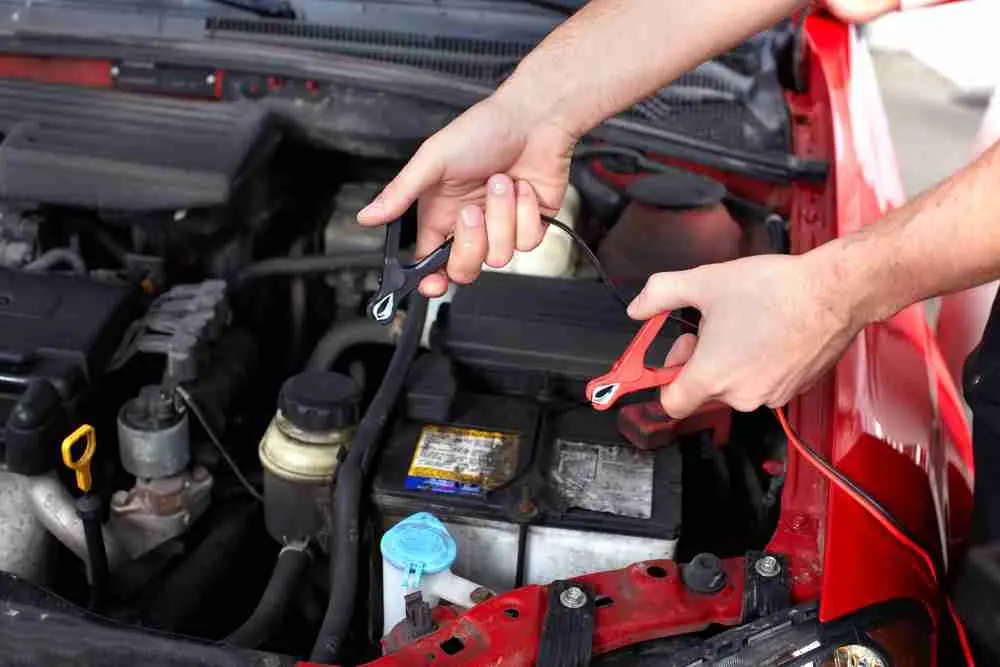
- A worn battery that soaks up charge and never fills
- A loose or glazed belt that slips under load
- A corroded charge wire or alternator ground
- A blown fuse link between the alternator and the battery
- A computer command problem on cars with controlled charging
How do we test the alternator itself?
On the car, we load the electrical system and measure current at the alternator's output wire with an inductive clamp, then compare that number with the unit's rating. A healthy alternator comes close. We also check voltage right at the alternator's output stud, so a bad wire downstream cannot fool us.
Many newer alternators take a control signal from the engine computer. We check that the signal is present and that the alternator responds. When results are unclear, a removed unit can be bench tested. Our charging system test looks at the whole loop, while this page is the component-level check.
Our alternator testing process
Step 1: Rule out the battery
The battery is charged and tested so it does not skew the result.
Step 2: Measure output
Current and voltage are measured at the alternator under full load.
Step 3: Check control
We confirm the field or control signal and the alternator's response.
Step 4: Listen and spin
With the belt off, we spin the pulley to feel for rough bearings.
What's included
Included on the work order
- 01Battery charge and health check
- 02Output current against the alternator's rating
- 03Voltage at the output stud
- 04Control signal check on computer-controlled systems
- 05Pulley and bearing feel test
- 06Written results and a plain recommendation
What the results lead to
A low output number leads to alternator repair. Rough bearings may mean alternator bearing replacement or a full unit. Voltage that runs too high points to the voltage regulator.
Now or later?
Need now: call
- Output well below rating
- Overcharging voltage
Need later: book
- Slight bearing roughness with good output
How pricing and timing work
Aftercare
If the alternator passed, keep an eye on the battery light. Share any new symptom with us, since the fault may be elsewhere.
Frequently asked questions
Can a parts store test my alternator?
Some can bench test a removed unit. That misses wiring, belt and control problems on the car, which is why we test on the vehicle first.
Why did my alternator test fine but my battery keeps dying?
Look for a parasitic drain or a worn battery. We can run an overnight drain test to find it.
Does the alternator make noise when failing?
It can whine from a failing diode or grind from worn bearings. Noise alone is not proof, so we test output too.