
On this page
Found a nail in your tread? Route 66 Auto Repair in Upland patches repairable punctures the way tire makers call for: tire off the rim, inside inspected, and a combined patch and plug sealed from the inside. If the hole is in the sidewall or shoulder, we will not patch it, and we show you why. The goal is a repair you can trust at freeway speed on the 10, not one that holds until the next hot day.
What is the difference between a patch and a plug?
A plug is a sticky cord pushed into the hole from outside. It stops the air for now, but nobody has looked inside the tire, and the injury channel is not sealed against moisture that can rust the steel belts. A patch alone, glued to the liner, seals the inside but leaves the hole open to water.
The repair we use is a patch-plug combination, a single unit with a stem that fills the injury and a patch that bonds to the inner liner. It needs the tire off the wheel, which is exactly the point: it lets us find liner damage from running low that would make any repair unsafe.
The size limit behind that second rule is published, not improvised. Industry repair guidance from the tire makers limits a repair to a puncture no larger than about 1/4 inch in diameter, located in the crown of the tread between the outermost grooves, with no overlapping earlier repair. A nail or screw almost always falls inside that; a gash or a sidewall injury does not. If your tire maker or vehicle maker sets a tighter rule, that one wins and we replace instead.
When can a flat be patched?
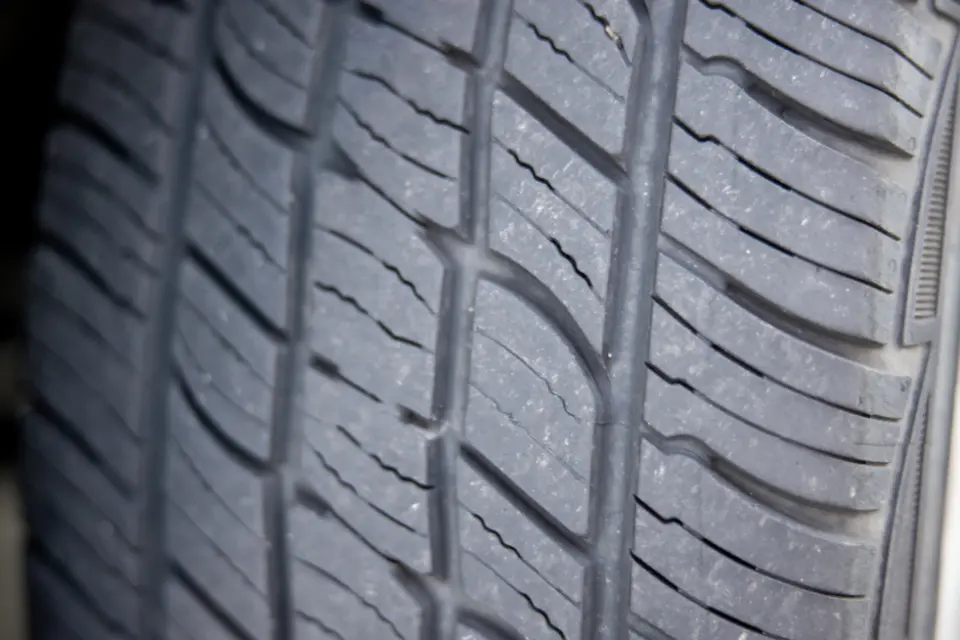
- The puncture sits in the center tread area, between the outer grooves.
- The hole is within the maximum size the tire maker allows, typical of a nail or screw.
- The inner liner shows no creasing, rubber dust or heat damage from driving flat.
- The new repair will not overlap an earlier one.
- Sidewall and shoulder injuries are never patched; that tire is replaced.
Our flat tire patching process
Step 1: Mark and remove
We mark the puncture, note the valve position and demount the tire from the wheel.
Step 2: Inspect inside
The liner is checked by hand and eye for damage, and the object's path is traced.
Step 3: Prepare the injury
The channel is cleaned out and the liner is buffed and cleaned around the hole.
Step 4: Install the repair
A patch-plug unit is pulled through and rolled down against the liner, then sealed.
Step 5: Remount and check
The tire is remounted, balanced, leak-tested and torqued to spec on the car.
What's included in a patch
Included on the work order
- 01Demount and inside inspection of the tire
- 02Patch-plug combination repair from inside
- 03Leak test after remounting
- 04Wheel rebalance
- 05Lug nut torque and pressure set
Need-now or need-later?
Need now: call
- A nail in a tire that is already losing air
- Any puncture near the shoulder or sidewall
- A roadside plug that is still leaking
Need later: book
- A nail head in the tread with no air loss yet, booked within days
- A plug that is holding air but needs a proper inside repair
How pricing and timing work
Frequently asked questions
Should I pull the nail out myself?
No. Leave it in. The nail often slows the leak. Check the pressure, add air if needed and drive gently to us, or fit the spare if the tire is losing air quickly.
How many times can a tire be patched?
There is no fixed count, but repairs cannot overlap and the tire maker's rules apply. Several repairs clustered together, or a tire with other wear, is usually a sign to replace it.
Will a patched tire be safe on the freeway?
A proper inside repair within the tire maker's limits restores the tire for normal driving. We follow the tire maker's rules, including any limits on speed-rated or run-flat tires.