
On this page
Front-to-back rotation swaps the front and rear tires on the same side of the car without crossing them over. Route 66 Auto Repair in Upland uses it for directional tires and for vehicles whose makers call for it. It keeps each tire rolling the way it was designed to, while still sharing the heavier front wear across the set.
How do you know your tires are directional?
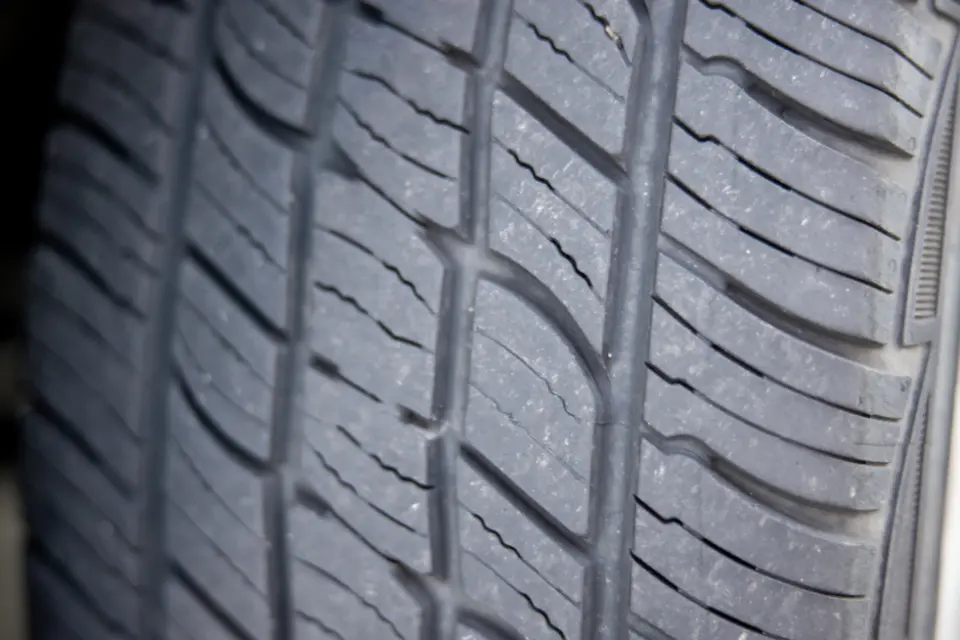
Look at the sidewall for an arrow and the word ROTATION. Directional tread usually forms a V or chevron pointing forward at the top of the tire. That shape moves water out from the center on wet roads, which is why a directional tire mounted backward loses wet grip, the thing you want most in a sudden Inland Empire downpour.
Asymmetric tires are different. They have an OUTSIDE marking but can roll either way, so they can often be crossed. We read the sidewalls on every car before choosing the pattern.
What are the limits of a same-side rotation?
- Left and right tires never trade places, so side-to-side wear differences stay put.
- Road crown can wear the passenger-side tires a little differently over time.
- Shorter intervals help, since there is only one swap per side.
- To move a directional tire to the other side, it must be dismounted and remounted on its wheel, which we can quote if the wear calls for it.
Our front-to-back rotation steps
Step 1: Confirm direction
We check each tire's arrow and confirm all four point forward on their current sides.
Step 2: Swap on each side
Front and rear tires trade places on the left, then on the right.
Step 3: Inspect and measure
Tread depth is recorded and brake and steering parts are checked with the wheels off.
Step 4: Torque and set
Lug nuts are torqued to spec and pressures are set to the placard front and rear values.
What's included
Included on the work order
- 01Direction check on every tire
- 02Same-side front and rear swap
- 03Tread depth readings on the repair order
- 04Front and rear pressures set to the placard
- 05Lug nut torque in a star pattern
Need-now or need-later?
Need now: call
- A directional tire found mounted backward
- Front tires near the wear bars
Need later: book
- A remount to move a tire across sides when wear differs
- Shortening your rotation interval
How pricing and timing work
Frequently asked questions
What happens if a directional tire is mounted backward?
It still holds air and rolls, but it moves water poorly, so wet traction drops and it may be noisier. We remount it the right way on its wheel.
Do front and rear tires need different pressures?
Some vehicles list different front and rear values on the door placard. When tires move between axles, we set each to the pressure for its new position.
Can I use front-to-back rotation on non-directional tires?
Yes, if your vehicle maker allows it. Many trucks and rear-drive cars list it as an option. We follow the pattern in your owner's manual.