
On this page
A tread inspection tells you how much grip your tires have left and roughly how long they will last. Route 66 Auto Repair in Upland measures tread depth at several points on each tire, reads the date code and checks the sidewalls. You get the numbers in writing, so you can plan new tires instead of being surprised by them on a wet 210.
How much tread is enough?
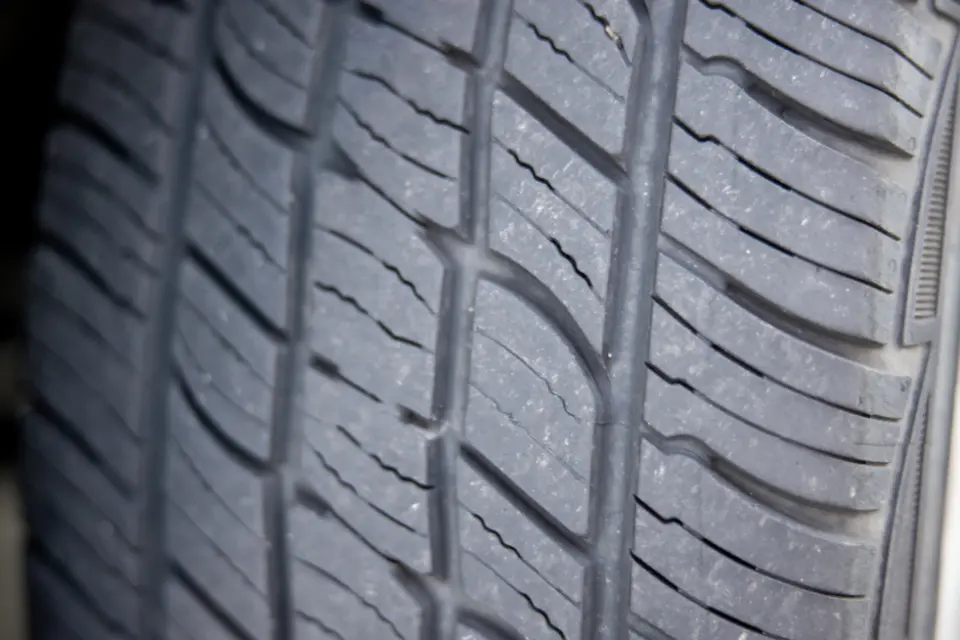
Tread depth is measured in 32nds of an inch. New passenger tires usually start around 10 or 11. The legal minimum in most states is 2/32, which is where the wear bars molded into the grooves sit flush with the tread. At that point wet braking is already poor.
Rain is rare here, which is exactly why the first storm catches people out: oil on the road lifts and worn tires hydroplane sooner. Many tire makers suggest replacing well before the bars, and we flag anything near 4/32 so you can plan. The penny test is a rough home check, but a gauge reading at several grooves is far more telling.
What else does a tread inspection cover?
- Depth at the inner, center and outer grooves, since uneven wear hides on the inside edge.
- The DOT date code: the last four digits are the week and year the tire was made.
- Cracks in the sidewall or between tread blocks from sun and heat.
- Objects in the tread that have not caused a leak yet.
- Matching tread depth across the set on all-wheel-drive vehicles.
Our tread inspection steps
Step 1: Gauge each tire
Depth is read at three or more grooves on each tire, spare included when it is full-size.
Step 2: Check age and sidewalls
We read the date code and look for cracking, bulges and cuts.
Step 3: Write it down
Readings go on the repair order, with need-now or need-later labels.
What's included
Included on the work order
- 01Multi-point tread readings on every tire
- 02Date code check
- 03Sidewall and tread surface inspection
- 04Pressure set to the door placard
- 05Written results you keep
Need-now or need-later?
Need now: call
- Any groove at or below 2/32
- Steel cords, bulges or deep cracks
Need later: book
- Tires around 4/32 to 5/32, to plan within months
- Older tires with good tread but light surface cracking
How pricing and timing work

Frequently asked questions
How old is too old for a tire?
Vehicle and tire makers give different guidance, often in the range of several years. Heat speeds aging, so we look at the date code and the rubber itself and tell you what we see.
Is the penny test accurate?
It is a rough guide for the 2/32 limit only. It does not show uneven wear on the inside edge. A gauge at several grooves gives you real numbers.
Should I replace two tires or four?
It depends on your drivetrain and how different the tread is. Many all-wheel-drive vehicles need all four close in depth. We check your manual and your readings before advising.