
On this page
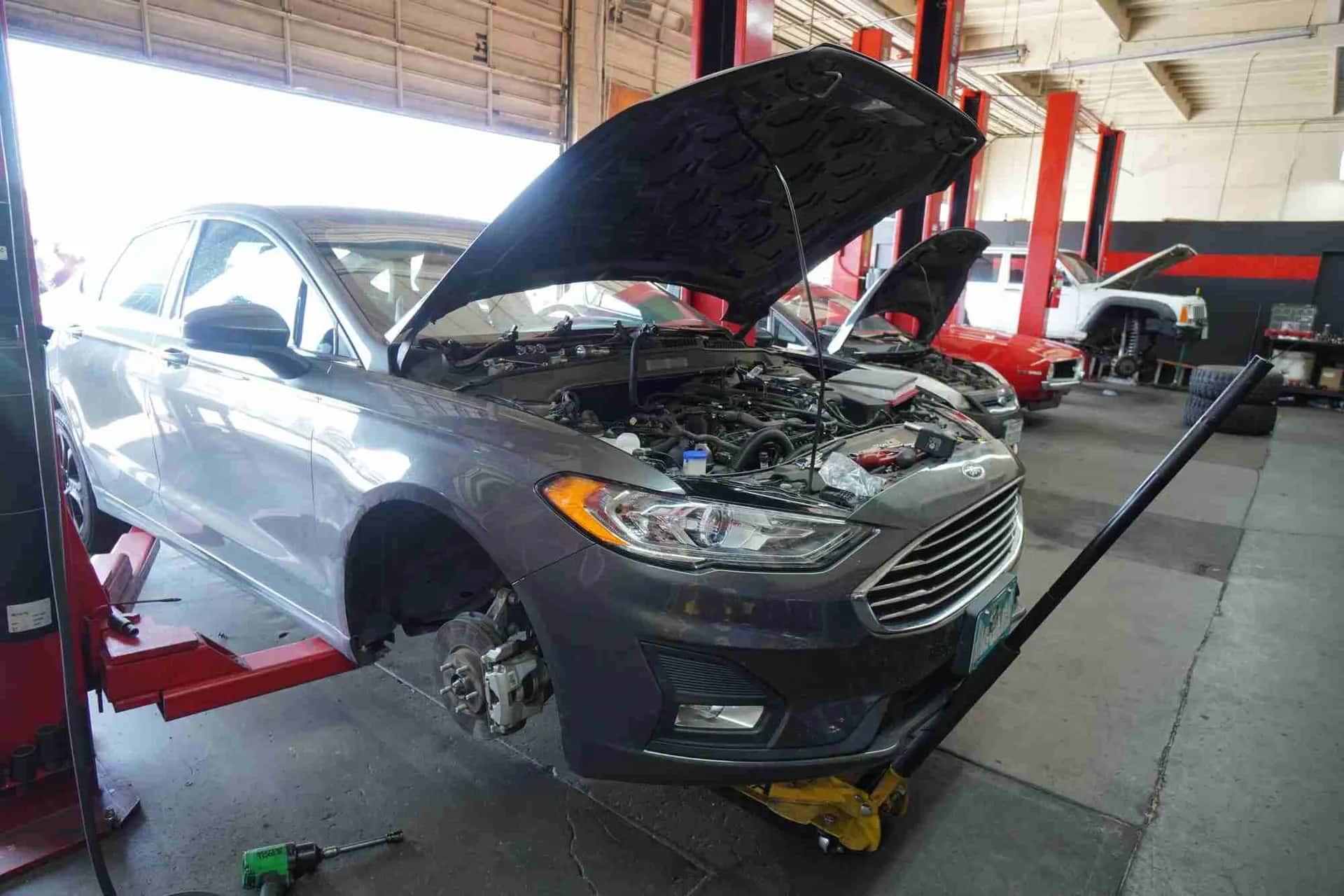
A wheel stud is the threaded bolt pressed into the hub that the lug nut threads onto. When one breaks, strips or stretches, that wheel is held by one fewer fastener than it was designed for. Route 66 Auto Repair in Upland replaces damaged studs, checks the others on that hub and the nuts that go with them, and torques the wheel to spec.
How do wheel studs get damaged?
- Over-tightening with an impact gun, which stretches the threads.
- Cross-threading a lug nut during a hurried roadside change.
- Driving with loose lug nuts, which shears studs under load.
- Rust and seized nuts that twist the stud off during removal.
- The wrong lug nut seat type for the wheel, which loosens over time.
Why check all the studs when only one broke?
If one stud broke from over-tightening or a loose wheel, the others on that hub saw the same stress. A stretched stud looks fine but has a narrowed section of thread and can snap later. We run each nut on by hand, look for thread damage and necking, and replace any that are suspect.
Replacing a stud usually means removing the brake caliper and rotor to reach the back of the hub. On some vehicles the hub must come off. While it is apart we check the rotor and brake parts, and if the rotor surface was distorted by bad torque, brake services will note it on the estimate.
Our wheel stud replacement process
Step 1: Remove wheel and brakes
The wheel, caliper and rotor come off to reach the hub flange.
Step 2: Press out the old stud
The damaged stud is pressed out without damaging the hub or wheel bearing.
Step 3: Install the new stud
A matching stud is drawn into the hub until it seats fully.
Step 4: Reassemble and torque
Brakes and wheel go back on, and all lug nuts are torqued to spec.
Step 5: Road test
We drive the car and confirm no noise or pedal change.
What's included
Included on the work order
- 01Inspection of every stud on the hub
- 02New stud pressed and seated
- 03Lug nut inspection and replacement when damaged
- 04Brake reassembly with a visual rotor check
- 05Torque to spec and a road test
Need-now or need-later?
Need now: call
- A missing or broken stud
- A lug nut that spins without tightening
Need later: book
- Rusty studs that still hold torque, replaced at the next brake job
- Replacing mismatched lug nuts
How pricing and timing work
Frequently asked questions
Can I drive with one broken wheel stud?
Only a short, gentle distance to a shop. The remaining studs carry extra load, and if the cause was a loose wheel, they may be damaged too.
Can a stripped stud just be re-threaded?
Light thread damage can sometimes be chased clean, but a stretched or badly stripped stud should be replaced. We inspect it and tell you which applies.
Do I need new lug nuts too?
If the nut threads are damaged or the seat is worn, yes. A damaged nut can ruin a new stud. We check each one.