
On this page
A coolant leak rarely fixes itself, and every ounce lost brings the engine closer to overheating. Route 66 Auto Repair in Upland repairs the leak at its source, whether that is a hose, a water pump seal, a gasket or a plastic housing, and shows you a photo of the failed part. You approve a written estimate before we start, and if the job grows, we stop and ask again.
What are the signs of a coolant leak?
- Sweet smell after parking, especially in a closed garage
- Bright colored drops on the driveway that feel slippery
- Low coolant warning or a reservoir you keep topping up
- White vapor from under the hood at a stoplight
- Wet film on the inside of the windshield with the heat on
Where do coolant leaks usually start?
The usual suspects are hose ends, the water pump seal and its weep hole, plastic thermostat housings, radiator tank seams and the heater hoses at the firewall. Water pump leaks are handled on our water pump repair page because they often tie into the timing belt.
Not every leak drips outside. Coolant that disappears with no puddle can be burning inside the engine, which points to a head gasket or intake gasket. If that is the case, we explain the tests and the options before quoting anything big.
Our coolant leak repair process
Step 1: Confirm the source
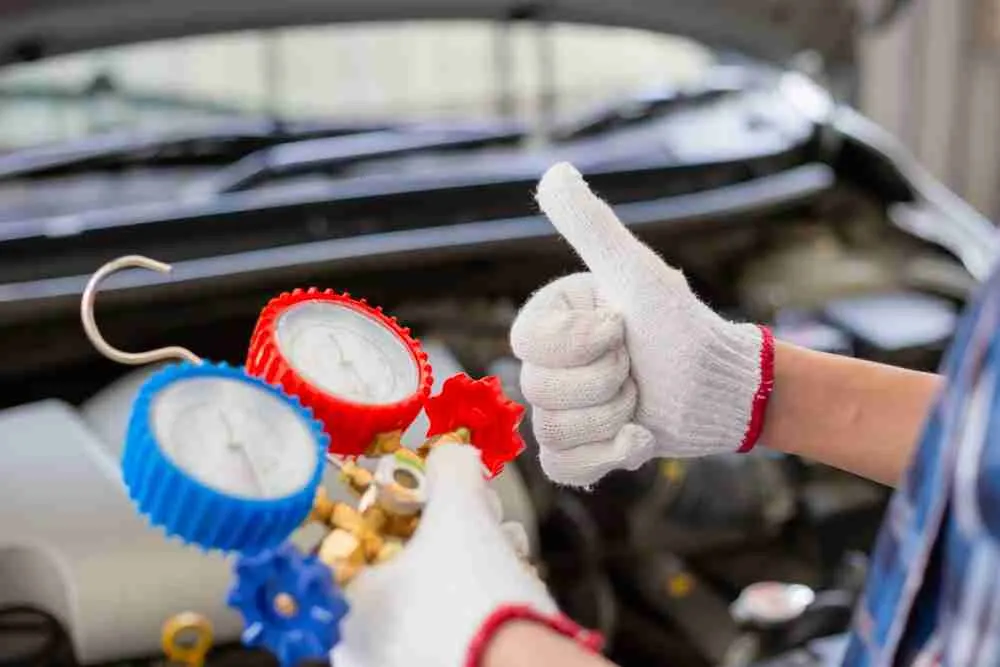
We pressure test and trace the wet trail uphill to where it starts, not where it drips.
Step 2: Photo and estimate
You see the failed part and a written estimate with need-now and need-later lines.
Step 3: Repair
The failed hose, seal, gasket or housing is replaced with clean sealing surfaces.
Step 4: Verify
We refill, bleed, pressure test again and road-test to full temperature.
What's included in coolant leak repair
Included on the work order
- 01Pressure test before and after the repair
- 02Photo of the leak point and the failed part
- 03Replacement part and gasket or clamp as quoted
- 04Surface cleanup so a new leak is easy to spot
- 05Coolant refill with the type your engine specifies
- 06Road test to operating temperature
Is it a need-now or need-later repair?
Need now: call
- Any leak that lets the gauge climb
- Coolant dripping onto the exhaust or belts
- A reservoir that is empty by the next morning
Need later: book
- Dried residue with no measurable coolant loss
- A slow seep you are watching weekly while you plan the repair
How pricing and timing work
A hose or clamp is usually quick. A thermostat housing behind the intake or a pump driven by the timing belt takes far longer, and the estimate shows that labor line by line. If we have not found the source yet, that search is covered on our coolant system leak detection page, with the diagnostic fee stated at the counter before testing and applied to approved related repair.
Aftercare
Slide a piece of cardboard under the engine overnight for a few days. A clean board means the fix held. Check the level cold, never with the engine hot. If a new spot appears, bring the car back; comebacks go to the front of the line and the cause is written on the repair order. Aging hoses found nearby are covered on cooling system hose replacement.
Frequently asked questions
How long can I drive with a coolant leak?
Only as long as the level stays up and the gauge stays normal. A leak can grow without warning, and an engine that overheats on the 210 can warp a cylinder head. Get it checked soon.
Is a coolant leak dangerous?
Coolant is toxic to pets and children and it is slippery. Hot coolant can burn you. Never open the cap when the engine is warm.
Why is my car losing coolant but there's no leak?
It may be leaking inside the engine or only when hot and pressurized. We use pressure and combustion gas tests to find which, and explain the results before quoting.