
On this page
Trapped air in a cooling system causes a gurgle behind the dash, heat that comes and goes, and temperature spikes. Route 66 Auto Repair in Upland purges the air using the method your engine calls for, often a vacuum fill, and then asks the important question: was this one pocket from a recent service, or is air entering the system again and again?
What are the signs of air in the cooling system?
- Gurgling or trickling sound behind the dashboard
- Heater that blows hot, then cold, then hot again
- Temperature gauge spikes that drop back quickly
- Reservoir level that drops in the first days after a service
- Bubbles in the reservoir with the engine running
Is it a one-time pocket or recurring air?
Air gets in any time the system is opened: a hose change, a water pump, a DIY coolant swap. Many modern engines have the radiator mounted lower than the heater core or the cylinder head, so air settles at the high points and will not leave on its own. That kind of pocket is cleared once and stays gone.
Air that returns after a proper purge is different. It can come from a hose joint pulling in air as the engine cools, a cap that will not hold, or combustion gas pushing into the coolant. That is why we recheck after a heat cycle and, if bubbles return, run a coolant system contamination test for exhaust gases.
Our air purge process
Step 1: Check the history
We ask what work was done recently and check the level, cap and hoses for obvious air leaks.
Step 2: Vacuum fill or bleed
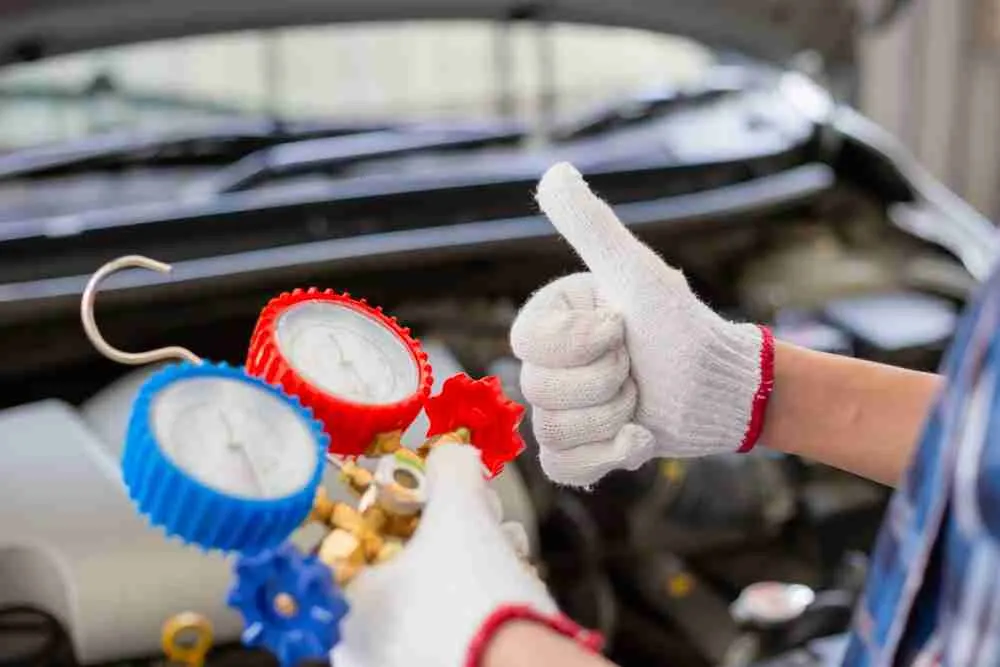
A vacuum fill tool pulls the air out before coolant goes in, or the engine is bled at its bleed screws in the correct order.
Step 3: Heat cycle
The engine runs to full temperature with the heater on high, and we watch for bubbles and steady heat.
Step 4: Cool-down recheck
After it cools, the level is checked again, and any drop means we look for a source.
What's included in a coolant air purge
Included on the work order
- 01Level, cap and hose check for air entry points
- 02Vacuum fill or bleed-screw purge per engine design
- 03Coolant of the type your engine specifies to correct the level
- 04Heat cycle with heater output check
- 05Cold recheck and notes on any recurring air
Should trapped air be cleared right away?
Need now: call
- Temperature spikes toward hot
- No heat at all with a gurgle
- Bubbles that keep coming after a purge
Need later: book
- A faint gurgle at startup that fades
- A small level drop in the first days after service
How pricing and timing work
A purge takes time because the engine has to heat up and cool down. Some engines need a specific sequence and more waiting. If we find an air leak or a failed cap, it goes on the written estimate before any repair. If testing shows gas in the coolant, we stop and explain. The fee is stated at the counter before we start, and most purges are done in one visit when the board allows.
After the purge
Check the reservoir cold for about a week. Steady heat and a quiet dash are good signs. If the gurgle returns, bring it back and we will recheck at the front of the line. The step-by-step bleeding procedure itself is covered on coolant system bleeding.
Frequently asked questions
Can I burp the air out myself?
On some older vehicles, running the engine with the cap off can help. On many newer engines, the high points trap air and a vacuum fill or specific bleed order is needed.
Why did air appear after a shop changed my coolant?
Some engines are hard to bleed completely in one pass. A small pocket can move to a high point during the first drives. A recheck usually clears it.
Can trapped air damage the engine?
A large pocket at the sensor or cylinder head can cause local overheating. That is why a spiking gauge should be checked promptly.