
On this page
A coolant contamination test looks for things that should not be in your coolant: combustion gas, engine oil, transmission fluid, rust sludge or leftover stop-leak. Route 66 Auto Repair in Upland uses a chemical block test, a close look at the coolant and the reservoir, and a check of any coolers the coolant touches, so you learn where the contamination comes from before any big decision.
What are the signs of contaminated coolant?
- Brown, milky or oily film in the reservoir
- Bubbles in the reservoir with the engine running
- White smoke with a sweet smell from the tailpipe
- Coolant loss with no drip under the car
- Pink or milky transmission fluid, or rust-colored coolant
Where does contamination come from?
Combustion gas in the coolant usually means a head gasket or a crack is letting exhaust into the water jacket. Oil can enter through a failed oil cooler or a gasket that separates the two. Transmission fluid can mix with coolant if the cooler inside the radiator fails, which can damage both systems. Rust and sludge come from old coolant that ran out of protection, or from mixing coolant types.
Each source needs a different fix, so a flush alone is not enough. Mixed transmission fluid is serious enough to check the transmission too, and our transmission cooler repair page covers that.
Our contamination test process
Step 1: Look and sample
We check the coolant, reservoir and cap, and look at the engine oil and transmission fluid for mixing.
Step 2: Block test
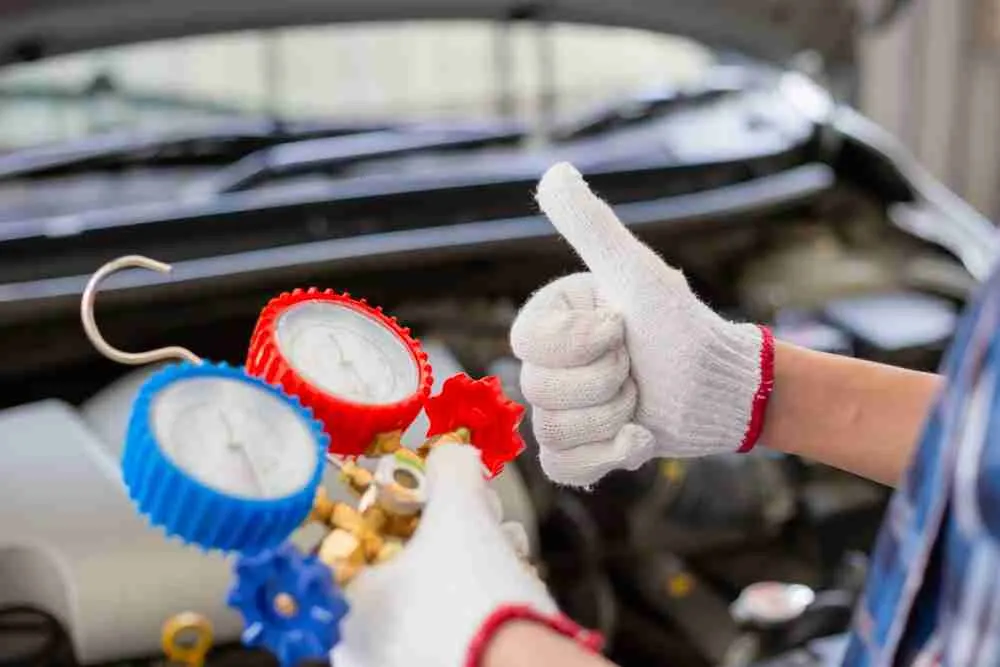
A test fluid samples gas above the coolant and changes color if exhaust gas is present.
Step 3: Cooler checks
Where the design allows, oil and transmission coolers are pressure checked for internal leaks.
Step 4: Explain the findings
We write down what was found, with photos, and what repair each result points to.
What's included in a contamination test
Included on the work order
- 01Visual check of coolant, oil and transmission fluid
- 02Chemical combustion gas block test
- 03Reservoir and cap inspection
- 04Cooler pressure checks where accessible
- 05Written findings with photos
How urgent is contaminated coolant?
Need now: call
- Positive block test or overheating
- Coolant mixed into oil or transmission fluid
- White sweet-smelling smoke
Need later: book
- Mild discoloration with a negative block test
- Light rust that a flush can address
How pricing and timing work
The test fee is stated at the counter before testing and applies to approved related repair. Results are usually ready in one visit when the board allows. If a big repair is on the table, we explain the options in writing before anything is taken apart. Mild contamination may only need a cooling system flush.
After the test
If the result was clean, keep an eye on the reservoir and the tailpipe. If the result pointed to an internal leak, avoid long drives and heavy loads until it is repaired. Call (909) 646-4111 with any questions about the report. Deeper engine checks go through engine diagnostics.
Frequently asked questions
Does oil in the coolant always mean a head gasket?
No. An oil cooler failure can cause it too, and that is a smaller repair. Testing tells the difference.
Can mixing coolant types cause sludge?
Some coolant types react poorly when mixed and can form gel or deposits. We use the coolant your vehicle specifies.
Will stop-leak show up in the test?
Leftover stop-leak often shows as particles or brown residue in the reservoir. We note it because it can clog heater cores and radiators.