
On this page
A full cooling system pressure test checks every part that holds coolant, including the radiator, hoses, water pump, heater core, gaskets and the cap, and adds a combustion gas check when the answer is not outside. Route 66 Auto Repair in Upland uses it when coolant is disappearing and nobody can say where. The result is a written finding with photos, not a guess.
When is a full cooling system pressure test needed?
- You add coolant every week and never see a drip
- Damp passenger floor or a fogged windshield
- Bubbles in the reservoir with the engine running
- White exhaust smoke with a sweet smell on startup
- A new radiator or hose did not stop the coolant loss
Where can coolant go without leaving a puddle?
Coolant that drips on a hot exhaust or engine block can evaporate before it reaches the ground. A leaking heater core empties into the carpet or the HVAC box. A head gasket or intake gasket can let coolant burn off inside the engine. Each of those needs a different test, and all start with holding the system at pressure.
The narrower radiator pressure testing is for when the radiator is the only suspect. This page is the wider search. If the heater core is wet, heater core service explains what comes next.
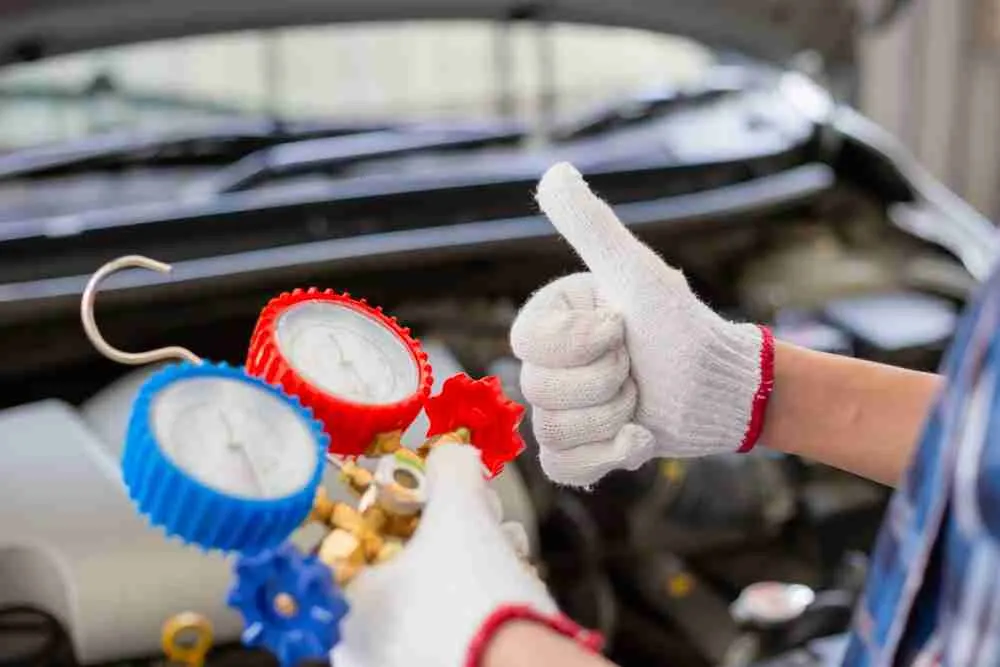
The test itself works to a published number. A hand pump brings the system up to the pressure printed on the cap, usually a figure in the low-to-mid teens of psi on a passenger vehicle, and a sealed system should hold that reading steady while we look. A gauge that creeps down with no visible drip means the coolant is going somewhere we have not found yet. We test to the rating your vehicle maker calls for, since over-pressurizing a system proves nothing and can cause harm.
Our cooling system pressure test process
Step 1: Cold pressure hold
We pump the system to the cap's rated pressure and time how long it holds.
Step 2: Cap test
The cap is tested separately to rule it out.
Step 3: Trace the loss
We check the engine, pump, heater hoses, cabin floor and exhaust for coolant traces.
Step 4: Combustion gas check
If the leak is internal, a block test looks for exhaust gas in the coolant.
Step 5: Written result
You get the needle readings, photos and the repair path.
What's included in a cooling system pressure test
Included on the work order
- 01System pressure hold test with timing
- 02Radiator cap pressure and vacuum test
- 03Engine, pump and hose inspection
- 04Cabin floor and HVAC drain check for coolant
- 05Combustion gas test when the leak is internal
- 06Written findings with photos
Is it a need-now or need-later repair?
Need now: call
- Pressure drops fast or combustion gas is present
- Coolant in the cabin, which can fog the windshield
Need later: book
- Slow drop traced to a seep that is being monitored
- Test passes and the loss was a one-time overfill
How pricing and timing work
The test is diagnostic time; the fee is stated at the counter before testing and applies to approved related repair. If the combustion gas test is positive, we explain the options, from gasket work to your broader choices, before any estimate for a large repair. Your written estimate shows every step. Serious engine findings are handled with our engine services team.
Aftercare
Keep a simple log: date, miles and how much coolant you added. That log helps us confirm the repair worked. If the test passed and the loss continues, we can repeat it hot, since some leaks only open at operating temperature.
Frequently asked questions
Can a pressure test find a head gasket leak?
It can show a slow internal loss. A combustion gas test gives stronger evidence. Together they tell us whether the head gasket is the likely cause.
Why test the cap separately?
A weak cap lets coolant escape as vapor, which looks like a leak. It is the easiest thing to rule out.
My car passed the test. Where is my coolant going?
Some leaks only open when hot. We can test again at temperature, or use UV dye and a follow-up visit.