
On this page
A radiator pressure test answers one question: is the radiator itself leaking, or is the coolant going somewhere else? Route 66 Auto Repair in Upland pumps the cold system to its rated pressure and inspects the radiator tanks, seams, necks and core with a light and a mirror. You get a clear yes or no, with a photo, before anyone quotes a new radiator.
When should the radiator be pressure tested?
- Someone quoted a radiator but never showed you the leak
- Coolant drips at the front of the car but the source is unclear
- The radiator took a hit from road debris on the I-10
- You see crust at a tank seam and want to know if it is active
- Before buying a used car with a replaced front bumper
What does the pressure gauge tell us?
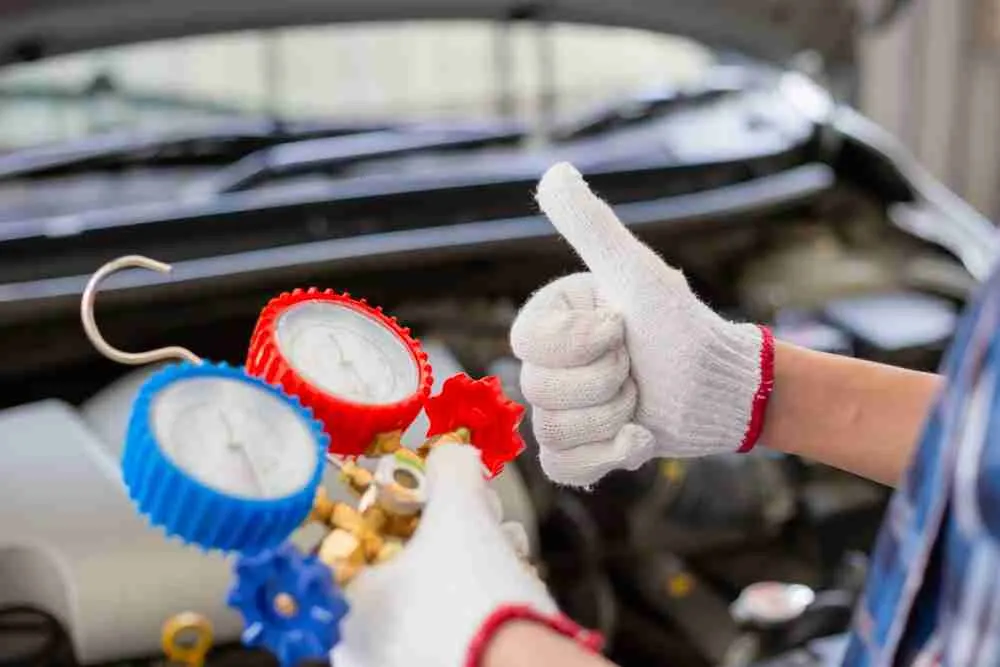
We pump the system to the pressure printed on your cap and watch the needle. A steady needle with a dry radiator clears the radiator. A falling needle with coolant beading at a tank seam, a neck or between the core tubes points straight at the radiator. A falling needle with a dry radiator sends us to hoses, the pump or inside the engine.
Some radiator leaks only open when hot. If the cold test passes, we can warm the engine and look again. That wider search is the cooling system pressure test, which also checks the cap and for combustion gases.
Our radiator pressure testing process
Step 1: Access
We remove splash shields or covers so the whole radiator face and both tanks are visible.
Step 2: Pressurize
The tester is attached at the filler neck and pumped to the rated pressure.
Step 3: Inspect
Tanks, crimp seams, hose necks, drain valve and cooler line fittings are checked for seepage.
Step 4: Report
You get the needle result, photos and a written next step.
What's included in radiator pressure testing
Included on the work order
- 01Cold pressure test at the rated value
- 02Inspection of tanks, seams, necks and drain valve
- 03Transmission cooler line fitting check where equipped
- 04Photos of any leak point
- 05Written result with repair options
Is it a need-now or need-later repair?
Need now: call
- Pressure drops and coolant beads on the radiator
- Wet core after debris damage
Need later: book
- Holds pressure with old dried residue
- Minor fin damage with no leak
How pricing and timing work
The test is billed as diagnostic time. The fee is stated at the counter before testing and applies to approved related repair, such as radiator repair. Most tests are done while you wait if the board allows. Bent fins found during the test are covered on radiator fin repair and are usually a later item.
Aftercare
If the radiator passed, keep an eye on the level and where any drip lands. Note whether it happens after short trips or long drives; that detail helps us find a leak that only opens when hot. The test result stays on your repair order for next time.
Frequently asked questions
Can a radiator leak only when the engine is hot?
Yes. Plastic and aluminum expand at different rates, so a tank seam can seal cold and weep hot. We can repeat the look at operating temperature.
Does the test damage anything?
No. We use the pressure your cooling system is designed for, never more. That is the same pressure it sees on every drive.
Can I do this test with a rental tester?
You can, and it is a good first step. Knowing where to look on your model, and what a slow drop means, is where a technician helps.