

On this page
Route 66 Auto Repair in Upland recharges car AC systems with the refrigerant your vehicle specifies, measured by weight. Before we do, we answer a simple question: where did the old charge go? Refrigerant does not wear out or get used up. A low system has a leak, and we check for it first so your money is not spent refilling a hole.
Why does a car run low on refrigerant?
Every AC system loses a tiny amount through hoses and seals over many years, but a system that is noticeably low has a real leak. The usual suspects are rubber O-rings that have dried out, a condenser pitted by road debris, service port valve cores, and the compressor shaft seal on a car that sat unused. Heat cycles on a summer in the Inland Empire speed all of that up.
How low it is matters too. A system at half charge cools poorly and runs the compressor with too little oil returning to it. That wears the compressor faster, so a small leak left alone can turn into AC compressor replacement.
Why not use a can from the parts store?
- The gauge on a can reads only one side, so it cannot tell you if you overfilled
- An overcharged system builds high pressure and cools worse, not better
- Many cans contain sealer that can clog the expansion valve and shop equipment
- It adds refrigerant to a system that may already hold air and moisture
- It does nothing about the leak that caused the problem
How we handle a recharge request
Step 1: Ask about history
We ask when it was last charged and whether a can or sealer was used.
Step 2: Check for a leak
Dye, an electronic detector or a vacuum hold shows whether the system is sealed.
Step 3: Recover and weigh
What is left is recovered and weighed, which tells us how much escaped.
Step 4: Recharge to spec
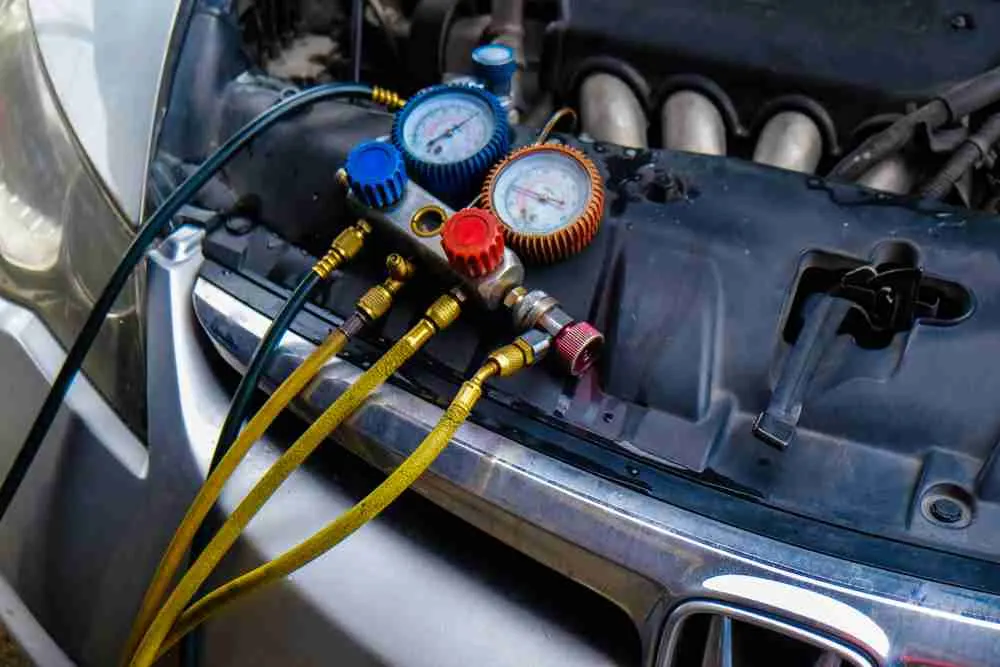
The system is charged to the weight on the underhood label, then performance is checked.
What's included in a refrigerant recharge
Included on the work order
- 01Leak check before charging
- 02Recovery and weighing of old refrigerant
- 03Evacuation to remove air and moisture
- 04Refrigerant your vehicle specifies, charged by weight
- 05UV dye added when useful for future leak checks
- 06Vent temperature reading before and after
How pricing and timing work
The refrigerant type your car uses has a big effect on cost, and newer vehicles often use a more expensive one. The estimate lists it by weight so you can see the math. If we find a leak, you decide whether to fix it now or recharge and watch it, and that choice is written down. Our AC system recharge page walks through the machine procedure, and AC leak detection explains the leak tests. The EPA's page on vehicle AC (opens in a new tab) explains why refrigerant must be recovered, not vented.
Frequently asked questions
How often should my car AC be recharged?
Ideally never. A sealed system in good condition holds its charge for years. If you need a recharge every summer, you have a leak worth fixing.
Can you recharge without fixing the leak?
Yes, if the leak is slow and you understand it will return. We note that decision on the repair order and add dye so the leak is easy to find next time.
Does my car use a special refrigerant?
Many newer vehicles use a different refrigerant than older ones, and the two are not interchangeable. The correct type and amount are printed on a label under the hood, and we charge exactly that.