
On this page
Route 66 Auto Repair in Upland replaces battery cables when a voltage drop test shows they are wasting starting power. The heavy positive cable feeds the starter, and the negative cable returns current through the engine and body. Corrosion can creep inside the insulation where you cannot see it, turning copper to green powder. The cable looks fine but acts like a thin wire.
Signs your battery cables are failing
- Slow or clicking starts with a battery that tests healthy
- A cable that feels hot after cranking
- Swelling or a bulge under the insulation near the terminal
- Green or white powder at the end where the jacket meets the terminal
- Cracked, brittle insulation from years of engine heat
- Dim lights during cranking that recover right after
How does a voltage drop test prove a cable is bad?
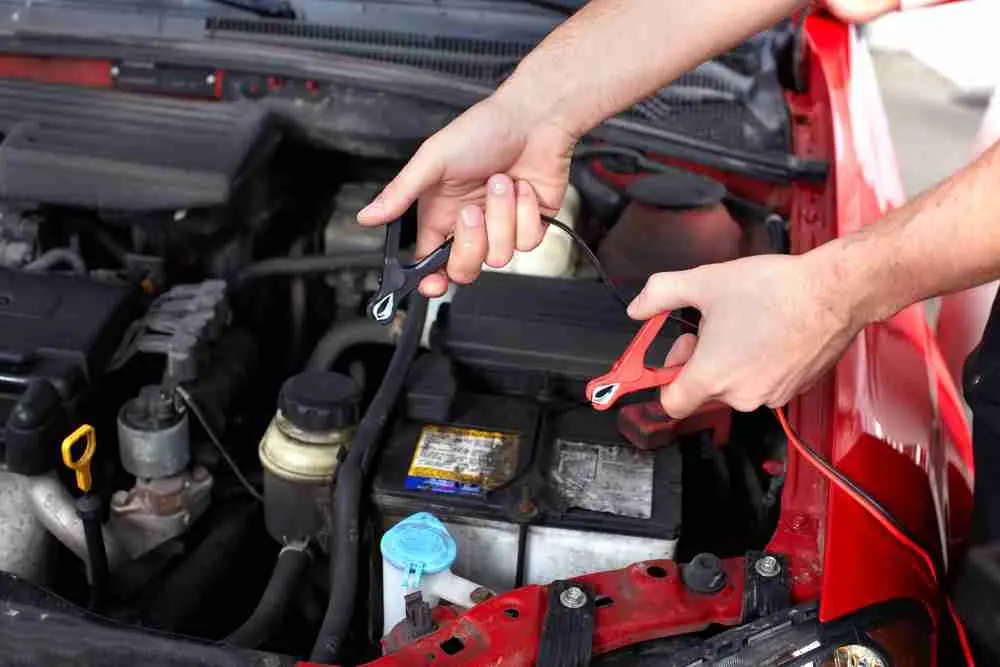
With the engine cranking, the technician places one meter lead on the battery post and the other on the far end of the cable, at the starter or the engine block. A good cable loses very little voltage. A corroded one loses much more, and every bit of that loss is power the starter never gets. We test the positive side and the ground side separately, since either can be the culprit.
This test is why we rarely quote starter motor repair on a first guess. A starter fed through a bad cable looks just like a failing starter. When the ground side is the issue, the fix may be the cable or a separate electrical ground repair.
How much loss is too much? The rule of thumb used across the trade allows no more than about 0.2 volts dropped across a single cable or connection, and roughly half a volt across an entire starting circuit including the ground path. Anything beyond that is resistance you paid for in cranking speed. It is a general yardstick rather than a promise, and where your vehicle maker publishes a tighter limit, we use theirs.
Our cable replacement process
Step 1: Measure
Voltage drop is tested on both cables during cranking.
Step 2: Estimate
The written estimate names which cable, whether it is part of a harness, and the routing involved.
Step 3: Replace and route
The new cable follows the factory path, away from exhaust heat and sharp edges, and is clipped in place.
Step 4: Retest
We repeat the voltage drop test so you can see the before and after numbers.
What's included
Included on the work order
- 01Voltage drop readings before and after
- 02Cable matched to factory gauge and length
- 03Clean contact surfaces at the starter, block or body
- 04Correct routing and clips
- 05Photos of the old cable's corrosion when it is cut open
Why some cables cost more to replace
On many newer cars, the positive cable is part of a larger harness that also feeds the fuse box and alternator, and it may run under the intake or along the transmission. That changes the labor. Your estimate spells it out. If only the clamp end is damaged and the cable is sound, terminal replacement may be enough, and we will say so.
Now or later?
Need now: call
- A failed voltage drop test with starting problems
- A cable that gets hot or shows melted insulation
Need later: book
- Surface cracking on insulation with good test numbers
- Light corrosion at the end that cleaning resolves
How pricing and timing work
Aftercare
The engine may idle unevenly for a few drives while settings relearn. If you notice slow cranks again, call (909) 646-4111 so we can recheck the connections.
Frequently asked questions
Can you just replace the terminal end?
Sometimes. If corrosion has not traveled up the copper, a new end is fine. If the wire inside is green, a new end on a bad cable only moves the problem, so the voltage drop test decides.
Why did my cable corrode inside?
Acid vapor and moisture wick up the strands from the terminal end, helped by heat. It happens slowly, which is why older vehicles are more likely to need cables.
Is a universal cable okay?
We prefer cables that match the factory gauge, length and ends, because a mismatched cable can rub, overheat or not seat properly.