
On this page
A tick that is loudest on a cold morning and fades as the engine warms is the classic sign of an exhaust manifold leak. Route 66 Auto Repair in Upland finds whether the gasket, a stud or the manifold itself has failed, then repairs it properly. Manifold work can hide surprises, so we explain the risks in writing, and if a job grows we stop and call before going further.
What are the signs of a manifold leak?
- Ticking or tapping at cold start that fades when warm
- An exhaust or burnt smell under the hood
- Black soot near the manifold flange
- A missing or loose heat shield bolt rattling at idle
- Scorched wiring or melted plastic close to the manifold
Why do exhaust manifolds crack and leak?
The manifold goes from cold to very hot every trip, and it grows and shrinks each time. On trucks and V engines, that movement fatigues the studs until one snaps, and the gasket beside it starts to leak. Long climbs with a load, like towing up the Cajon Pass, add extra heat cycles. Cast manifolds can crack outright, and stainless tube manifolds can crack at their welds.
The cabin smell matters here. A leak at the manifold sits close to the fresh-air intake, so fumes can reach you even though the leak is small. If you smell exhaust inside the car, treat it as need-now.
What if a stud breaks during the repair?
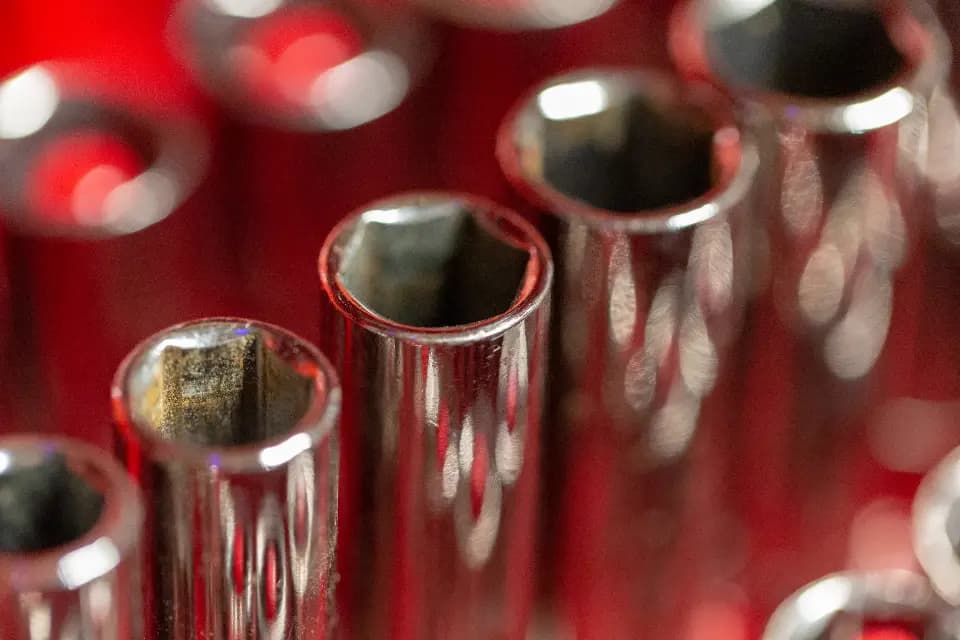
Old studs are often rusted into the head, and removing one can take extra steps. We tell you that risk before we start, and if a stud breaks, we stop, explain the options and get your approval. Your written estimate shows every step. Diesel manifold work is covered on our diesel exhaust manifold repair page.
Our manifold repair process
Step 1: Listen cold
We start the engine cold when possible, since many manifold leaks seal once hot.
Step 2: Find the failure
We check the flange, studs, heat shield and the manifold body for cracks.
Step 3: Quote with the risks named
Your estimate covers parts, access and the chance of a seized stud.
Step 4: Repair and recheck
We fit new gaskets and hardware, torque to spec, then recheck cold and road-test.
What's included in manifold repair
Included on the work order
- 01Cold-start leak check
- 02Stud, flange and gasket inspection
- 03Heat shield and nearby wiring check
- 04New gasket and hardware
- 05Torque to specification
- 06Cold recheck and road test
How urgent is a manifold leak?
Need now: call
- Exhaust smell inside the cabin
- Heat damage to wiring or hoses nearby
Need later: book
- A faint cold tick with no smell, scheduled soon
How pricing and timing work
Frequently asked questions
Is an exhaust smell in the cabin dangerous?
It can be. Exhaust carries carbon monoxide, which you cannot smell on its own. If you smell exhaust inside, drive with windows open, avoid idling, and come in soon. Headache or drowsiness means stop and get fresh air.
How is an exhaust manifold leak found?
We listen with the engine cold, because many leaks seal once the metal expands. Then we inspect for soot at the flange, broken studs and cracks. An exhaust leak inspection can be booked on its own.
Can a manifold leak cause engine problems?
A leak near the upstream oxygen sensor can confuse the fuel mixture reading and set a code. Heat from the leak can also damage wiring nearby. Fixing it early keeps the repair smaller.