
On this page
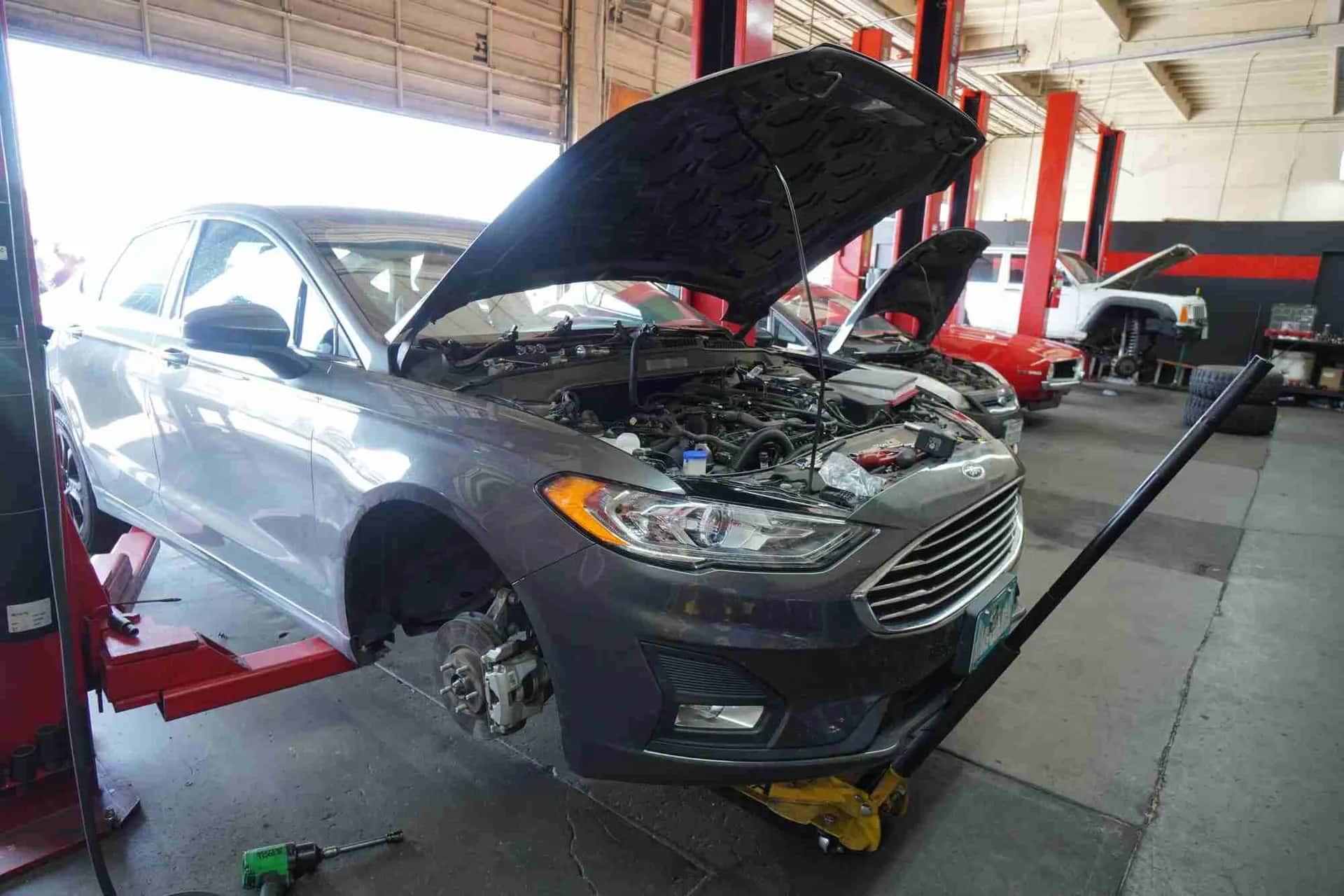
Brake repair is fixing a problem you can already feel or hear: a pull, a grind, a shake or a pedal that changed. Route 66 Auto Repair in Upland traces that complaint to the part causing it, shows you photos of what failed, and gives you a written estimate before we replace anything. Our ASE-certified (opens in a new tab) technicians road-test the car before and after.
Which brake complaints do we fix most often?
- The car drifts left or right when you brake but tracks straight otherwise.
- A scraping sound that started suddenly, sometimes a pebble trapped behind the rotor shield.
- The pedal sits lower than it did last week, or slowly sinks at a red light.
- One wheel wears far more dust than the others, or smells hot after a short drive.
- A clunk from the front when you first brake or back out of a parking spot.
- Brakes that grab hard at parking lot speed, sometimes from a restricted brake hose.
How do we find the real cause?
One complaint can have several sources. A pull under braking might be a sticking caliper on one side, a hose that holds pressure, pads soaked with grease, or simply a low tire. We check the easy things first, like tire pressure and lug nut torque, then look at the brake parts on both sides of the axle.
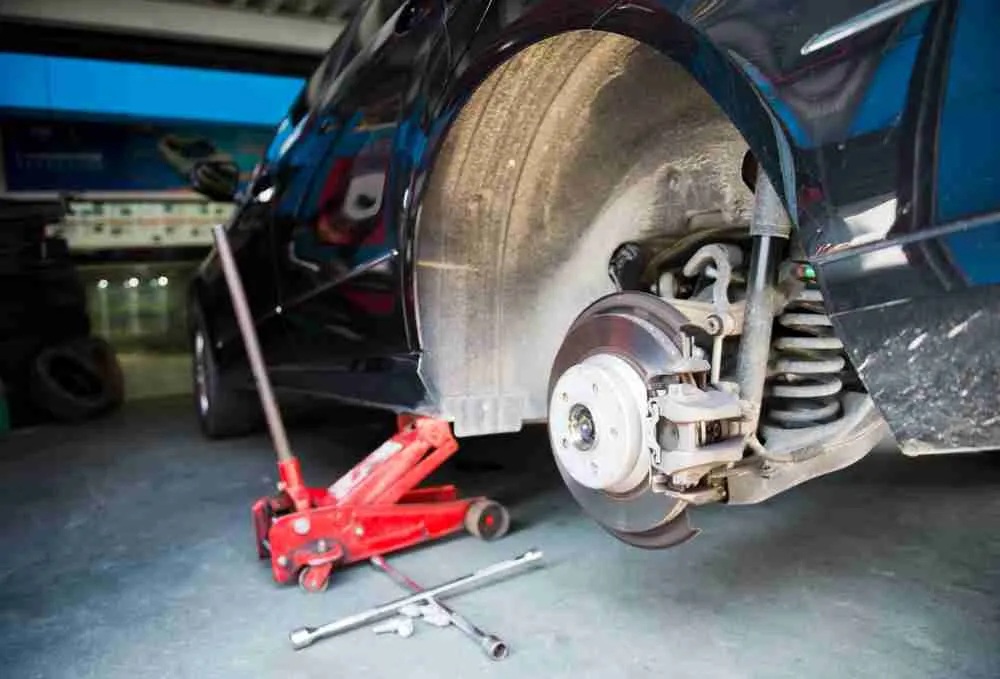
Comparing sides is the key. If the left pads are thin and the right pads are thick, the problem is usually on the side with less wear, because that caliper is not clamping. If one rotor is much hotter after the road test, that brake is dragging and may need brake caliper replacement. The numbers tell us where to look, and the photos let you see it too.
Figures keep a diagnosis honest. As general guidance, pad lining is usually considered due near 3 millimeters of remaining material, a rotor is judged against the minimum thickness cast into it rather than against its age, and brake fluid testers commonly call for replacement once moisture reaches about 3 percent by volume. We write every reading on the repair order next to the figure your vehicle maker specifies, and that published specification is what settles the call.
Our brake repair steps
Step 1: Reproduce it
We drive the car the way you described and confirm the pull, noise or pedal change.
Step 2: Compare both sides
Pads, rotors, calipers and hoses are checked left against right to find the odd one out.
Step 3: Show and quote
You see photos and measurements, then a written estimate for the fix.
Step 4: Repair and verify
We replace the failed parts to spec and repeat the same road test to prove the complaint is gone.
What's included in a brake repair
Included on the work order
- 01Road test that reproduces your complaint
- 02Side-to-side comparison of pads, rotors and calipers
- 03Tire pressure and lug nut check
- 04Photos of the failed part
- 05Repair to manufacturer specification
- 06Road test to confirm the fix
Can your brake problem wait?
Need now: call
- A pull that gets stronger the harder you brake
- A pedal that sinks while you hold it
- Sudden grinding from one wheel
Need later: book
- A clunk only at the first stop of the day, once we confirm the hardware is tight
- Uneven dust with no pull and pads still in spec
What affects the cost of a brake repair?
After your brake repair
Drive the route that used to show the problem within the first few days. If the pull or noise returns, bring it straight back. Comebacks move to the front of the line, and we write the root cause on the repair order. If a pull remains but only when you are not braking, the next stop is suspension and steering and alignment, which we inspect and arrange.
Frequently asked questions
Why does my car pull to one side when I brake?
Most often one caliper is sticking or one hose is restricted, so one side grips harder than the other. Low tire pressure and worn suspension parts can cause it as well. We compare both sides of the axle to pin it down.
Will you road-test my car after you repair it?
Yes. Every brake repair ends with a road test, and we try to drive it the same way that showed the problem in the first place. A quality check of the work comes before that drive.
What if you find something else once the wheels are off?
We stop and contact you before doing it. You get the finding, a photo when the part is the point, and the added cost. If you decline, the item stays on the repair order so you have a record for later.