
On this page
A brake system inspection is a measured look at every part that helps your car stop, from the pedal to the tires. Route 66 Auto Repair in Upland measures pad and rotor thickness, tests the fluid, checks lines and hoses, and road-tests the car. You get a written report with photos, and every item is labeled need-now or need-later. It is the right visit when something feels off, or before a long drive over the Cajon Pass.
When should you book a brake inspection?
- Squealing, grinding or clicking when you stop
- A pedal that feels different than it used to
- Vibration in the steering wheel during braking
- Before a road trip, a move with a trailer, or buying a used car
- A brake or ABS light on the dash
- You cannot remember the last time anyone looked
What do we check during a brake inspection?
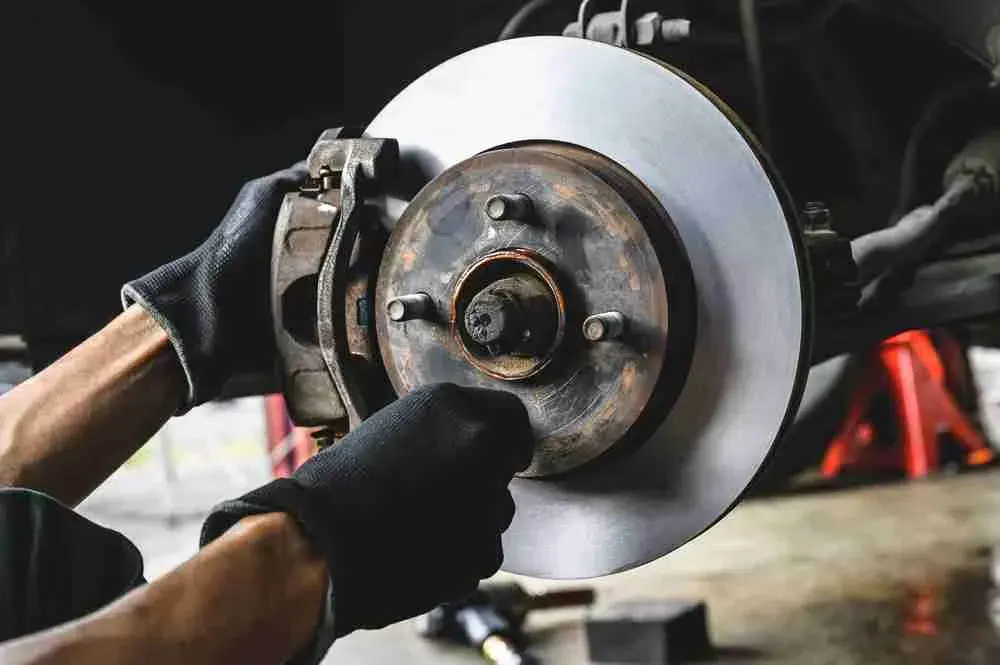
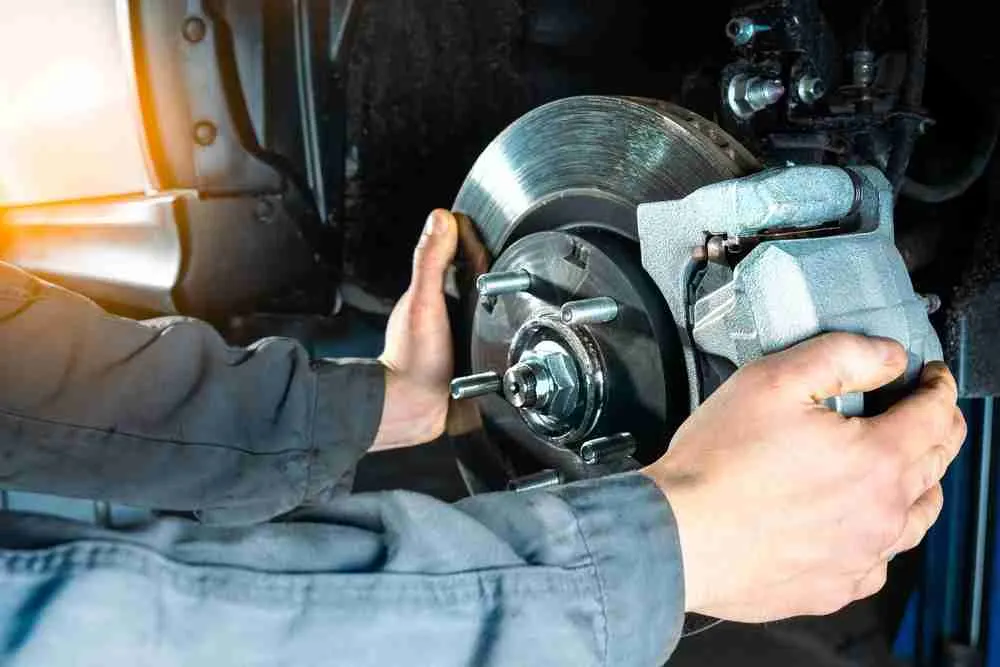
At each wheel we measure pad lining and rotor thickness, and check drums and shoes where fitted. We look at calipers for sticking, hoses for cracks, and hardware for wear. Under the car, we trace the steel lines for rust and leaks. Under the hood, we check the master cylinder, booster and fluid condition.
We also test the parking brake and scan for stored ABS codes. The road test covers pull, pulsation, noise and pedal feel. If the tires show uneven wear, we note it, since tires and suspension affect stopping too.
Wherever a published figure exists, it goes on the sheet next to the reading. Pad lining is written in millimeters against the common replacement guidance of roughly 3 millimeters. Rotors are compared with the minimum thickness cast into them, drums with the maximum diameter cast into the drum, and fluid with the usual 3 percent moisture threshold. Treat all of those as general industry reference points; the specification issued for your vehicle is what the inspection measures against.
Our brake inspection process
Step 1: Listen and road test
We ask what you have noticed, then drive the car to feel it ourselves.
Step 2: Wheels off, measure
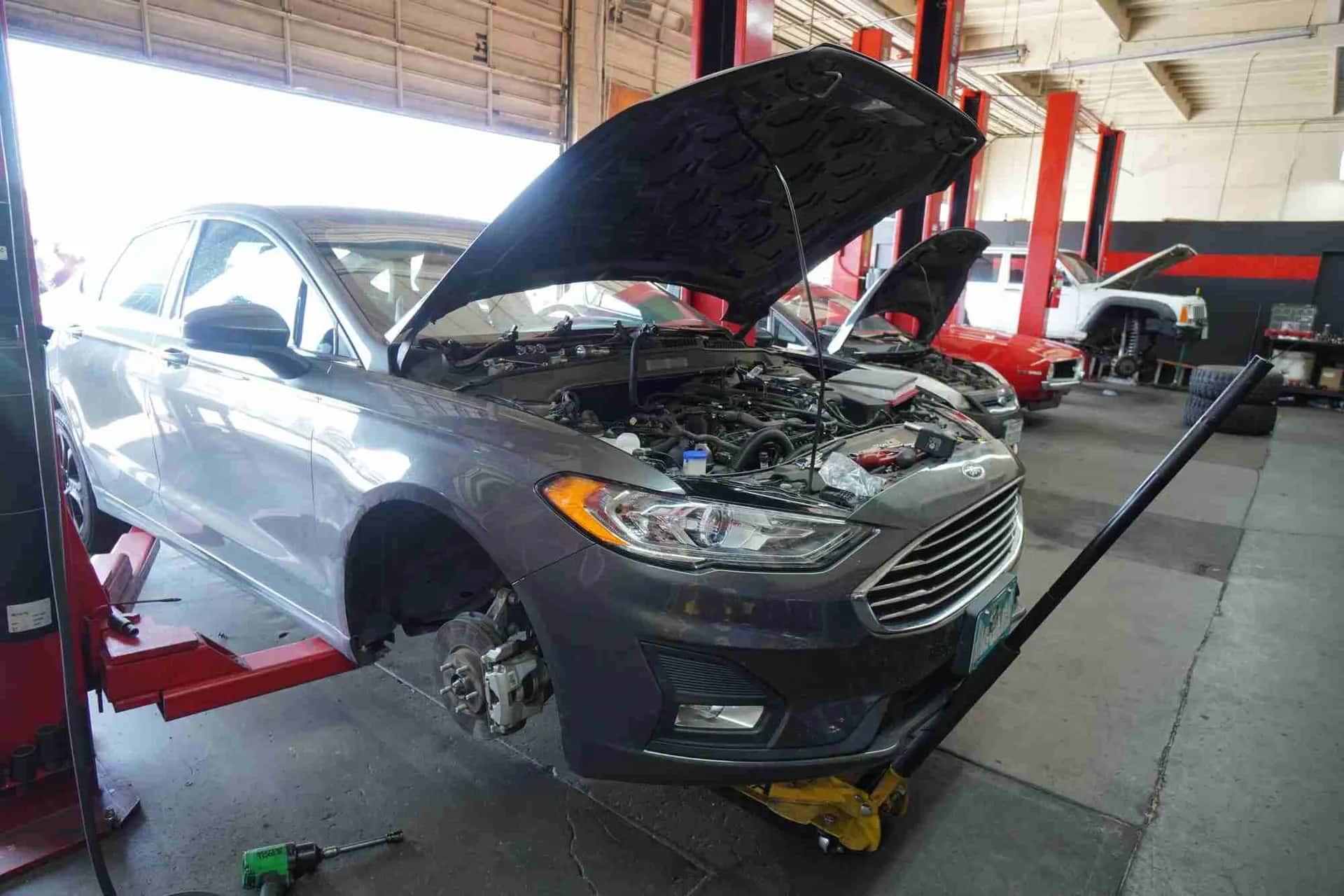
Wheels come off so pads, rotors, drums and calipers can be measured and photographed.
Step 3: System check
Lines, hoses, fluid, master cylinder, booster and parking brake are checked.
Step 4: Written report
You receive findings with photos and a need-now or need-later label on each line.
What's included in a brake system inspection
Included on the work order
- 01Pad and shoe thickness measured at each wheel
- 02Rotor and drum measurement against minimum spec
- 03Brake fluid test
- 04Line, hose and fitting inspection
- 05Master cylinder, booster and parking brake check
- 06ABS code scan
- 07Photos and a written report
How we label what we find
Need now: call
- Pads at or near minimum, or metal on metal
- Any fluid leak or a soft pedal
- A seized caliper or a cracked hose
Need later: book
- Pads with some life left, rechecked at your next oil change
- Minor rotor wear with no pulsation
- Light rust on hardware
How pricing and timing work
After your inspection
Keep the report. It gives the next technician a baseline, and measured wear over time shows how fast your driving uses up pads.
Frequently asked questions
How often should brakes be inspected?
At least once a year, and any time you hear noise or feel a change. Drivers who commute in stop-and-go traffic or tow may want checks more often, since pads wear faster.
Will you pressure me into repairs?
No. You get measurements, photos and a label on each item. Need-now items are safety or strand risks. Need-later items can be scheduled. The decision is yours, and declined items stay on the record.
Can you tell how many miles my pads have left?
We can measure what is left and compare it to minimum spec. Miles remaining depend on how and where you drive, so we give you the measurement and suggest when to recheck rather than a guess.
Do you inspect the brakes on a truck I use to tow?
Yes. Tell us about the trailer at intake. Towing adds heat and load, so we pay close attention to fluid condition, rotor wear and rear brake balance.