

On this page
People ask Route 66 Auto Repair in Upland about expansion valve cleaning when their AC shows a restriction. The honest answer is that cleaning a metering device is rarely the whole fix. The valve, or the orifice tube some systems use instead, is usually cheap next to the labor to reach it, and the debris that clogged it came from somewhere. We find that source before we quote.
What clogs an expansion valve or orifice tube?
The metering device is the narrowest point in the system, so anything loose ends up there. Common culprits are metal flakes from a wearing compressor, crumbled desiccant from a failed drier, sludge from old sealer, and ice from moisture. Each one points to a different root cause.
Orifice tubes have a fine screen you can see once the tube is pulled. Its contents are evidence. Bright metal means the compressor is shedding. Black sludge suggests overheated oil or sealer. We photograph what we find.
When is cleaning enough?
- Almost never for thermal expansion valves, since their internal parts cannot be reached and a new valve costs little more than the labor
- An orifice tube is always replaced once removed, not cleaned and reused
- Flushing the lines and condenser cleans the path around the valve
- Metal debris means compressor testing before any valve work
- Moisture icing means a new drier and a longer vacuum
Our restriction repair process
Step 1: Confirm the restriction
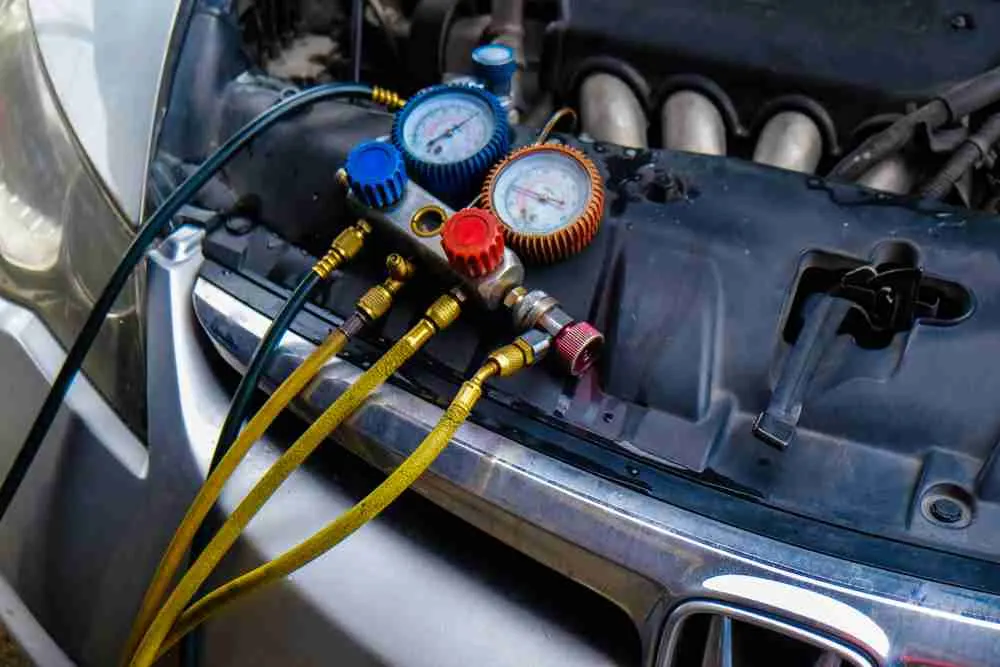
Gauge readings and frost patterns show where flow is blocked.
Step 2: Recover and inspect
The system is recovered, and the orifice screen or valve inlet is inspected and photographed.
Step 3: Trace the source
Debris type decides whether the compressor, drier or old sealer is to blame.
Step 4: Repair the path
The metering device is replaced, lines are flushed where approved, and a new drier goes in.
Step 5: Vacuum and charge
A vacuum hold and a charge by weight are followed by a vent temperature test.
What's included in expansion valve service
Included on the work order
- 01Restriction confirmation with gauges
- 02Refrigerant recovery
- 03Screen or inlet inspection with photos
- 04New orifice tube or expansion valve and seals
- 05New drier or accumulator
- 06Vacuum hold, charge by weight and performance test
How urgent is a restriction?
Need now: call
- Metal debris in the screen, which will reach the new parts if ignored
- Frost on lines with warm vents
Need later: book
- Slight restriction readings with acceptable cooling, to watch before summer
How pricing and timing work
An orifice tube in an accessible line is a short job. Some expansion valves sit at the firewall; others are inside the dash. If metal debris shows up, the estimate expands to AC compressor replacement with an AC system flush, and we explain why skipping the flush risks the new compressor. Valve failures that are not debris-related are covered on AC expansion valve repair.
After the repair
Cooling should be steady with no frosting on the lines. We keep the photos of the screen on file. If cooling fades again, that history helps the next test go faster.
Frequently asked questions
Can you flush the expansion valve without removing it?
Flush chemical should not be pushed through an expansion valve or compressor. Those parts are removed or bypassed during a flush. The valve is usually replaced rather than cleaned.
Why replace the drier too?
Debris and moisture both use up the drier. A new one protects the new metering device from clogging again.
Could sealer from a recharge kit cause this?
Yes. Some sealers harden when they meet moisture and can plug the valve. Tell us if a kit was used, as it changes how we service the system.