
On this page
The expansion valve meters refrigerant into the evaporator so it can boil and absorb cabin heat. When it sticks, the AC either starves or floods. Route 66 Auto Repair in Upland diagnoses expansion valves and their cousin, the orifice tube, by reading pressure patterns and watching for frost, then replaces the valve with a written estimate that shows what else was opened.
Does your car have an expansion valve or an orifice tube?
Both do the same job: they create a pressure drop right before the evaporator. An expansion valve adjusts itself using a temperature-sensing bulb or internal element. An orifice tube is a fixed brass or plastic tube with a fine screen, found mostly on older domestic trucks and cars. Valves usually sit at the firewall where the lines enter the evaporator. Orifice tubes hide inside a line, often near the condenser outlet. We identify which one your vehicle uses before quoting.
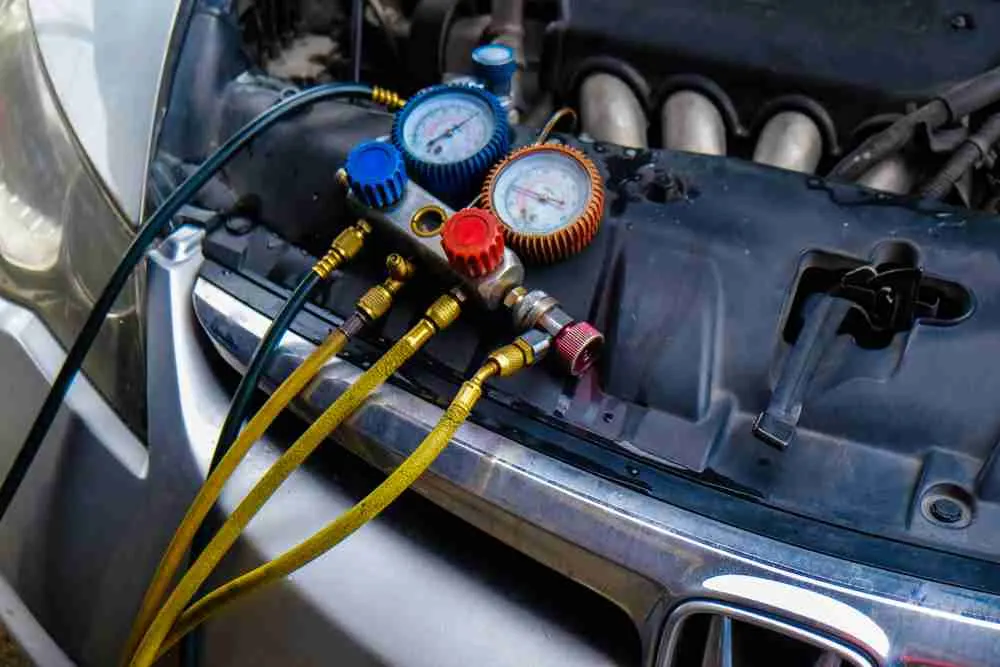
What pressure pattern points to the valve?
- Stuck closed or blocked: very low low-side pressure, high side lower than expected, frost on the valve or line
- Stuck open: low side too high, high side low, and vents only cool
- Hunting valve: vent temperature swings up and down at steady speed
- Clogged orifice screen: similar to stuck closed, often with debris from compressor wear
What else can look like a bad valve?
A low charge can starve the evaporator and mimic a valve that is stuck closed. Moisture in the system can freeze at the valve and block it only after a long drive, then thaw when the car sits. A failed evaporator temperature sensor can let the coil ice over. We weigh the charge and watch readings over time so the diagnosis holds up.
Our expansion valve process
Step 1: Record the pattern
Gauges and vent temperature are logged at idle and higher engine speed.
Step 2: Confirm the charge
The refrigerant is recovered and weighed to rule out undercharge.
Step 3: Replace the valve
The valve or orifice tube is replaced with new seals, and the screen is inspected for debris.
Step 4: Dry and recharge
A new drier, a deep vacuum and a charge by weight finish the job.
What's included in expansion valve repair
Included on the work order
- 01Pressure pattern and vent temperature log
- 02Recovery and charge weight check
- 03Expansion valve or orifice tube
- 04New O-rings and correct oil
- 05Receiver drier or accumulator
- 06Vacuum, recharge and road test
How pricing and timing work
Some valves are reachable at the firewall. Others sit behind the dash with the evaporator, which adds significant labor. Debris in the old valve screen can point to a larger problem, and if we find it, we show you and discuss an AC system flush before going further. Firewall valves are often a one-day job. The drier is included because it is usually part of the job, see AC dryer replacement.

Frequently asked questions
Can an expansion valve be cleaned instead of replaced?
Some can have debris cleared, but the internal parts wear too. When the valve itself is sticking, a new valve is the reliable fix.
Why is there frost on my AC line?
Frost forms where refrigerant boils at very low pressure. That points to a restriction or a low charge. It is not dangerous, but the system will not cool well until the cause is fixed.
Why replace the drier with the valve?
Opening the system lets in moisture, and moisture is what freezes in valves. A fresh drier absorbs it so the new valve works as it should.