
On this page
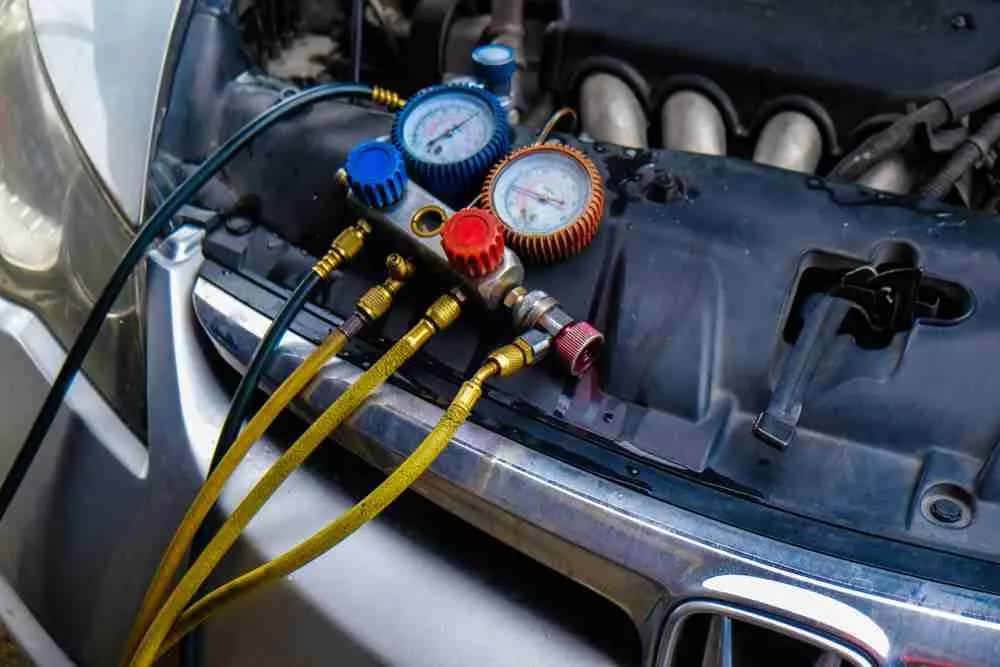
AC pressure testing is how Route 66 Auto Repair in Upland looks inside a sealed system without opening it. Gauges on the high and low side service ports, read against the day's air temperature and humidity, show whether the problem is charge, airflow, a restriction or the compressor. We record the numbers on your repair order so you can see the evidence behind the estimate.
Why do readings depend on the weather?
Refrigerant pressure rises and falls with temperature. A high side reading that is normal at 75 degrees is too low at 105. That is why we record ambient temperature and humidity at the car before interpreting anything, and why a DIY gauge on a can, which reads only the low side, can mislead. We use the pressure charts for your vehicle and test at set engine speeds with the doors closed and the fan on high.
What do common pressure patterns mean?
| Low side | High side | Likely cause |
|---|---|---|
| Low | Low | Undercharged system, usually a leak |
| High | High | Overcharge, or poor airflow across the condenser |
| Very low, frosting | Low or normal | Restriction at the valve, orifice tube or drier |
| High | Low | Weak compressor or valve stuck open |
| Normal | Climbs at idle only | Condenser fan or blocked condenser fins |
What else is part of a pressure test?
Gauges are compared with scan data from the high side pressure sensor, since a lying sensor can stop the compressor. We also watch how pressures change over ten or fifteen minutes, because moisture freezing at the valve may only show after the system runs a while. When the system is empty, a static nitrogen test checks for leaks, which is covered on our leak detection page.
Our AC pressure testing process
Step 1: Record conditions
Ambient temperature, humidity and vent temperature are logged first.
Step 2: Connect gauges
High and low side gauges go on the service ports, with caps and valve cores checked.
Step 3: Run set conditions
Readings are taken at idle and at a raised engine speed.
Step 4: Interpret and explain
We compare readings to specs and scan data, then explain the pattern on your estimate.
What's included in AC pressure testing
Included on the work order
- 01Ambient and vent temperature log
- 02High and low side gauge readings
- 03Readings at idle and raised speed
- 04Pressure sensor versus gauge comparison
- 05Written interpretation of the pattern
How pricing and timing work
Pressure testing is part of our diagnostic, and the fee is stated at the counter before we begin. It applies to approved related repair. Testing is usually done within the same visit. If the readings point to a failed expansion valve or pressure switch, the estimate names it and shows the reading that led us there.

Frequently asked questions
Can I check my AC pressure with a store gauge?
A store gauge reads only the low side and does not account for temperature. It can suggest a problem but cannot tell you what it is, and it often leads to overcharging.
Does pressure testing find leaks?
Running pressures show whether the system is low. A standing nitrogen or vacuum test confirms a leak exists. Dye or a detector finds where it is.
Will you show me the readings?
Yes. We write the readings and ambient temperature on the repair order and explain what they mean.