
On this page
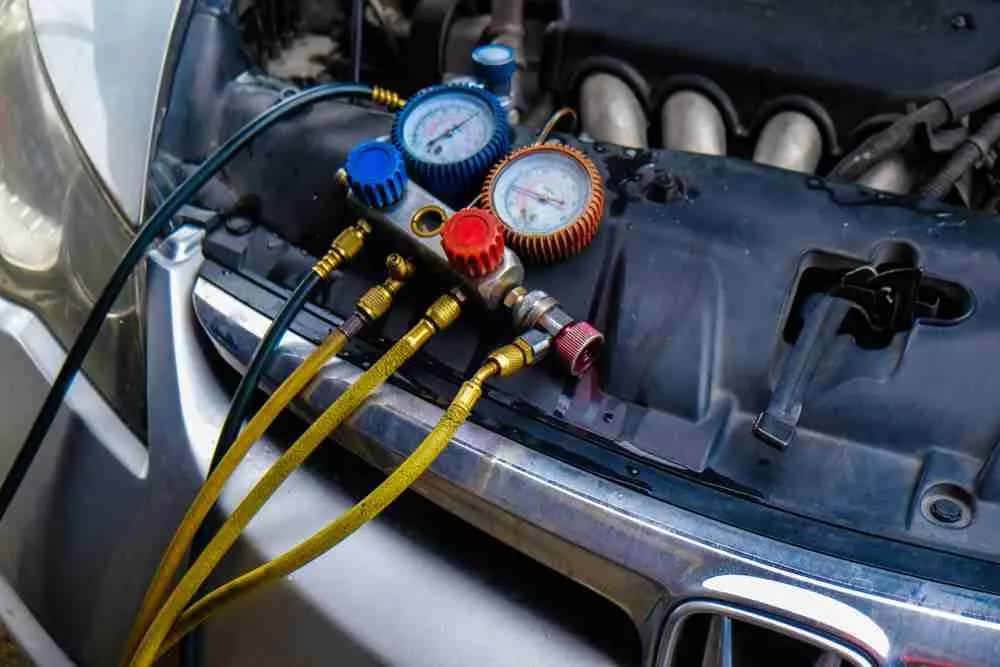
Rubber AC hoses flex with the engine and take a beating from heat under the hood. Route 66 Auto Repair in Upland replaces the suction and discharge hose assemblies when they leak at the crimps, crack or get chafed. Most hoses are sold as complete assemblies with metal ends, and we explain which one failed and why on your written estimate before we order it.
Why do AC hoses leak?
AC hoses are made with an inner barrier layer to hold refrigerant, wrapped in rubber and reinforcement. The weak spots are the crimped metal ferrules where rubber meets metal. Engine movement flexes them thousands of times. Heat from the exhaust manifold hardens the rubber. After enough cycles, refrigerant seeps past the crimp. Look for an oily, dust-caked film or glowing dye right at the crimp.
The discharge hose, from the compressor to the condenser, carries the hottest refrigerant and vibrates the most. The suction hose, returning to the compressor, is larger and often sweats in humid weather, which is normal and not a leak.
Signs of a failing AC hose
- Oily grime or dye at a hose crimp
- Cracks, bulges or soft spots in the rubber
- A hose rubbing against a bracket, belt or engine part
- A hissing sound near the compressor right after shutdown
- A muffler section on the hose that rattles loose
Our AC hose replacement process
Step 1: Confirm the leak
Dye or the electronic detector confirms the crimp or hose body is the source.
Step 2: Recover and remove
The system is emptied and the hose assembly is removed with its brackets.
Step 3: Install with correct routing
The new hose goes in with new O-rings, correct oil and factory clamp positions.
Step 4: Vacuum, charge and check
A vacuum hold confirms the seal, then we charge by weight and check for rubbing at idle.
What's included in AC hose replacement
Included on the work order
- 01Leak confirmation at the hose
- 02Refrigerant recovery
- 03Hose assembly as quoted
- 04New O-rings and oil
- 05Clamp and routing check
- 06Vacuum, charge by weight and vent temperature check
Is it a need-now or need-later repair?
Need now: call
- Hose rubbing on the drive belt or a hot exhaust part
- Hose bulging near the compressor
Need later: book
- Slow seep at a crimp with the AC still cooling
- Surface cracks in the outer cover without a leak
How pricing and timing work
Some hose assemblies include a section of metal line or a muffler, which affects the part price. Hoses routed under the intake take more labor. Your estimate shows each piece. Most hose jobs are completed in a day when the part is available. Rigid metal sections have their own page, AC line repair. The leak test that comes first is on AC leak detection, and the recharge that finishes the job is explained there too.

Frequently asked questions
Can an AC hose be re-crimped?
Some shops build hoses from bulk stock, but factory-style assemblies fit and seal better on most modern cars. We use assemblies that match your vehicle.
Why is my AC hose sweating?
The suction hose is cold and collects condensation on humid days. That is normal. An oily film or dye at the ends is a leak.
Do I need a new drier with a hose?
Not always. If the system was open only briefly and holds vacuum well, the drier may stay. We explain the choice on the estimate.