

On this page
The rigid aluminum lines in your AC carry refrigerant between the compressor, condenser and evaporator. Route 66 Auto Repair in Upland repairs leaks in those lines, their fittings and the service ports built into them. Lines fail from rubbing, corrosion and cracked joints, and we find the exact spot before quoting. Your written estimate shows the section, the seals and the recharge.
Where do metal AC lines fail?
- Where a line touches a bracket, the frame or another hose and wears through
- At brazed joints where a metal tube meets a fitting block
- Service port valves, whose tiny cores seep when the cap is missing
- Under clamps and insulating sleeves that trap moisture
- Long lines to rear AC units that run under the body on vans and SUVs
Why do service ports leak so often?
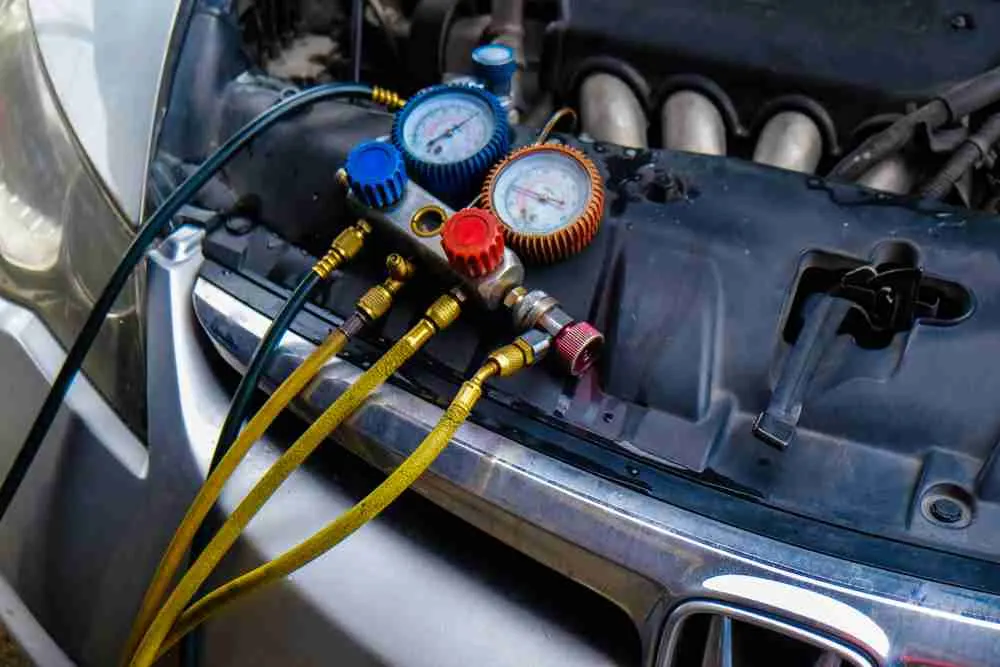
Each system has a high side and a low side service port, which is where gauges connect. Inside each is a spring-loaded valve core, much like a tire valve. Dirt, age and repeated connections wear the core seal. The plastic cap is actually the backup seal, and many cars lose theirs. We test ports with the electronic detector and replace worn cores. On many cars the core can be changed with a special tool; on others the port is part of the line.
Repair a section or replace the whole line?
A worn spot in the middle of a line can sometimes be repaired with a manufacturer-approved splice kit. A damaged fitting or brazed joint usually means a new line assembly. We follow the approach your vehicle's service information allows, and we add a protective sleeve or reposition the clamp so the new line does not rub through again. Flexible rubber sections are handled on our AC hose replacement page.
Our AC line repair process
Step 1: Trace the leak
Dye and the electronic detector follow the line from end to end.
Step 2: Recover and remove
Refrigerant is recovered and the damaged section comes out.
Step 3: Install and protect
The new section goes in with fresh O-rings, correct oil and a sleeve or clamp at the wear point.
Step 4: Vacuum and charge
A vacuum hold checks the seal, then the system is charged by weight and tested.
What's included in AC line repair
Included on the work order
- 01Line and fitting leak trace
- 02Service port core test
- 03Refrigerant recovery
- 04Line section or assembly as quoted
- 05New O-rings and caps
- 06Vacuum hold, charge by weight and vent check
How pricing and timing work
A valve core is a quick fix. A line that runs behind the engine or under the body takes longer to route. Your estimate lists the part, labor and refrigerant separately. Most line jobs finish in a day when the part is in stock. The leak detection step comes first, and the recharge comes last.
Frequently asked questions
Can a leaking AC line be welded?
Aluminum AC lines are thin and hold high pressure, so welding a repair on the car is not a reliable fix. We use approved splice kits or new line assemblies instead.
Should I replace a missing service port cap?
Yes. The cap is a secondary seal that keeps dirt out of the valve core. It is a small part that can prevent a slow leak.
Why did my line rub through?
A missing clamp, a shifted bracket or engine movement can let a line touch something. We fix the cause along with the line so it does not happen again.