

On this page
An AC system vacuum test pulls the air and moisture out of an empty system, then watches whether the vacuum holds. Route 66 Auto Repair in Upland runs it before every charge we put in, because refrigerant added to a wet or leaking system does not stay cold for long. If the gauge creeps back up, we know there is a leak or trapped moisture, and we find out which before charging.
Why does an AC system need a vacuum at all?
Air does not compress and cool the way refrigerant does, so any left inside raises pressures and cuts cooling. Moisture is worse. It mixes with the oil to form acids that eat seals and metal, and it can freeze at the expansion valve, causing cooling that comes and goes.
Water boils at a much lower temperature under deep vacuum, so pulling the system down for long enough turns trapped moisture into vapor the pump can remove. A quick pull only removes air.
What does the hold test tell us?
After the pump is valved off, the gauge is watched for a set time. The pattern means something:
- Holds steady: the system is dry and sealed, ready to charge
- Rises quickly and keeps rising: a leak is letting air in
- Rises a little, then levels off: moisture is still boiling off, so we pull longer
- Will not pull down at all: a large leak or an open fitting
Our vacuum test process
Step 1: Recover what is left
Any remaining refrigerant is recovered and weighed so we know how much was in it.
Step 2: Pull a deep vacuum
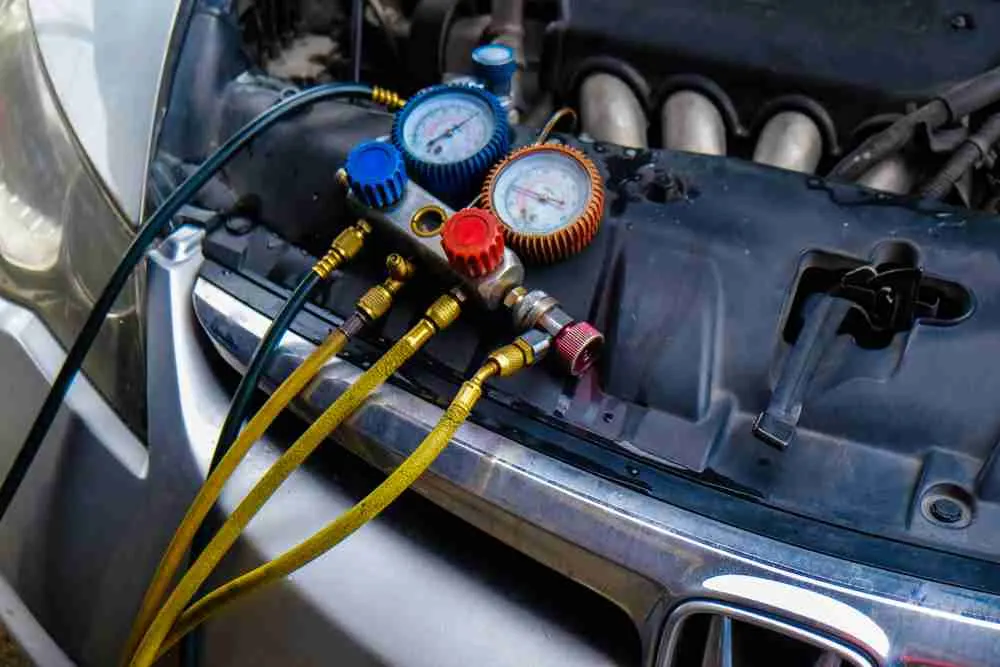
The pump runs through both service ports long enough to boil moisture out, with a gauge that reads fine vacuum levels.
Step 3: Isolate and watch
The pump is valved off and the reading is timed and recorded.
Step 4: Act on the result
A good hold goes to charging by weight. A failed hold goes to leak detection first.
What's included in an AC system vacuum test
Included on the work order
- 01Refrigerant recovery and weight record
- 02Service port and cap inspection
- 03Timed deep vacuum on both sides
- 04Recorded hold test result
- 05Written next step based on the reading
What happens if the vacuum fails?
Need now: call
- A fast rise, meaning a leak that would lose a new charge
- Moisture that will not clear, which calls for a new drier
Need later: book
- A slow rise on a system you plan to replace soon, discussed with you before charging
How pricing and timing work
The vacuum and hold are part of any recharge or sealed-side repair, not a surprise add-on, and they take real time. If the hold fails, charging stops and AC system leak detection goes on the estimate. A system that was open for weeks may need a new drier, explained on AC dryer replacement. When the hold passes, the charge by weight follows on the same visit, covered on AC system recharge.
After a passed vacuum test and charge
The vent temperature should be steady through hot afternoons. The hold result is written on your repair order, so if cooling drops later, the next technician knows the system was sealed on that date.
Frequently asked questions
Can a recharge kit skip the vacuum?
Store kits add refrigerant to whatever is already inside, including air and moisture. That is one reason those charges fade. A proper vacuum requires the system to be empty first.
How long does the vacuum take?
Longer than most people expect. A system that sat open or empty needs more time for moisture to boil off. We do not cut it short to save time on the board.
Does a passed vacuum test mean there is no leak?
It means the system held under vacuum for the test period. A very small leak that only opens under high pressure on a hot day can still exist, which is why dye can be added with the charge.