
On this page
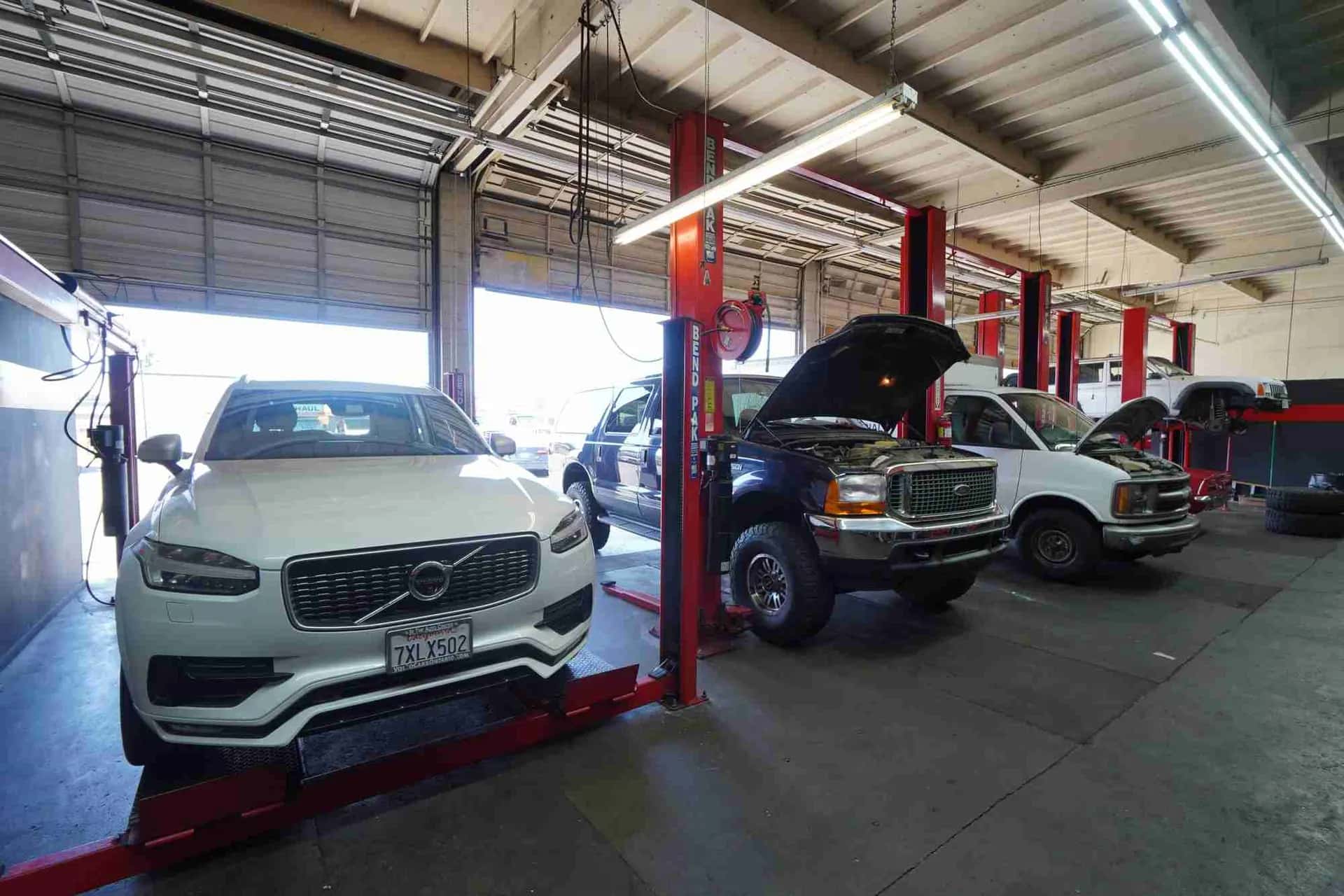
A suspension inspection at Route 66 Auto Repair in Upland checks the parts that keep your tires planted: shocks, struts, springs, control arm bushings, ball joints and sway bar links. We test for play on the lift, look for leaks and torn rubber, and photograph what is worn. You leave knowing whether that clunk under the car is urgent or just annoying.
What suspension symptoms should you watch for?
- Clunks over speed bumps or driveway dips
- Nose dive when braking or squat when accelerating
- Floating or bouncing after bumps on the 10
- Uneven or cupped tire wear
- One corner of the car sitting lower than the others
- Oil wetting the outside of a shock or strut
How do we test suspension parts?
Many suspension faults only show under the right load. With the vehicle on the lift, a technician uses a pry bar to check ball joints and bushings for movement, and watches for play while the wheel is rocked. Shocks and struts are checked for leaks, bent rods and broken mounts. Springs are checked for cracks and sag by comparing ride height side to side.
A road test ties it together. We drive over the same kind of bumps that bother you and listen for where the noise comes from. When a joint is worn, you get a photo, or we show you the movement in person. For a closer look at single parts, see the ball joint inspection and shock absorber inspection.
Our suspension inspection process
Step 1: Road test
We confirm the noise or handling complaint before the car goes up.
Step 2: Lift inspection
Joints, bushings, mounts and links are checked for play and damage.
Step 3: Leaks and ride height
Shocks and struts are checked for leaks, and ride height is compared side to side.
Step 4: Document
Worn parts are photographed or shown, and the results go on the report.
What's included in a suspension inspection
Included on the work order
- 01Road test over bumps and turns
- 02Ball joint and tie rod play check
- 03Control arm bushing inspection
- 04Shock and strut leak and mount check
- 05Spring and ride height comparison
- 06Sway bar link and bushing check
- 07Tire wear notes tied to the findings
Which findings are need-now, and which can wait?
Need now: call
- A ball joint with noticeable play
- A broken coil spring
- A strut mount that has separated
Need later: book
- A shock with light misting but good control
- A worn sway bar link that only rattles
How pricing and timing work
The inspection price is stated before we start. Suspension parts are often replaced in pairs, and some jobs need an alignment afterward, which we arrange and then road-test. All of that is spelled out in the written estimate. See suspension and steering services for repair options, and the tire inspection for what your tread says about it.
Frequently asked questions
Is a clunk always dangerous?
No. A loose sway bar link can clunk loudly and still be a need-later repair. A worn ball joint can be quiet and still be a need-now repair. That is why we check each joint instead of going by the noise.
How do I know my shocks are worn?
Bouncing after bumps, nose dive under braking and cupped tires are common signs. Oil on the shock body is another. We confirm with a visual check and a road test before recommending anything.
Will I need an alignment after suspension work?
Often, yes, when steering or control arm parts are replaced. Alignment is not done in our shop, so we arrange it, then road-test the car to make sure it tracks straight.