
On this page
Battery testing at Route 66 Auto Repair in Upland answers one question: is your battery the problem, or is something else making it look bad? We measure how full it is and how healthy it is, which are two different things. A tired battery can be fully charged and still fail to start the car. A good battery can be flat because a light stayed on. The test tells us which.
Charge versus health: why both matter
State of charge is how full the battery is, like a fuel gauge. State of health is how much capacity it still has compared with new, like the size of the tank. A half-full battery can be healthy, and a worn one can read full and still sag under the starter.
Our testers check both. When the charge is low, we charge the battery before judging it, because testing a flat battery can condemn a good one.
Both readings have accepted reference points. A rested 12-volt battery generally sits near 12.6 volts when it is genuinely full, and a tester compares measured cold cranking amps with the rating printed on the label. As a general guideline, a battery whose measured cranking amps have fallen well under about three quarters of its label rating is nearing the end of its useful life even if the voltage looks fine. The rating on your battery and your vehicle maker's requirement are the figures we test against.
When is a good time to get the battery tested?
- Before summer, since heat does the most damage in the Inland Empire
- Right after any jump start, to learn why it went flat
- When the engine cranks slower than it used to
- Before a long trip up the Cajon Pass or out to the desert
What can you check at home, and what needs the shop?
At home, look for a swollen case, crusty terminals and a loose hold-down, and listen to the crank speed. If you own a meter, a battery voltage test gives a rough idea of charge. What home checks cannot do is apply a real load or measure internal health. That is where our testers, and a full battery load test when results are borderline, come in. A broader condition report is available as a battery condition inspection.
Our battery testing process
Step 1: Look it over
We check the case, terminals, hold-down and the date code.
Step 2: Charge if needed
A low battery is charged before we judge its health.
Step 3: Test health
An electronic tester measures internal condition and compares it with the battery's rating.
Step 4: Check the car's side
Charging output and a quick drain check rule out the car as the reason the battery went flat.
What's included in a battery test
Included on the work order
- 01Visual check of case, terminals and hold-down
- 02State of charge reading
- 03State of health result against the battery's rating
- 04Charging output check with the engine running
- 05Results written on your repair order
What the result means for timing
Need now: call
- A failed health result
- A battery that will not hold a charge overnight
Need later: book
- A marginal result on a battery that still starts well
- Light terminal buildup with a healthy battery
How pricing and timing work
After the test
Keep the result. If your battery tested marginal, plan the replacement before the hottest weeks and retest in a few months.
Frequently asked questions
My battery is only a couple of years old. Can it really be bad?
Yes. Heat, short trips and a car that sits can wear a battery early. Age alone does not decide it. The health test does, and we show you the result.
Can a jump start damage my battery?
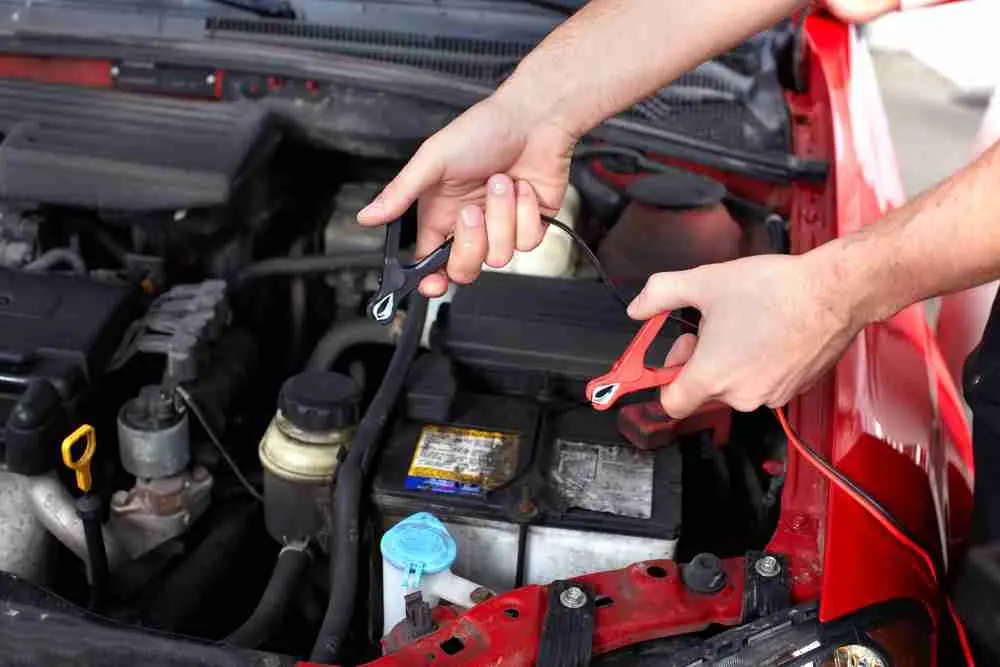
A jump usually does not, but a battery that goes fully flat can lose capacity each time. That is why we test after any jump and look for the reason it went flat.
Do you test the alternator at the same time?
We check charging output as part of the visit, because a weak alternator can make a good battery look bad. A deeper alternator test is a separate step if the numbers look off.