
On this page
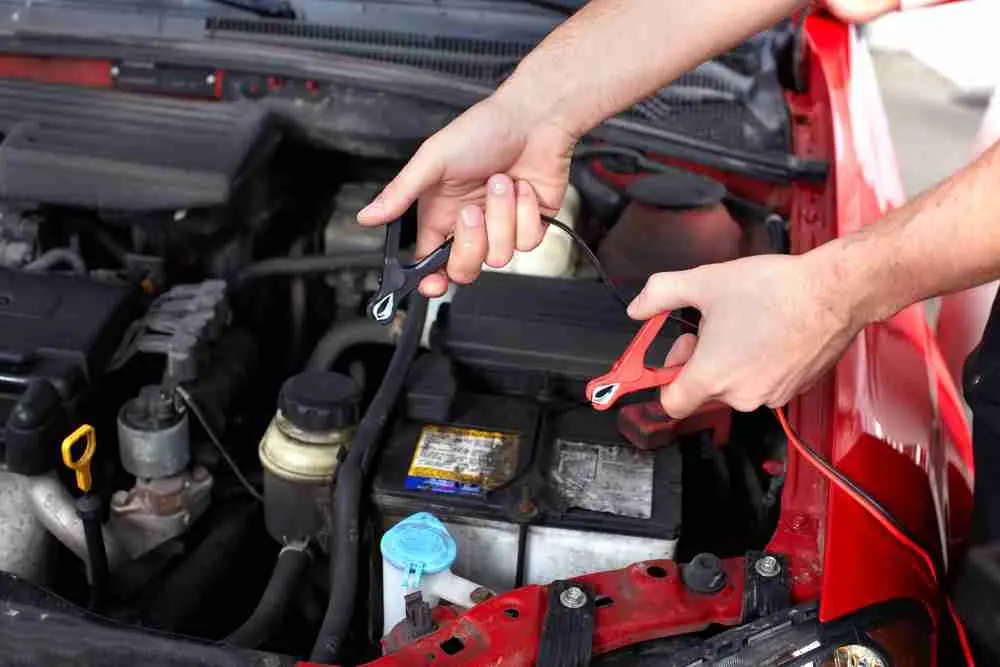
A battery load test at Route 66 Auto Repair in Upland puts your battery under a heavy draw, much like the starter does, and watches how far the voltage falls. It is the test that catches a battery that reads fine on a meter but fails on a hot afternoon. We charge the battery first, account for temperature, and write the result on your repair order.
How does a battery load test work?
Every battery has a cold cranking amp rating printed on the label. A classic load test draws about half that rating for around fifteen seconds while the tester watches voltage. A healthy battery at room temperature stays above roughly 9.6 volts. One that drops well below has lost too much capacity to be trusted.
Electronic testers reach a similar answer a different way, by measuring the battery's internal conductance without a long heavy draw. We use the method that suits the battery and the car, and when an electronic result is borderline, a true load test settles it.
What makes a load test fair?
- The battery is charged first, since a flat battery always fails
- Surface charge is removed so the starting voltage is honest
- Temperature is considered, because a cold battery reads lower
- The rating used is the one on the battery, not a guess
- Terminals are clean so the clamp is not the weak link
Our load test process
Step 1: Inspect and charge
We check the case and terminals, then bring the battery to full charge if it is low.
Step 2: Apply the load
The tester draws a set current and records the lowest voltage.
Step 3: Compare and explain
We compare the result with the rating and tell you plainly if the battery passed, is marginal or failed.
What's included in a load test
Included on the work order
- 01Battery charge check and charging if needed
- 02Load or conductance test against the battery's rating
- 03Lowest voltage and pass or fail written on the repair order
- 04Terminal condition check
- 05A charging output reading so the car is not overlooked
Why a passing battery can still fail in July
Heat makes a battery look stronger on the day and wears it faster over the season. That is why a marginal result in spring deserves a plan. If you just want a quick read, battery testing covers the everyday check, and a battery voltage test is the simplest first look. A failed battery leads to battery replacement.
What the result means
Need now: call
- Voltage falls well below the pass line
- The battery will not accept a charge
Need later: book
- A pass that sits close to the line on an older battery
- A pass with light terminal buildup to clean
How pricing and timing work
Aftercare
Keep the number. Retesting before and after summer shows the trend better than any single result.
Frequently asked questions
Can a parts store test give the same answer?
Many stores use electronic testers that work well on a charged battery. Results on a flat or hot battery can mislead. We charge first and check the car's charging side too.
Does the load test hurt the battery?
No. It is a short draw, similar to a hard start. A healthy battery recovers right away.
What if my battery passes but the car still cranks slowly?
Then the problem is likely a cable, a ground or the starter. We move on to voltage drop testing during cranking.