
On this page
An oil change inspection is the look we take while your car is already on the lift. Route 66 Auto Repair in Upland checks for leaks, torn boots, worn belts, soft hoses, brake wear you can see, and tire condition during every oil service. It takes a few extra minutes and catches problems while they are still small. Everything we note is written on your repair order with a need-now or can-schedule label, and we show photos when a part is the point.
What do we look at under the car?
- Engine, transmission and differential leaks, with the source noted
- CV boots, tie rod ends and ball joint boots for tears
- Exhaust hangers and any rattling heat shields
- Brake lines and hoses, plus pad thickness where visible
- Tire tread depth and uneven wear patterns
- Drive belt cracks and coolant hose condition from above
Why inspect during an oil change?
The car is already in the air and the underside is in plain view. That is the cheapest moment to notice a torn CV boot before grease flings out and the joint wears, or a seeping gasket before it drips on the exhaust.
Inland Empire driving is hard on rubber. Heat bakes boots and hoses, and dust sticks to any leak. A quick, consistent look at each visit builds a history, so we can tell you whether a seep is getting worse or holding steady. For a deeper check, ask about our full multi-point inspection.
How the oil change inspection works
Step 1: Lift and look
While the oil drains, the technician inspects the underside from front to back.
Step 2: Under-hood pass
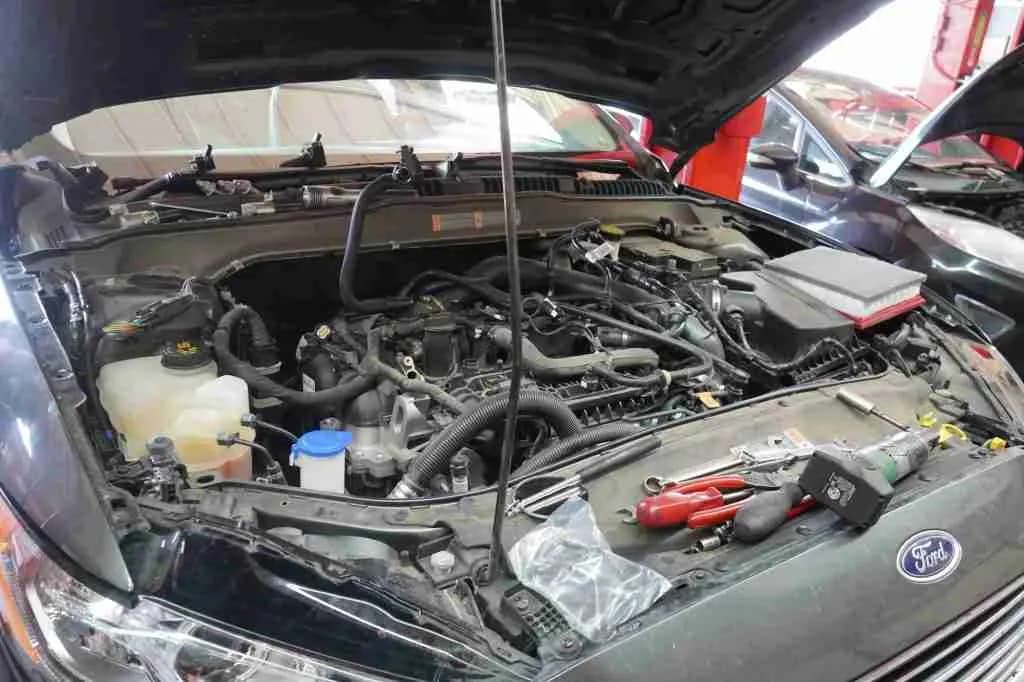
Belts, hoses, fluid levels and the battery get a visual check.
Step 3: Write it up
Each finding goes on the repair order with a label and a photo when useful.
Step 4: Walk you through it
The service writer explains what can wait and what should not, with no pressure to buy today.
What's included in the oil change inspection
Included on the work order
- 01Underbody leak and damage check
- 02Suspension and steering boot check
- 03Visible brake and tire condition
- 04Under-hood belts, hoses and fluid levels
- 05Written findings with need-now or can-schedule labels
How do we label what we find?
Need now: call
- Brake fluid leaks or metal-to-metal brake wear
- Tires with cords showing or bulges
- Oil or fuel dripping on the exhaust
Need later: book
- Light gasket seepage with a steady oil level
- A cracked boot with the joint still quiet
- Tread getting close to the wear bars
How pricing and timing work
Frequently asked questions
Will you push me to buy repairs I do not need?
No. Every finding is labeled need-now or can-schedule, and declined items simply stay on your repair order for next time. You decide what to do and when.
Is this the same as a pre-purchase inspection?
No. A pre-purchase inspection is a separate, far deeper deluxe service with a scan, road test and written buy-or-walk letter. The oil change inspection is a quick visual look during service.
Can I see what you found?
Yes. We take photos when a part is the point and can show you under the car when the shop floor allows. Old parts from any repair can be shown too.