
On this page
Shock absorbers control how fast your springs move, keeping the tires pressed to the road after bumps. When they wear, the car floats, bounces and dives, and stopping distances grow. Route 66 Auto Repair in Upland checks each shock for leaks, damage and weak damping, replaces them in axle pairs after written approval, and road-tests the ride. Many trucks and SUVs use shocks at the rear and struts up front. If your car uses struts instead, see strut repair.
How do worn shocks show up?
- The body keeps moving after a dip instead of settling
- The nose dives hard under braking or squats when accelerating
- Tires develop scalloped, cupped wear
- A loaded truck wallows on the freeway
- Oil wetting the shock body, or a bent or rusted shaft
Do shocks matter more when you haul or tow?
Yes. A loaded pickup or a car towing a trailer puts more energy into the springs, and worn shocks let that energy bounce around. Wallowing and trailer sway get worse. If you are planning a move, pair new shocks with a hookup check from our free towing inspection, which checks the trailer connection itself.
For work trucks, heavier-duty shocks may be an option. We explain the trade-offs in ride comfort before you choose.
Our shock replacement process
Step 1: Road test
We feel for float, dive and bounce on real streets.
Step 2: Inspect
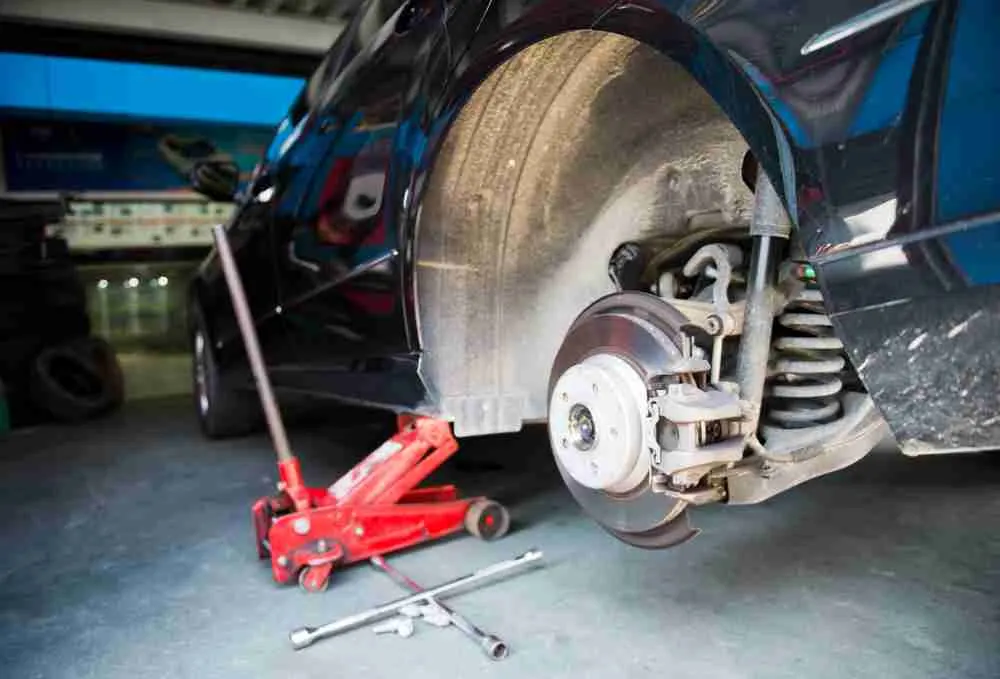
Each shock is checked for leaks, shaft damage, and worn mounting bushings.
Step 3: Quote in pairs
The estimate lists shocks by axle and any worn mounts or hardware.
Step 4: Replace and road test
New shocks are installed and torqued, and we road-test the ride.
What's included in shock absorber replacement
Included on the work order
- 01Before-and-after road test
- 02Leak, shaft and mount inspection
- 03Shocks replaced as an axle pair
- 04New mounting hardware where supplied
- 05Tire wear pattern noted
Need-now or need-later?
Need now: call
- A leaking or broken shock
- A detached shock mount
- Severe bounce that affects braking
Need later: book
- Gradual softening with no leaks
- Minor cupping on tires with good tread
How pricing and timing work
Aftercare
The car should feel more settled right away. If your tires already have cupped wear, that noise may linger until they are replaced; our tire services team can mount new ones when you are ready.
Frequently asked questions
How long do shock absorbers last?
It depends on the vehicle, load and roads. Instead of a fixed number, we look for leaks, damage and how the car behaves on a road test.
Does the bounce test work?
Pushing down on a corner can reveal a badly worn shock, but it misses many. A road test and visual inspection are more reliable.
Can I replace just one shock?
It is best to replace them as a pair on the same axle so both sides damp equally.