
On this page
Camber is the inward or outward tilt of a tire when you look at the car from the front. When it drifts out of spec, one edge of the tread wears away while the rest looks fine. Route 66 Auto Repair in Upland does not align wheels in-house. We read the wear, find the worn or bent part that changed the camber, fix it with your approval, then arrange the alignment and road-test the result.
What is camber, in plain terms?
Stand in front of the car. If the top of a tire leans in toward the engine, that is negative camber; leaning out is positive camber. Most cars use a little negative camber for grip in turns. Too much either way loads one edge of the tread, and that edge wears out early.
Many cars have no factory camber adjustment at all. The angle is set by the position of the strut, the control arms and the ball joints. So when camber changes, something has usually worn, sagged or bent.
Signs your camber is off
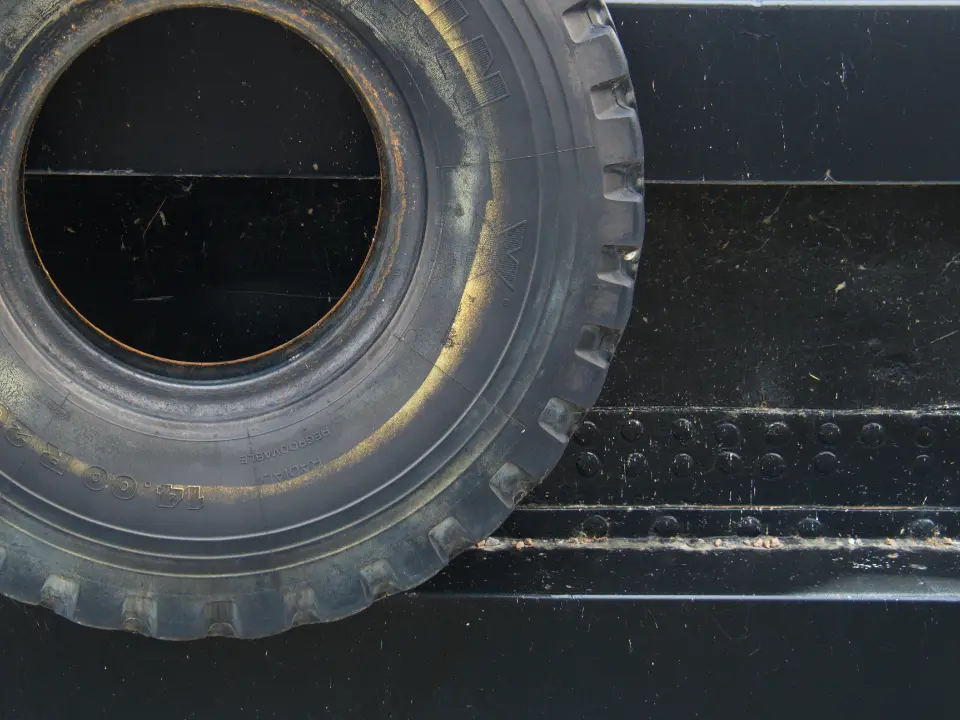
- The inner edge of a front tire is bald while the center still has tread.
- The car drifts toward the side with more positive camber.
- One wheel visibly leans compared with the other side.
- Edge wear started after a pothole, a curb hit or lowering springs.
Why do we inspect parts before any camber adjustment?
A worn lower ball joint, a torn control arm bushing or a collapsed strut mount lets the wheel tilt under load even if it measures fine sitting still. Set camber on top of those parts and the tire keeps wearing. So we check each of them, look for bent struts or spindles after an impact, and write what we find on the estimate. Worn parts are handled through our suspension and steering services, including ball joint replacement. When the car is sound, we arrange the alignment, where an adjustment bolt or kit may be needed on cars without factory adjustment.
Our camber inspection and alignment process
Step 1: Read the tires
We measure tread at the inner, center and outer grooves and photograph the wear.
Step 2: Inspect suspension
Ball joints, bushings, strut mounts and springs are checked for play, sag and bends.
Step 3: Repair with approval
Worn parts are replaced only after you approve the written estimate.
Step 4: Arrange the alignment
We arrange the alignment, including camber correction where your car allows it.
Step 5: Road test
We drive the car to confirm it tracks straight with a centered steering wheel.
What's included
Included on the work order
- 01Tread readings across each front and rear tire
- 02Suspension inspection for parts that change camber
- 03Photos of edge wear and any worn parts
- 04Alignment arranged once the car is ready
- 05Road test after the alignment
Need-now or need-later?
Need now: call
- Cords showing on an inner edge
- A loose ball joint or bent suspension part
Need later: book
- Mild edge wear with good tread elsewhere
- An alignment after planned suspension work
How pricing and timing work
Frequently asked questions
Can I keep driving with camber wear?
Yes for a short time if the worn edge still has tread and nothing is loose. Once cords show, or a suspension part has play, the car should be fixed before more miles.
Do lowered cars always need camber correction?
Lowering usually adds negative camber, and many cars need an adjustment kit to correct it. We inspect the setup and tell you what the alignment will need.
Will new tires fix camber wear?
No. New tires will wear the same way until the cause is fixed and the alignment is corrected. We check the parts first so the new set lasts.