
On this page
Toe is whether your tires point straight ahead, slightly inward or slightly outward when seen from above. It is the angle that wears tires fastest when it is off. Route 66 Auto Repair in Upland checks the tie rods and steering parts that set toe, replaces what is worn after you approve it, then arranges the alignment and road-tests the car. We do not align wheels in-house.
What is toe, and why does it wear tires so fast?
Picture your feet. Pointed slightly together is toe-in; pointed apart is toe-out. A car's wheels work the same way. Even a small error means the tire is dragged a little sideways with every turn of the wheel, mile after mile. On a daily 10 freeway commute that drag scrubs rubber fast.
Toe is set by the tie rods, which connect the steering rack to each wheel. Toe is the angle most often changed by a curb hit, a pothole, or replacing a tie rod end or steering rack, and it is adjustable on nearly every car.
Signs of a toe problem
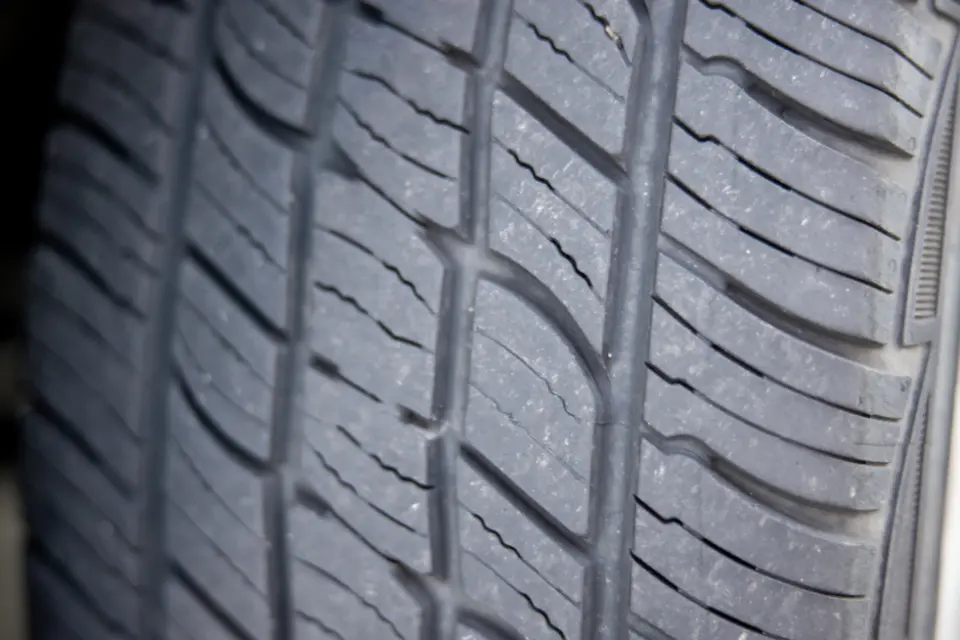
- Feathered tread: ribs feel smooth one way and sharp the other when you run a hand across them.
- A steering wheel that sits off-center while the car goes straight.
- Wandering that makes you steer constantly on a straight road.
- Tire squeal on slow, tight turns in parking lots.
- Fast wear on both front tires at once.
Why do tie rods get checked before toe is corrected?
A tie rod end with play lets toe change every time you hit a bump. Correct toe on a loose joint and it drifts right back out, so the alignment was wasted. We check inner and outer tie rod ends, the rack mounts and boots, and the steering linkage for bends. Worn parts are replaced through tie rod end repair or the wider suspension and steering services team. When everything is tight, we arrange the alignment.
Our toe correction process
Step 1: Feel and measure the tread
We check for feathering and record tread depth at the inner and outer grooves.
Step 2: Check steering linkage
Tie rod ends, rack mounts and boots are tested for play and damage.
Step 3: Approve repairs
Any worn part is listed on the written estimate before it is replaced.
Step 4: Arrange the alignment
Once parts are sound, we arrange the alignment to bring toe back into spec.
Step 5: Road test
We confirm a centered steering wheel and no drift on the road.
What's included
Included on the work order
- 01Feathering and tread depth check on each tire
- 02Inner and outer tie rod inspection
- 03Steering rack mount and boot check
- 04Alignment arranged after repairs
- 05Road test for wheel center and drift
Need-now or need-later?
Need now: call
- A tie rod end with noticeable play
- A sudden off-center wheel after a curb strike
Need later: book
- Light feathering with good tread depth
- An alignment after a planned steering part replacement
How pricing and timing work
Frequently asked questions
Why is my steering wheel crooked when the car drives straight?
Usually toe changed on one side, often after a curb hit or a steering part replacement. We check the tie rods for damage, then arrange the alignment to center the wheel.
Does replacing a tie rod always need an alignment?
Yes. Any tie rod change moves toe. We include the alignment on that estimate so the new part does not wear out your tires.
Can feathered tires recover after toe is fixed?
The feathering may smooth out somewhat with rotation, but lost tread does not come back. If the wear is heavy, we may suggest new tires after the correction.