
On this page
Tie rods connect your steering rack to the front wheels, and the ball-type ends are where wear shows up first. Route 66 Auto Repair in Upland tests both the outer ends and the inner tie rods, because they wear separately and feel alike. If one is loose, we replace it after you approve the written estimate, then arrange the alignment and road-test the car. A worn tie rod is the classic reason an alignment will not hold, which is why our suspension alignment coordination starts here.
What are the signs of a bad tie rod end?
- A slight dead spot or play when you move the wheel at highway speed
- Tread that feels sharp in one direction and smooth in the other when you run a hand across it
- A clunk when turning the wheel side to side while parked
- A steering wheel that no longer sits centered
- A split boot on the tie rod end with dirt packed inside
Inner or outer tie rod: how do we tell?
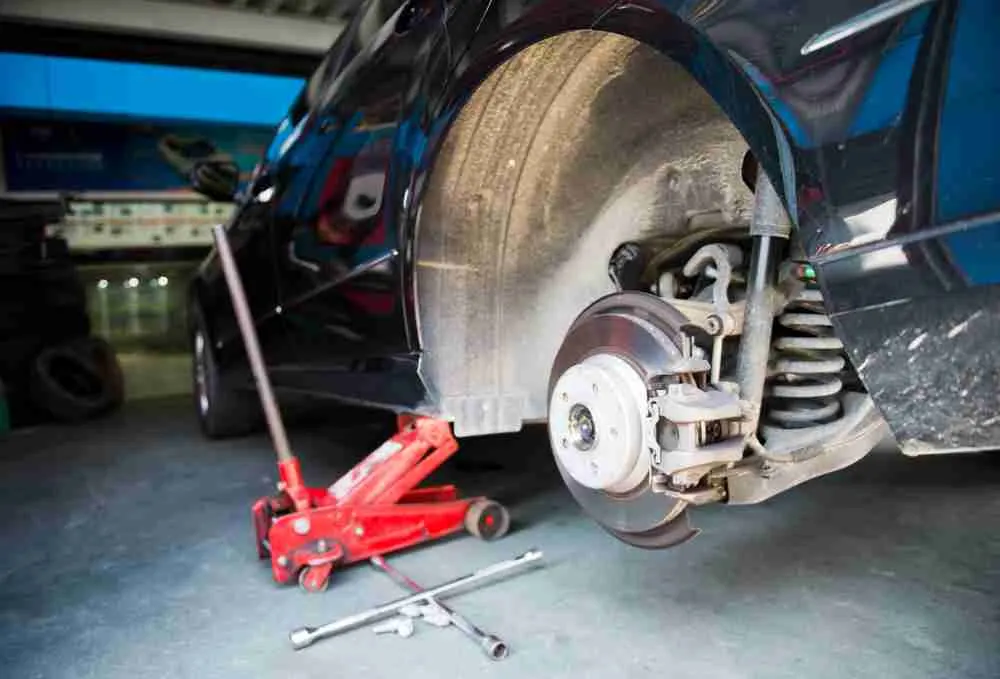
The outer end bolts to the steering knuckle and is easy to see. The inner tie rod hides under the rack boot. With the wheel off the ground, the technician grips the tire at the sides and pushes in and out, then feels each joint in turn. If the outer end moves, we see it. If the play is inside the boot, we squeeze the boot and feel the inner joint shift.
We also measure how far the tie rod has been threaded, so the new one can be set close to the original length before the alignment. That keeps the drive to the alignment straight.
Our tie rod repair process
Step 1: Test both joints
Outer ends and inner tie rods are checked separately for play.
Step 2: Quote with photos
The estimate shows which joint is worn and includes the alignment line.
Step 3: Replace and pre-set
The new part is installed and set to the original length, with the jam nut and cotter pin secured.
Step 4: Align and road test
We arrange the alignment, then drive the car to confirm it tracks straight.
What's included in tie rod end repair
Included on the work order
- 01Separate play check at inner and outer tie rods
- 02Rack boot condition check
- 03Original length measurement before removal
- 04Torque and locking hardware to spec
- 05Alignment arranged after installation
- 06Road test for centering and pull
Need-now or need-later?
Need now: call
- Any measurable tie rod play
- A clunk when turning the wheel parked
- Rapid feathering on the front tires
Need later: book
- A tight tie rod end with a cracked boot
- A slightly off-center wheel with tight joints
How pricing and timing work
Aftercare
Check that the steering wheel sits centered after the alignment is done. Run a hand over the tread after a few weeks; smooth in both directions means the toe is right. Our toe angle correction page explains what that wear pattern means.
Frequently asked questions
Can I drive with a bad tie rod end?
Short, careful trips are sometimes possible with minor play, but a badly worn tie rod can separate and leave you unable to steer that wheel. If you feel looseness, get it checked soon.
Do I need an alignment after replacing a tie rod?
Yes. The tie rod sets toe, and even a careful pre-set is not exact. We arrange the alignment and road-test the car afterward.
Why replace the inner tie rod too?
Only if it is worn. Inner and outer joints wear on their own schedules. We test each and quote only what moves.