
On this page
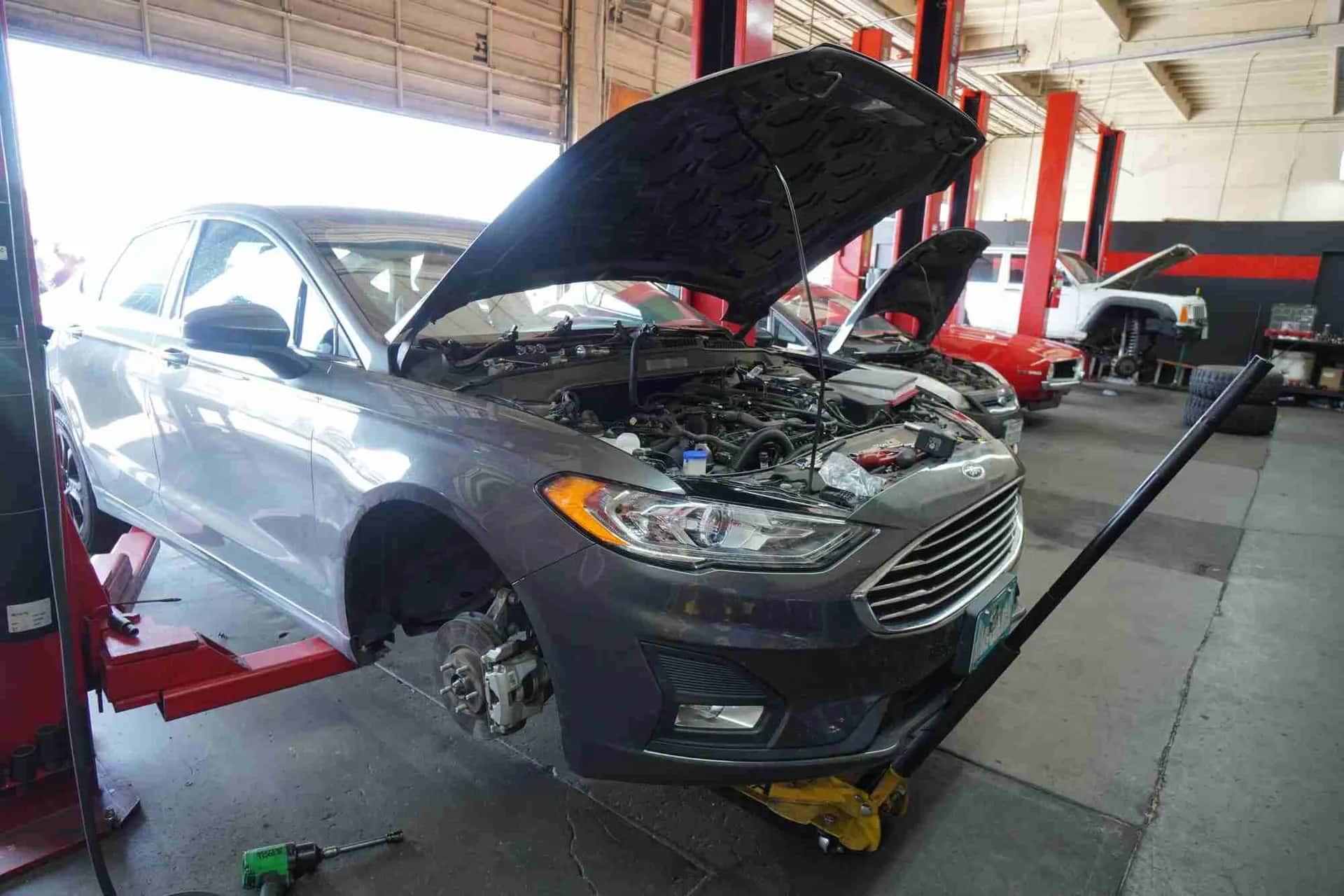
Route 66 Auto Repair in Upland does not align wheels in-house. What we handle is everything that makes an alignment hold: we inspect your tire wear and the suspension parts that set the angles, repair anything loose or bent with your approval, then arrange the alignment and road-test the car when it returns. For more on tires, see our tire services.
What are camber, toe and caster in plain words?
Camber is the tire's tilt, in or out, seen from the front. Toe is whether the tires point straight ahead or slightly toward or away from each other, seen from above. Caster is the backward or forward lean of the steering pivot, seen from the side, and it helps the wheel return to center after a turn.
Each angle leaves a signature. Camber wears one edge. Toe feathers the tread across its face. Caster problems show up as a pull or a wheel that will not return to center. Our pages on camber adjustment and toe angle correction go deeper on each.
Why inspect the suspension before an alignment?
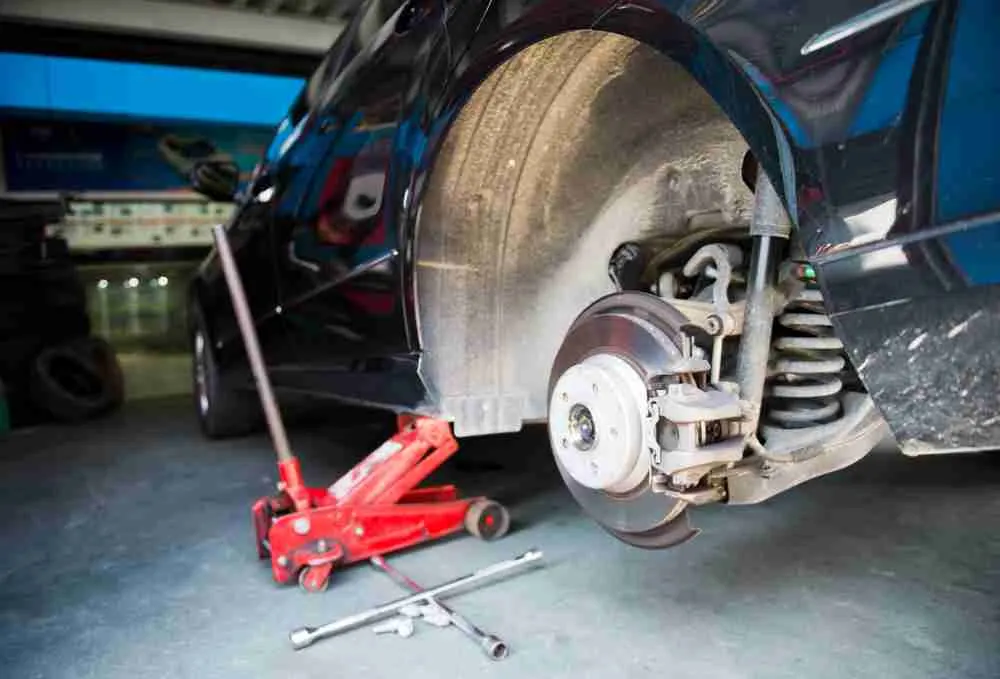
Angles are set by adjusting parts that must be tight to begin with. If a tie rod end has play, the toe setting moves every time you hit a bump. If a control arm bushing is torn, camber shifts under braking.
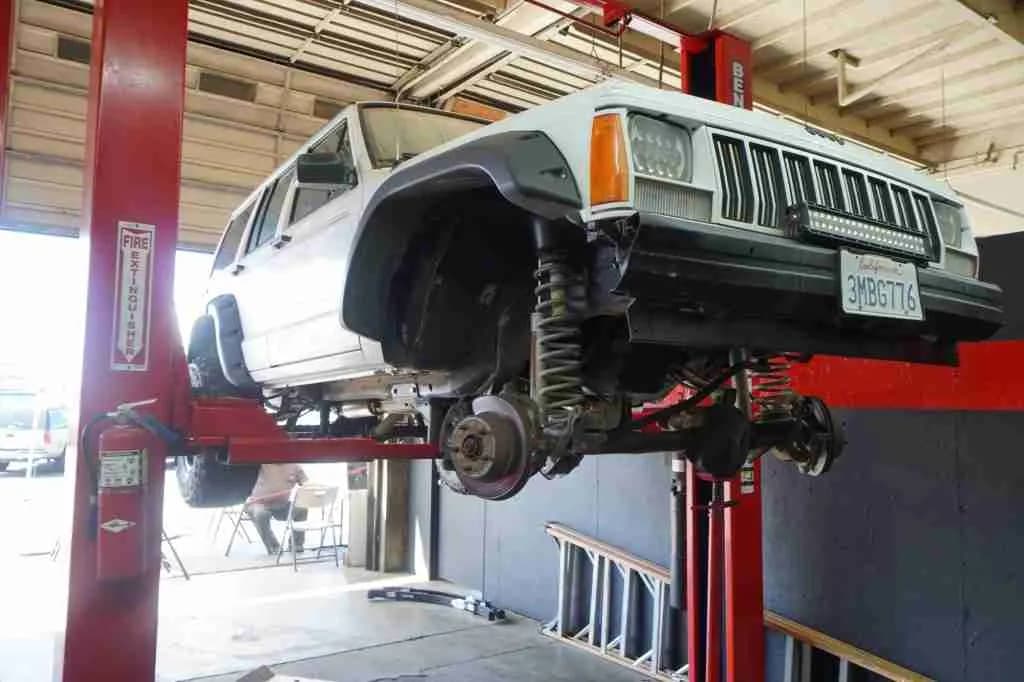
So we check tie rods, ball joints, bushings, struts and springs first, record the tire wear pattern, and fix what is loose with your approval.
How we coordinate the alignment
Step 1: Read the tires
We record where and how each tire is wearing and check pressures.
Step 2: Inspect the parts that hold angles
Tie rods, ball joints, bushings, struts and springs are checked for play and damage.
Step 3: Repair with approval
Worn parts are replaced after you approve the written estimate.
Step 4: Arrange the alignment
We arrange the alignment and explain the timing before the car leaves our hands.
Step 5: Road test the result
Back at our shop, we drive the car to confirm it tracks straight and the wheel sits centered.
What's included when we coordinate an alignment
Included on the work order
- 01Tire wear pattern and pressure check at each corner
- 02Play check on steering and suspension joints
- 03Written estimate for any worn parts, labeled need-now or need-later
- 04Arranging the alignment after repairs are complete
- 05Post-alignment road test for pull and steering wheel position
Need-now or need-later?
Need now: call
- A strong pull or a wheel that will not return to center
- Tire wear down to the cords on one edge
- Any steering joint with measurable play
Need later: book
- A slightly off-center wheel with even tire wear
- Light feathering on tires that still have good tread
How pricing and timing work
Aftercare
After an alignment, the steering wheel should sit centered and the car should track straight on a flat road. Check tire pressures monthly, because low pressure mimics alignment trouble.
Frequently asked questions
Do you do alignments at your shop?
No. We are upfront about that. We inspect the tires and suspension, repair what is worn, arrange the alignment, and road-test the result, so one shop keeps track of the whole job.
How do I know if I need an alignment?
Watch for a pull on a flat road, a steering wheel that sits crooked when you drive straight, or tires wearing on one edge. New tie rods, struts or control arms also usually call for one.
Why did my car pull again soon after an alignment elsewhere?
The most common reason is a worn part that let the angle shift again. We check the joints and bushings first, so the next alignment has a solid base to hold.