
On this page
Rotor balancing, in practice, means making a rotor spin true on its hub so it does not wobble into the pads. Route 66 Auto Repair in Upland tracks down brake vibration by measuring rotor runout with a dial indicator, checking the hub face, and ruling out tire balance and worn suspension parts. We sell, mount and balance tires in-house, so we can test the wheel and the brake in the same visit.
What does rotor balancing really mean?
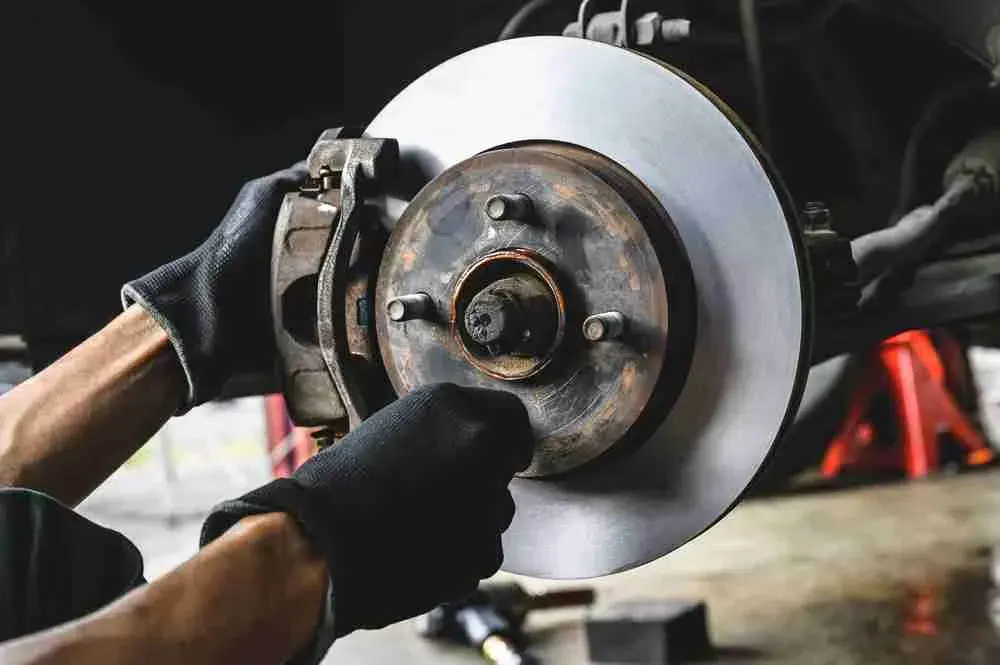
Rotors are not balanced with weights the way tires are. The fix for a shaking brake is making the rotor run true. Runout is how much the rotor face wobbles side to side as it turns. Even a small wobble lets the pads kiss one spot on every turn. That spot wears thinner, and the thickness variation is what you feel as a pulse.
Runout can come from the rotor, from rust or dirt on the hub face, from a worn wheel bearing, or from lug nuts tightened unevenly with an impact gun.
How do we tell a rotor shake from a tire shake?
- A shake only while braking points to rotors or hubs
- A shake at a certain speed with no brakes applied points to tire balance or a bent wheel
- A pulse in the pedal alone is usually rotor thickness variation
- A steering wheel shimmy on the 57 downgrade but not around town suggests heat-related rotor problems
Our runout correction process
Step 1: Road-test at speed
We reproduce the shake and note when it happens and where you feel it.
Step 2: Check the wheels
Tires are spun on our balancer to rule out balance and wheel bend.
Step 3: Dial the rotor
A dial indicator measures runout on the rotor face with the lug nuts torqued.
Step 4: Clean or index
The hub face is cleaned to bare metal, and the rotor may be clocked to a different stud position to cancel runout.
Step 5: Correct and verify
If runout remains, the rotor is resurfaced or replaced, then measured again and road-tested.
What's included in rotor runout correction
Included on the work order
- 01Tire and wheel balance check
- 02Dial indicator runout reading on each rotor
- 03Thickness variation check with a micrometer
- 04Hub face cleaning and inspection
- 05Lug nuts torqued in sequence to spec
- 06Before and after readings on the repair order
Need-now or need-later?
Need now: call
- A shake so strong the steering wheel jerks in your hands
- Runout caused by a loose or worn wheel bearing
Need later: book
- A faint pedal pulse during hard stops only
- A shake that turned out to be tire balance, which is quick to fix
How pricing and timing work
Aftercare
Ask any shop that removes your wheels to torque the lug nuts by hand to spec. After a long, hot descent, avoid holding the brake hard while stopped at the bottom. If the shake returns, come back first, before it wears the rotors again; comebacks go to the front of the line.
Frequently asked questions
What is rotor runout?
Runout is side-to-side wobble in the rotor face as it spins. We measure it with a dial indicator. Too much of it lets the pads wear uneven spots that you later feel as a pulse.
Why did my new rotors start shaking after a few months?
Common causes are rust left on the hub face, lug nuts tightened unevenly, or pads that were not bedded. We measure to find which one, then write the cause on the repair order.
Is a warped rotor really warped?
Usually not. Most pulsation comes from uneven thickness caused by runout, not from a rotor bent by heat. That is why measuring beats guessing.