
On this page
An AC system diagnostic is the organized hunt for why your cabin will not cool, and Route 66 Auto Repair in Upland runs it before any part gets ordered. Our ASE-certified technicians check the electrical command, the airflow path and the sealed refrigerant side in a fixed order. The diagnostic fee is stated at the counter before testing starts, and it applies to approved related repair. You leave with the cause written down, not a guess.
When does a full diagnostic make sense?
Book one when the complaint is vague or keeps coming back. Guessing is how drivers pay for three parts to fix one problem.
- Vents blow warm, or only cool on one side of the cabin
- Cooling fades in stop-and-go traffic on Foothill Blvd, then returns at speed
- The AC light blinks or the compressor never clicks on
- A recharge done elsewhere lasted only weeks
What order do we test things in?
We start with your words: when it happens and what has already been done. Then the technician scans the climate and engine modules, because a computer that refuses to engage the compressor looks exactly like a broken compressor from the driver's seat.
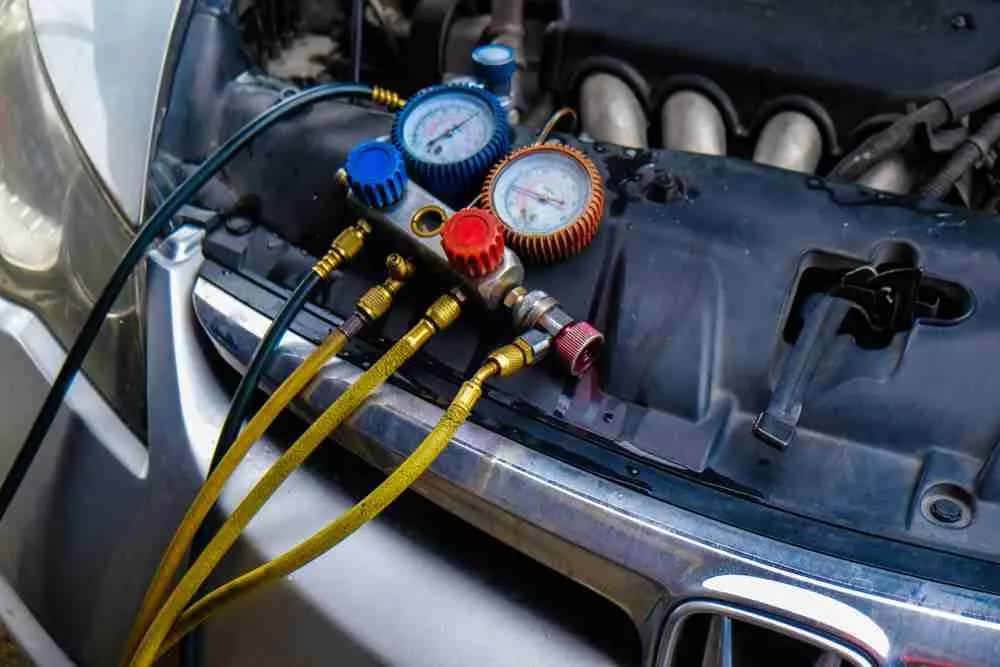
Next comes airflow: blower speeds, blend doors, the cabin filter and the condenser fans. Only after those pass do gauges go on the service ports. The detailed gauge work is explained on our AC system pressure testing page.
Our AC diagnostic process
Step 1: Intake interview
We record the symptom, the conditions it shows up in and any past AC work.
Step 2: Module scan
Codes and live data show whether the system is asking for cold air and what is blocking it.
Step 3: Airflow and fan check
Blower, doors, filter and condenser fans are verified before the sealed side is touched.
Step 4: Sealed side tests
Gauges, vent temperature and, when needed, leak tests narrow the fault to one component.
Step 5: Written findings
The estimate names the cause, the proof and whether it is need-now or can wait.
What's included in an AC system diagnostic
Included on the work order
- 01Customer concern interview and history
- 02Climate and engine module scan
- 03Blower, blend door and cabin filter check
- 04Condenser fan and clutch command check
- 05High and low side gauge readings with ambient temperature
- 06Written findings with each line labeled now or later
Which findings are need-now and which can wait?
Need now: call
- A seizing compressor that could throw the shared drive belt
- Defrost that will not clear the windshield
- A cooling fan fault that also lets the engine run hot
Need later: book
- A slow leak that holds a charge for a season
- Musty odor with normal cooling
- Slightly weak cooling on the hottest afternoons
How the fee, estimate and timing work
What should you do after the diagnostic?
Declined items stay on the repair order so the next technician sees the history. Approved repairs get a road test with a vent thermometer before handing the keys back. Should the same symptom return, call (909) 646-4111 and the car goes to the front of the line.

Frequently asked questions
Is a diagnostic the same as an AC recharge?
No. A recharge refills the system. A diagnostic finds out why it needed refilling, or proves the charge was never the problem. If you want the refill only, see our AC system recharge page, but a low system almost always has a leak.
Can you tell me what is wrong over the phone?
We can list likely causes, but phone quotes are ranges until the vehicle is inspected. The written estimate replaces the range with real numbers.
What if you find more than one problem?
Each item gets its own line with its own label. Approve the need-now work and schedule the rest.