
On this page
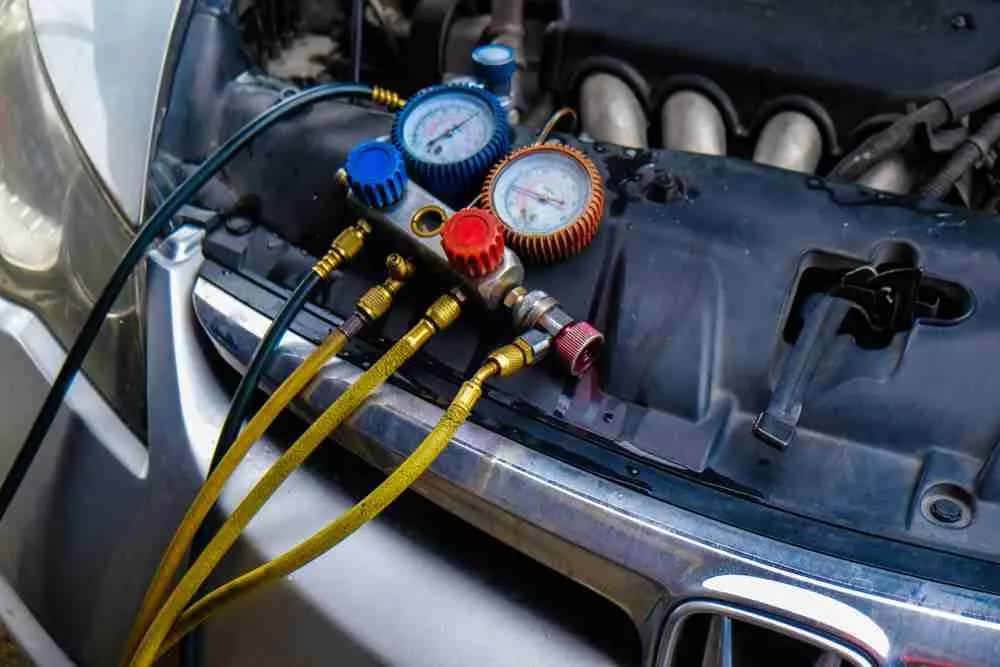
Every AC system has service port valves where equipment connects to flush, test and charge it. Route 66 Auto Repair in Upland repairs those valves when they leak, which is more common than most people think. A worn valve core or a missing cap can slowly empty a system that is otherwise healthy, and it is often a small repair.
How do service port valves work?
Each port has a spring-loaded valve core, similar to a tire valve, that opens only when a service coupler is attached. The cap is the second seal and holds its own O-ring. When the cap is lost, dirt gets into the core and the O-ring dries out.
A core that has been used many times, or damaged by a store coupler, can leak slowly. Ports also carry dust caps that look similar but are not sealing caps.
Signs a service port is leaking
- Missing or cracked port caps
- Oily dirt around a port
- A detector reading that peaks at the port
- A system that loses its charge slowly with no other leak found
- A store coupler that stuck or would not release
Our service port repair process
Step 1: Test the port
With the cap off, a detector checks the core. With the cap on, we check whether the cap seals.
Step 2: Replace the core
Many cores can be replaced with a special tool, sometimes without recovering the whole charge.
Step 3: Replace the port if needed
A damaged port body may require recovery and a new port or line.
Step 4: Cap and verify
New sealing caps are installed and the port is rechecked for leaks.
What's included in service port valve repair
Included on the work order
- 01Leak test at both ports
- 02Valve core replacement as needed
- 03New sealing caps
- 04Port body inspection
- 05Recovery and recharge if the port must be opened
Need-now or need-later?
Need now: call
- A leaking core on a system that is already low
- A port damaged so a coupler cannot connect
Need later: book
- Missing cap on a system with no leak yet
- A worn cap O-ring on a sealed core
How pricing and timing work
A core and cap replacement is often short and low in parts cost. If the port is part of a line and the body is damaged, see AC line repair. If the system is low, a full leak search on AC system leak detection makes sure the port is the only leak. Charging afterward follows AC system recharge.
After the repair
Keep the caps on. They are the second seal, not decoration. If one goes missing, replace it soon.

Frequently asked questions
Can a missing cap really cause a leak?
A cap on its own will not usually empty a system, but it is the backup seal for the core. Without it, a weak core leaks freely.
Can you change a valve core without emptying the system?
On many ports, yes, using a special tool. If the port is damaged, recovery is needed first.
Why is this called a flush valve?
The same ports are used to flush, test and charge the system. We use the name you searched for, but the part is the service port valve.