
On this page
A cooling system runs under controlled pressure, which raises the boiling point of coolant. The regulator is the pressure cap, on the radiator or on a pressurized reservoir, along with the reservoir and its lines. Route 66 Auto Repair in Upland diagnoses systems that build too much pressure or cannot hold enough, because the cause is not always the cap and a new cap alone can hide a bigger problem.
What are the signs of a pressure problem?
- Upper hose hard as a rock right after startup, before the engine is warm
- Coolant pushed out of the reservoir vent or overflow
- Boiling or gurgling at normal gauge readings
- Reservoir tank bulging or cracked along a seam
- Coolant level that drops with no visible leak
What causes pressure to run high or low?
Low pressure is usually simple: a cap that no longer seals, a cracked reservoir or a leak somewhere in the system. The coolant boils at a lower temperature, and you lose it as steam. High pressure is the one to take seriously. If hoses turn hard within a minute of a cold start, combustion gas may be leaking into the coolant from a head gasket or cracked part. A new cap will not fix that.
Pressurized reservoirs, common on European and many newer cars, are part of the regulation system too. When their plastic ages, they swell or split. A coolant reservoir replacement is sometimes the fix, once we rule out the bigger causes.
Our pressure diagnosis process
Step 1: Cold-start check
We start the engine cold and feel the upper hose and watch the reservoir for bubbles.
Step 2: Cap and system test
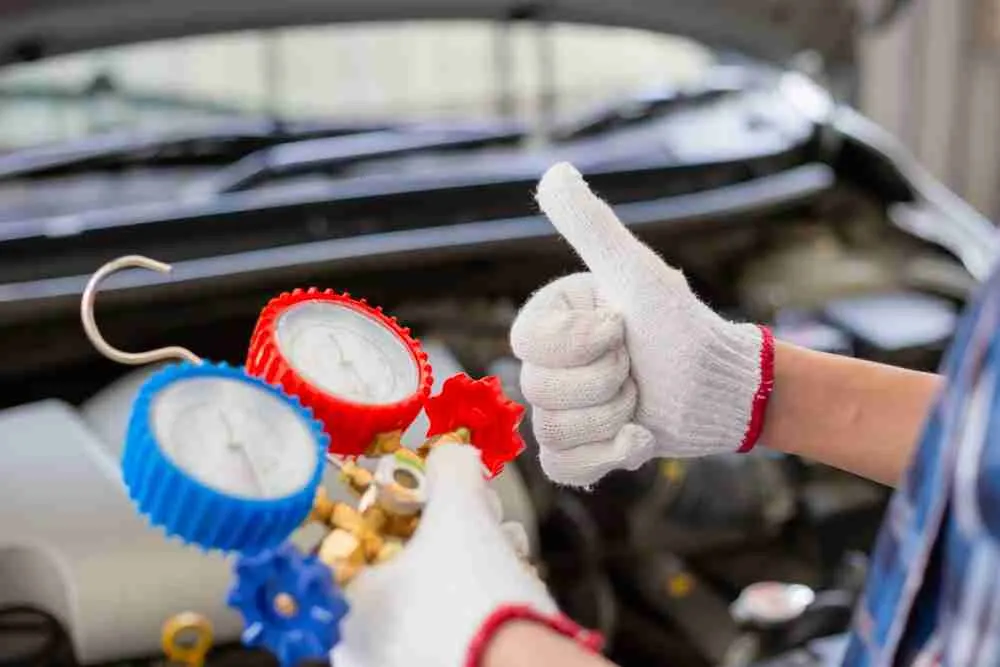
The cap is tested for its rated release point, and the system is pressure tested for leaks.
Step 3: Combustion gas test
A chemical block test samples the air above the coolant for exhaust gases.
Step 4: Repair and verify
The failed cap, reservoir or line is replaced, or the internal problem is explained in writing with next steps.
What's included in pressure regulation repair
Included on the work order
- 01Cold-start hose and reservoir observation
- 02Cap release test and system pressure test
- 03Combustion gas block test
- 04Replacement cap, reservoir or vent line as quoted
- 05Coolant top-off, air purge and heat cycle check
Is a pressure problem urgent?
Need now: call
- Coolant pushing out while driving or temperature rising
- A positive combustion gas test
- A split or bulging pressurized reservoir
Need later: book
- A cap that tests near the low end of its range with no symptoms
- A reservoir that is yellowed but not swollen
How pricing and timing work
A cap or reservoir is a modest repair. The testing matters more than the part. The diagnostic fee is stated at the counter before testing and applies to approved related repair. If the gas test is positive, we stop and explain what that means, and you get a written estimate before any engine work. See engine diagnostics for that path.
After the repair
Never open the cap on a hot engine. After a cap or reservoir repair, check the level cold for a week and feel the upper hose after a cold start: it should be soft and firm up slowly. If it turns hard quickly again, call (909) 646-4111.
Frequently asked questions
Can I use a higher-pressure cap to stop boiling?
No. A cap rated above spec can stress the radiator, hoses and heater core, and it hides the real reason the coolant is boiling.
Why are my hoses hard after the engine cools?
Some pressure is normal right after shutdown. If hoses stay hard for a long time, or turn hard right after a cold start, that points to gas in the coolant and needs testing.
How is this different from a cap test?
A cap test checks one part. This service looks at why the whole system has the wrong pressure, including the reservoir and possible internal leaks.