
On this page
Route 66 Auto Repair in Upland handles every part of the engine cooling system: radiator, thermostat, water pump, fans, hoses, cap and coolant. This page is a map. It explains what each service fixes and how we decide between them, so you walk in knowing the questions to ask. Every decision starts with a pressure test and a written estimate, not a guess.
How does the engine cooling system work?
Coolant picks up heat inside the engine block and cylinder head. The water pump pushes it along. The thermostat holds it in the engine until it is warm, then opens the path to the radiator. Air moving through the radiator, pulled by the fans at low speed, carries the heat away. The cap holds the whole loop under pressure so the coolant boils at a higher temperature. Hoses connect it all, and a branch runs to the heater core for cabin heat.
Because it is one loop, one weak link affects everything. A lazy fan looks like a bad radiator. A leaking cap looks like a hidden leak. That is why we test the loop as a whole before naming a part.
Which cooling service matches your problem?
- Needle climbs in traffic but settles on the freeway: start with cooling fan service.
- Engine slow to warm up and weak heater: usually thermostat replacement.
- Green, orange or pink drips under the front: radiator repair or a hose.
- Drip near the front of the engine with a whine or wobbly pulley: water pump repair.
- Rusty or muddy coolant with no leak: a coolant exchange or cooling system flush.
- Coolant dropping with no visible leak: pressure test plus a combustion gas test.
How we choose the right cooling service
Step 1: Check level and condition
We look at coolant color, level and smell with the engine cold.
Step 2: Pressure test the loop
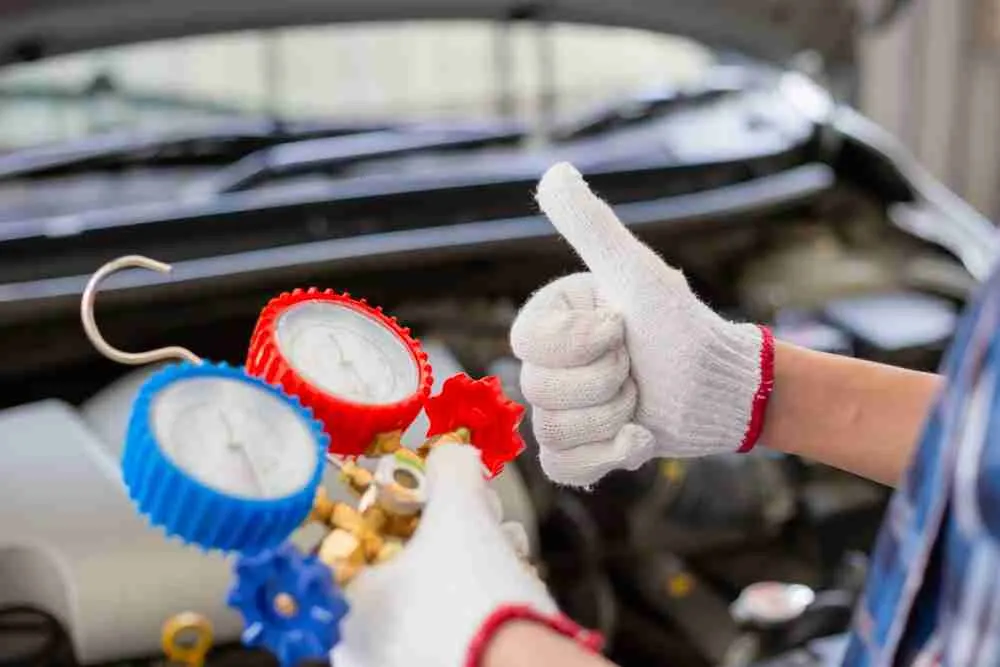
A hand pump brings the system to rated pressure so leaks show while we watch.
Step 3: Test the cap and fans
The cap goes on its own tester, and we command the fans with a scan tool.
Step 4: Recommend one path
You get a written estimate that names the failed part and marks what else can wait.
What's included in a cooling system visit
Included on the work order
- 01Cold coolant level and condition check
- 02System pressure test at rated pressure
- 03Radiator cap pressure test
- 04Fan operation check at temperature
- 05Hose and clamp inspection
- 06Written estimate with need-now and later lines
How pricing and timing work
Frequently asked questions
How often should the cooling system be serviced?
Follow the interval in your owner's manual for coolant changes. In Inland Empire heat, we also suggest a pressure test and hose check before each summer, since that is when weak parts give out.
Can I just add coolant and keep driving?
Topping off is fine to get home if the engine is not overheating. If you keep adding coolant, there is a leak, and it will get worse. Bring it in for a pressure test before it strands you on a hot day.
Is a cooling system flush always needed?
No. Many cars only need a drain and refill with the coolant type the manufacturer specifies. A flush makes sense when the coolant is contaminated with rust, oil or sludge. We show you the sample before recommending it.