
On this page
A hose condition inspection at Route 66 Auto Repair in Upland checks the rubber lines that carry coolant, vacuum, power steering fluid and air around your engine. Hoses fail from the inside out, and heat speeds that up. We squeeze, inspect and pressure-test them, so a soft hose gets replaced in the shop instead of on the shoulder of the 210.
What does a failing hose look like?
- A hose that feels soft, spongy or crunchy when squeezed
- Bulges or swelling near the clamps
- Cracks on the outside, especially at bends
- Coolant crust or wet spots at a connection
- A hissing sound at idle from a vacuum leak
- A hose that collapses after the engine cools
How do we judge a hose that looks fine?
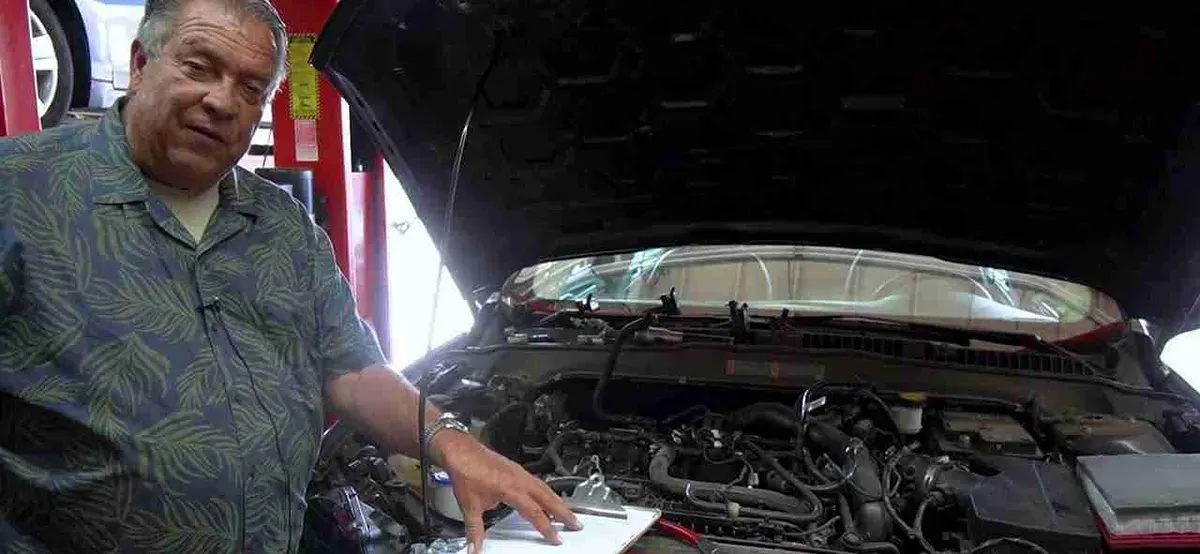
Coolant hoses usually break down from the inside, where hot coolant attacks the rubber. The outside can look normal while the inner layer is soft or flaking. That is why technicians squeeze each hose with the engine cool. A healthy hose feels firm and springs back. A bad one feels mushy, or hard and brittle.
A cooling system pressure test then shows whether any hose or clamp leaks at operating pressure. Vacuum hoses are checked for cracks and, when a lean code or a hiss suggests a leak, with a smoke test. Power steering hoses are checked for seepage at the crimped ends. Hose results tie into the cooling system inspection report and the radiator condition inspection.
How we inspect hoses
Step 1: Cool-engine squeeze test
Each coolant and heater hose is squeezed and inspected along its length.
Step 2: Pressure test
The cooling system is pressurized to reveal hose and clamp leaks.
Step 3: Vacuum check
Vacuum hoses are inspected, with a smoke test if needed.
Step 4: Steering and intake hoses
Power steering and air intake hoses are checked for leaks and cracks.
Step 5: Report
Each hose gets a result, with photos of any damage.
What's included in a hose condition inspection
Included on the work order
- 01Upper and lower radiator hose check
- 02Heater hose check
- 03Cooling system pressure test
- 04Clamp and connection inspection
- 05Vacuum hose inspection
- 06Power steering hose check
- 07Photos of swollen, cracked or leaking hoses
Which findings are need-now, and which can wait?
Need now: call
- A hose that is leaking or bulging
- A soft lower radiator hose that could collapse
- A power steering hose spraying fluid
Need later: book
- Light surface cracks on a firm hose
- A slightly worn clamp with no leak
How pricing and timing work
The inspection price is stated at the counter. Hoses of the same age are sometimes replaced as a set, and the written estimate tells you which ones need it now and which can wait. Coolant lost during a hose repair is replaced with the type your vehicle specifies. See cooling, heating and AC services for repairs.
Frequently asked questions
Should I replace all my hoses at once?
Not always. If several hoses are the same age and soft, replacing them together can save labor. If only one is bad, we tell you so and label the rest need-later.
Can a vacuum hose leak cause a check engine light?
Yes. Extra air entering the engine throws off the fuel mixture and can set a lean code or cause a rough idle. A smoke test finds the leak quickly.
Why do hoses wear out faster here?
Engine bays run hotter during Inland Empire summers, and short trips cycle hoses between hot and cold over and over. Both break down rubber over time.