
On this page
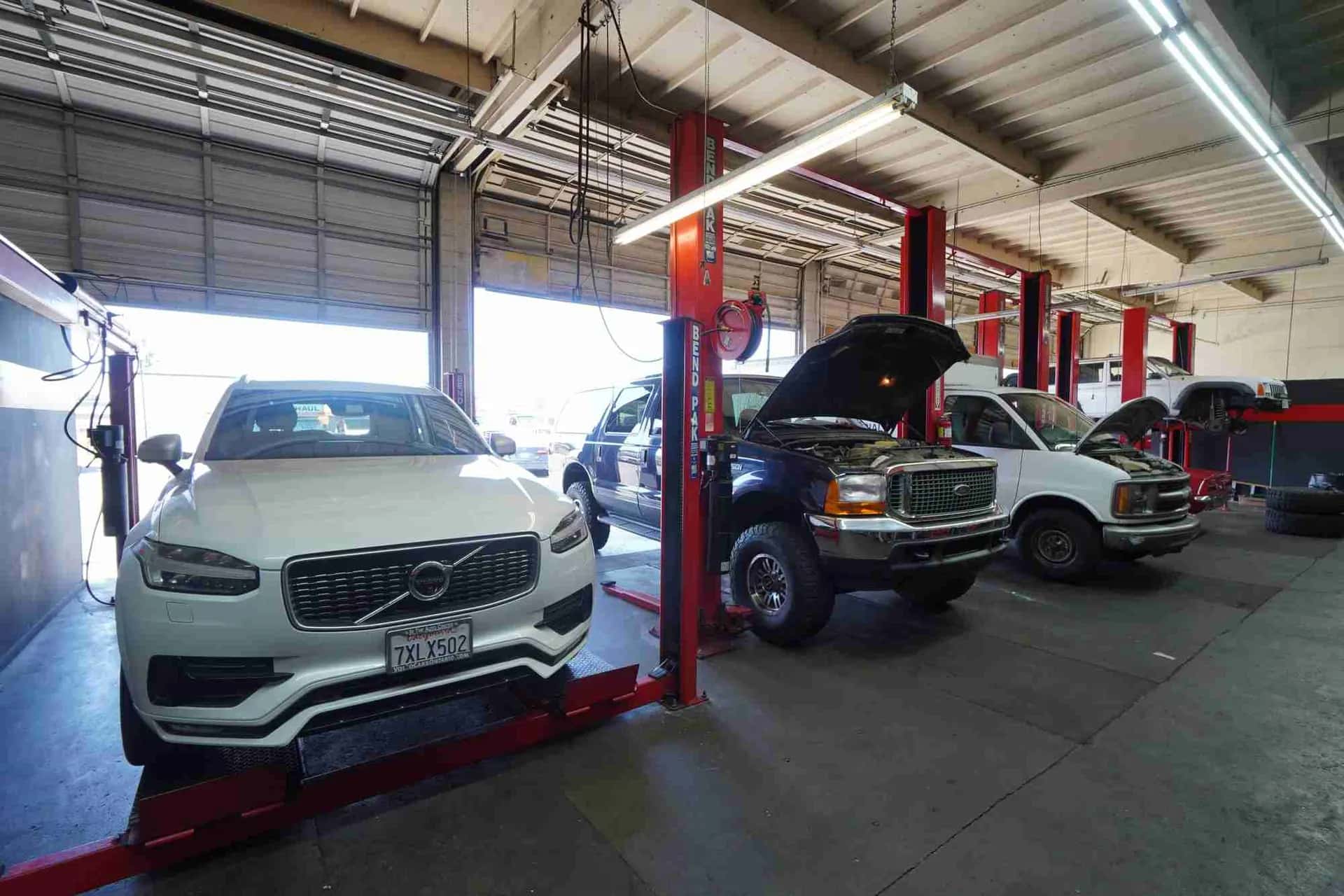
A tie rod condition inspection at Route 66 Auto Repair in Upland checks the rods that connect your steering rack to the front wheels. When their joints wear, steering gets loose and the tires start to wear unevenly. We check the inner and outer ends for play with the wheels loaded and unloaded, look at the boots, and give you a written, photo-backed answer on what needs doing.
When to have your tie rods checked
- Play in the steering wheel before the car responds
- The car wanders and needs constant small corrections
- Feathered wear across the front tire tread
- A knock from the front when turning slowly in a parking lot
- A torn rubber boot at the steering rack or wheel end
How do we measure tie rod play?
There are two joints per side. The outer end connects to the steering knuckle. The inner end connects to the rack and hides under a rubber boot. We check the outer end by gripping the tire at the sides and pushing in and out with the wheel in the air. Any clunk or visible movement at the joint is noted.
Inner ends can be harder to feel, so we use a dry-park test: with the wheels on the ground, a helper rocks the steering wheel while the technician watches and feels each joint. Play shows as movement before the wheel turns. We also check the boots for tears, because a torn boot lets dirt in and grease out, which speeds wear. Bent tie rods from curb strikes get noted too.
What the tie rod report shows
- Inner and outer end play, each side
- Boot condition and any grease loss
- Bent rods or damaged threads
- Front tire wear pattern
- Photos of torn boots or damaged ends
Our tie rod inspection process
Step 1: Road test
We feel for looseness, wander and knock in turns.
Step 2: Wheel-off-ground check
Outer ends are tested for movement by hand.
Step 3: Dry-park test
Inner ends are checked with the weight on the wheels.
Step 4: Write-up
Findings, photos and the estimate come to you in writing.
What's included in a tie rod condition inspection
Included on the work order
- 01Road test for steering looseness
- 02Outer tie rod end play check
- 03Inner tie rod dry-park test
- 04Boot and grease inspection
- 05Front tire wear check
- 06Written findings with photos
Need-now or need-later?
Need now: call
- Any tie rod end with visible play
- A bent rod from a curb strike
- A joint that knocks when turning
Need later: book
- A torn boot on an otherwise tight joint
- Light boot cracking with grease still inside
How pricing and timing work
Where to go next
Worn ends lead to tie rod end repair. If play is inside the rack itself, steering rack replacement explains that job. Alignment after the repair is covered on the suspension alignment page. For looseness that might come from several parts, the steering system inspection checks the whole chain.
Frequently asked questions
Is a bad tie rod dangerous?
A badly worn tie rod can separate, and then you lose steering control on that wheel. That is why any joint with play is labeled need-now. A torn boot alone is less urgent but should not be ignored.
Can you align my wheels after I felt a pull?
We inspect tire wear and suspension first, arrange the alignment once parts are sound, and road-test the result. Aligning a car with loose tie rods does not hold.
Do both sides need replacing?
Not always. We test each end separately and list them separately. If one side is worn and the other is tight, the estimate reflects that.