
On this page
The rubber hangers that hold your exhaust are small, cheap parts that do a big job. When they stretch, crack or tear, the pipe swings, clunks and eventually breaks at a joint. Route 66 Auto Repair in Upland replaces worn exhaust hangers and isolators, checks what the loose system may have damaged, and road-tests the car over bumps. You see the worn parts and approve the estimate first.
What are the signs of worn exhaust hangers?
- A thud or clunk under the car over speed bumps
- The tailpipe tip sitting lower or off-center in the bumper cutout
- A buzz at idle that stops when you press on the pipe
- Rubber isolators that look cracked, stretched or glossy with heat
- Scuff marks on the heat shield or floor above the pipe
Why are exhaust hangers made of rubber?
Your engine sits on soft mounts and rocks with every shift and stop. The exhaust is bolted to it, so the rest of the system has to move too. Rubber isolators let it float a little while blocking vibration from the body. Heat is their enemy. Isolators near the converter or muffler dry out, crack and stretch, and summer in the Inland Empire speeds that along.
Once one isolator lets go, the others carry more weight and fail faster. The pipe starts hitting the body, and the constant flexing cracks welds and joints. That is how a small hanger problem becomes a muffler repair or a new pipe section.
Why do fleet vans and trucks go through hangers?
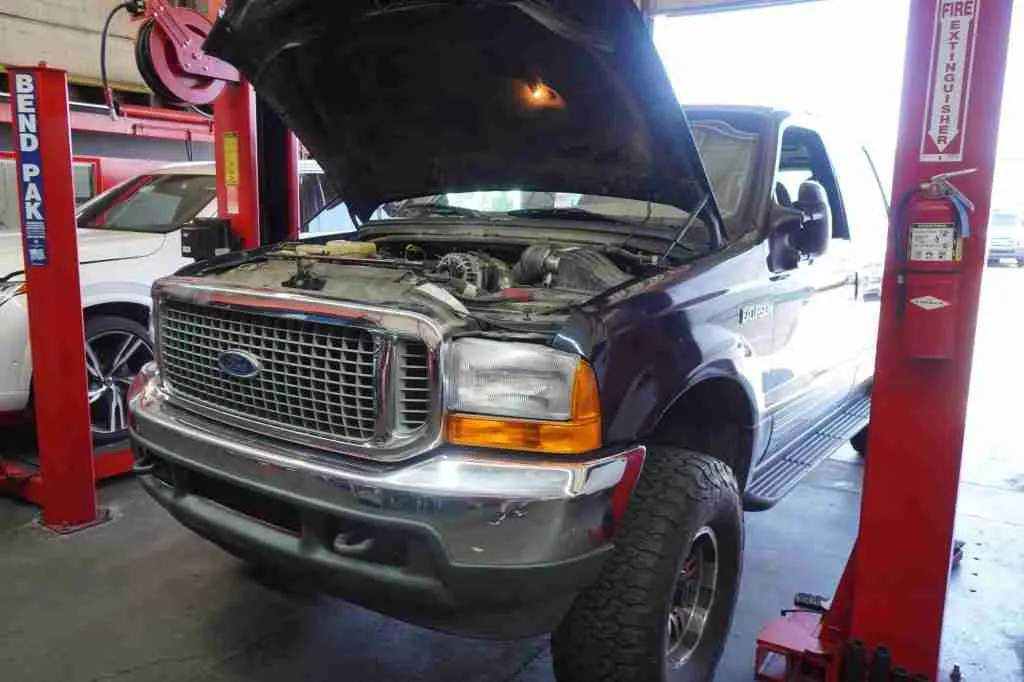
Delivery vans and work trucks see curbs, loading docks and rough lots every day, and long exhaust runs hang from more isolators. We check hangers at every lift visit, and fleets get unit numbers on invoices and A/B/C preventive maintenance intervals. See our page for fleet managers.
Our hanger replacement process
Step 1: Check each mount
On the lift we inspect every isolator and pull on the system to find play.
Step 2: Look for collateral damage
We check joints, shields and the body for cracks or scuffs from the swinging pipe.
Step 3: Estimate and replace
After you approve, we replace the worn isolators with the correct type for your vehicle.
Step 4: Bump test
We road-test over speed bumps and rough pavement to confirm the clunk is gone.
What's included in hanger replacement
Included on the work order
- 01Inspection of every exhaust isolator
- 02Play check on the full exhaust run
- 03Joint and heat shield check for impact damage
- 04Correct-type replacement isolators
- 05Pipe clearance check from the body
- 06Road test over bumps
Is a worn hanger need-now?
Need now: call
- The pipe is hanging or dragging
- A broken isolator lets the pipe hit a fuel or brake line
Need later: book
- Cracked but intact rubber
- Slight sag with no contact
How pricing and timing work
Frequently asked questions
Can a bad exhaust hanger damage my car?
Yes, over time. A loose system swings, hits the body and flexes joints until they crack. Replacing an isolator early is usually far smaller than the repairs it prevents.
Why does my car clunk underneath over speed bumps?
A worn exhaust hanger is a common cause, but a sway bar link or bushing can sound the same. We check the suspension and steering parts nearby on the same lift visit.
Should all the hangers be replaced at once?
Only the worn ones need replacing. We note any that are aging as need-later, so you can plan for them without paying for parts that still have life.